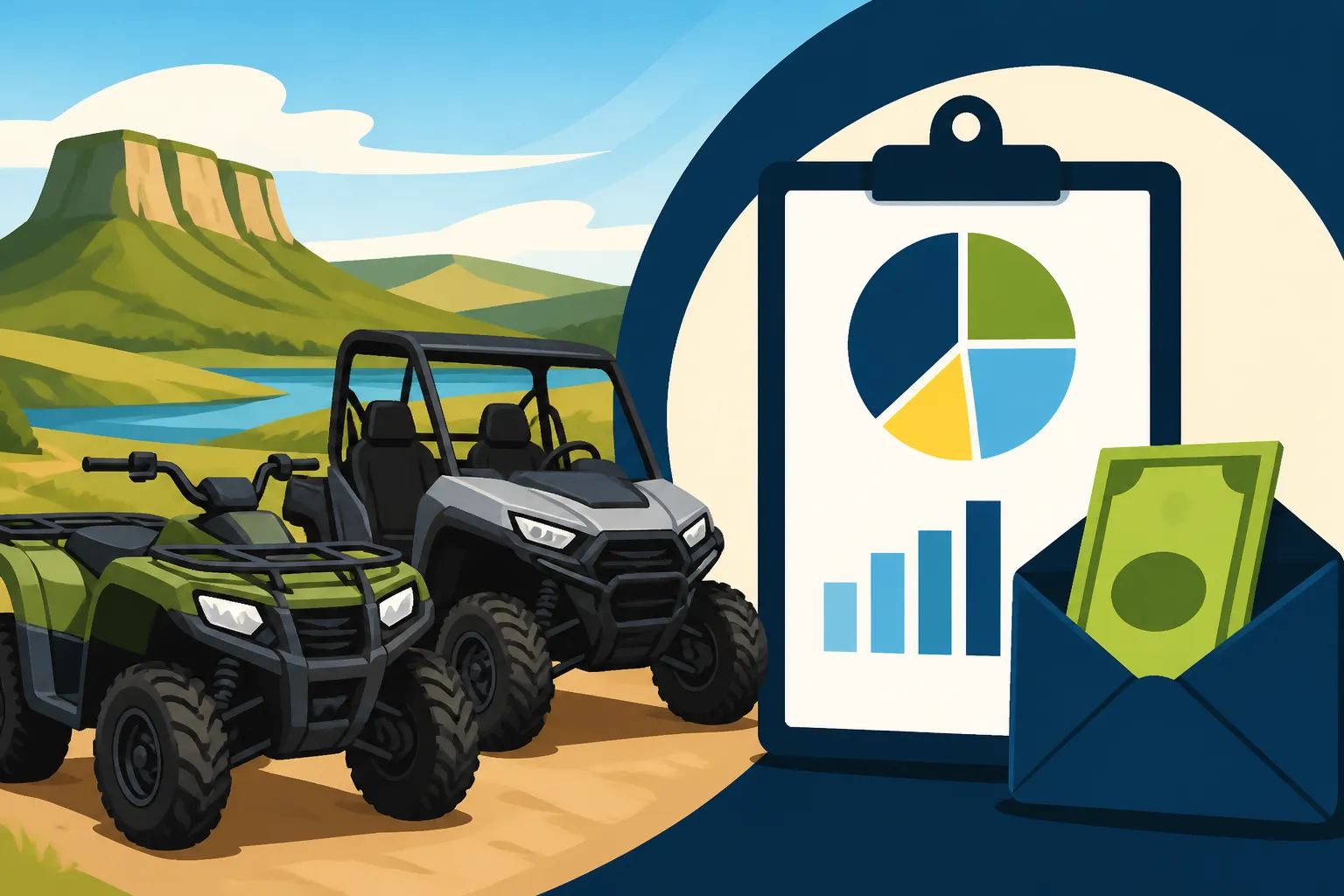
Quarterly Remittance by a Dealer
For many folks in North Dakota looking to buy a new ATV or UTV, the focus is often on the excitement of the machine itself, or maybe the sticker price. What often goes unnoticed, and can be a real headache for dealers, is the complex system of collecting and remitting various state taxes and fees. This guide will dive deep into "quarterly remittance" – a crucial but often overlooked part of how North Dakota ATV/UTV dealers manage their financial obligations to the state, and why it matters to you, the rider.
Understanding the Dealer's Role in North Dakota OHV Sales
When you walk into a dealership in Bismarck, Fargo, or any of our great North Dakota towns, you're not just dealing with someone selling powersports vehicles. You're interacting with a business that also acts as a critical collection point for state funds. It's a role that carries significant responsibility and can be a surprising amount of work behind the scenes.
More Than Just Selling Machines
A dealer’s job extends far beyond simply handing over the keys to a brand-new side-by-side or ATV. They are legally tasked with collecting several fees and taxes on behalf of the state. This includes the [North Dakota's 5 Percent Motor Vehicle Excise Tax], which is applied to most sales, whether it’s a shiny new utility UTV for the farm or a zippy sport quad for weekend trail rides. On top of that, there's often the [North Dakota Dealer Safety Fee of $5], a small charge that contributes to safety initiatives.
Think about it from their perspective: every sale involves calculating these amounts, adding them to the purchase price, and ensuring they are accurately recorded. It’s not just about processing a payment; it’s about becoming an extension of the state's revenue collection system. This can be a substantial administrative burden, especially for busy dealerships moving many machines. They need robust systems in place to track every penny, making sure everything is above board.
This process involves more than just a simple point-of-sale transaction. Dealers must understand the nuances of what is taxable, what might be exempt, and how to properly document each part of the sale. They're trying to get you out on the trails or back to your land with your new machine, but they're also juggling state mandates. It's a delicate balance that requires a lot of attention to detail and can sometimes feel like a second job for their administrative staff.
The Importance of Accurate Collection
Getting these collections right at the moment of sale is absolutely critical. Imagine a scenario where a dealer miscalculates the excise tax on your new machine. While it might seem minor, even small errors can snowball into bigger problems. For you, the buyer, it could mean delays in getting your [Titling an ATV in North Dakota] paperwork processed if the NDDOT finds a discrepancy. For the dealer, it could lead to audits, penalties, and a lot of extra paperwork to correct mistakes.
This means that when you receive your final invoice, it's often a detailed breakdown of the vehicle price, accessories, any warranties, and then the various taxes and fees that the dealer is collecting on behalf of the state. These might include the excise tax, registration fees, and even the trail tax that goes towards maintaining our beloved riding areas. Ensuring each line item is correct, and that the total collected matches what the state expects, is a constant challenge for dealerships.
The ripple effect of inaccurate collection can be quite far-reaching. If a dealer consistently under-collects, the state misses out on vital revenue. If they over-collect, it can cause frustration for customers who then have to seek refunds. Therefore, dealers invest significant time and resources into training their sales and finance teams to ensure these calculations are flawless, which ultimately helps streamline the process for everyone involved, getting you your vehicle faster and without hassle.
What "Quarterly Remittance" Really Means for Dealers
So, the dealer has collected all these taxes and fees from customers. What happens next? They don't just sit on the money. That's where "quarterly remittance" comes into play, a structured process that ensures those funds make their way to the state government.
The Why and How of Remitting Taxes
Quarterly remittance is essentially the scheduled reporting and transfer of collected funds from the dealer to the North Dakota Department of Transportation (NDDOT) or other relevant state agencies. It’s how the state receives its portion of the excise tax, registration fees, and other charges that were paid by customers at the time of purchase. These funds don't just float around indefinitely; they are earmarked for specific state services and programs.
The "quarterly" part means this process happens four times a year. Typically, dealers will tally up all the excise tax and other collectable fees from sales made during a three-month period. Then, shortly after that quarter ends, they submit a detailed report along with a payment for the total amount collected. For example, sales from January, February, and March would likely be remitted sometime in April. This structured approach helps the state manage its revenue flow and gives dealers a clear timeline to follow.
This systematic transfer of funds is crucial for the state’s budget and for the ongoing support of the OHV community. A significant portion of these collected funds, especially the excise tax, goes into the state's general fund, which supports a wide array of public services. Additionally, specific fees like the [North Dakota's Off-Highway Trail Tax] are directly allocated to maintaining and developing the trails and riding areas that we all enjoy across North Dakota.
The Components of a Dealer's Remittance
When a dealer prepares their quarterly remittance, the primary component they're accounting for is the excise tax collected on their OHV sales. This [North Dakota Excise Tax on a Dealer Purchase] is a percentage of the purchase price of the machine, and it's a significant revenue stream for the state. They'll also be remitting any collected registration fees, and the aforementioned safety fee. It's a comprehensive accounting process that covers all the state-mandated charges collected at the point of sale.
The dealer is responsible for making sure these funds are transferred accurately and on time. This involves meticulous record-keeping for every transaction, often using specific state forms or online portals to report their sales and the corresponding tax collected. It's not uncommon for dealers to have dedicated staff whose job it is to manage these financial and administrative obligations, ensuring compliance with all state requirements.
Consider the complexity: a dealer might sell dozens, if not hundreds, of ATVs and UTVs in a single quarter. Each sale has its own set of details, purchase prices, trade-in allowances, and collected taxes. All of this information must be aggregated, verified, and then correctly submitted. It's a testament to the administrative backbone of these businesses that they manage to keep up with these demands while still providing excellent service to their customers.
Navigating the Process: Challenges and Best Practices for Dealers
Managing quarterly remittance isn't always smooth sailing. Dealers often encounter a range of challenges, from tracking intricate details to simply keeping up with changing regulations. However, there are established best practices and tools that can make the process much more manageable.
Common Pitfalls and How to Avoid Them
One of the biggest hurdles for dealers is simply the sheer volume of transactions and the detailed record-keeping required for each one. Imagine trying to keep track of every [North Dakota Bill of Sale Form SFN 2888], every customer name, every VIN, and the exact excise tax collected over a three-month period. It's a lot of data, and errors can easily creep in, especially if records are not consistently maintained. Discrepancies between what was collected and what is reported can lead to serious headaches.
Another common pitfall is misunderstanding the nuances of the excise tax and other fees. For example, knowing exactly what counts as the "purchase price" for tax calculation purposes – especially when trade-ins are involved – can be tricky. Dealers must ensure they are using the correct base for their tax calculations to avoid under- or over-collecting. Mistakes here can not only impact the state's revenue but can also create issues for the customer when they go to finalize their [Titling a Dirt Bike in North Dakota] or a side-by-side.
To avoid these issues, meticulous record-keeping isn't just a suggestion; it's an absolute necessity. Many successful dealerships implement robust digital systems that integrate their sales, accounting, and inventory management. This allows for real-time tracking of sales and automatically calculates the taxes and fees due, significantly reducing the chance of human error. It’s an investment, but one that pays off in reduced stress and increased compliance.
Tools and Resources for Compliance
For dealers looking to streamline their remittance process, various tools and resources are available. Specialized accounting software designed for dealerships can automate much of the tax calculation and reporting. These systems often integrate with state reporting requirements, making it easier to generate the necessary forms and reports for quarterly submissions. This automation not only saves time but also vastly improves accuracy.
Working closely with a tax professional who specializes in motor vehicle sales and state tax laws can also be an invaluable asset. These experts can help dealerships navigate complex scenarios, advise on best practices, and ensure that all reporting is compliant. For smaller dealerships, where dedicated accounting staff might not be feasible, external consultants can fill a critical role in managing these obligations.
Even for basic documentation, resources exist to ensure consistency. Using standardized templates for sales agreements, bills of sale, and other transaction documents helps capture all necessary information from the outset. For instance, reputable online legal document providers like LawDepot offer customizable templates that can help dealers ensure they're gathering all the required details for a sale, which in turn makes the remittance process smoother. Having a consistent framework for every sale makes the quarterly aggregation much less daunting.
Penalties for Late or Incorrect Remittance
The North Dakota Department of Transportation, like any state revenue agency, takes the timely and accurate remittance of taxes seriously. There are indeed consequences for dealers who miss deadlines or submit incorrect information. These penalties can range from financial fines to interest charges on any unpaid or underpaid taxes. Just like you or I would face penalties for late income tax, businesses face similar repercussions for their state tax obligations.
For a dealership, these penalties aren't just a nuisance; they can directly impact their bottom line. Repeated issues could also lead to increased scrutiny from the NDDOT, potentially resulting in audits that consume significant time and resources. In severe cases, consistent non-compliance could even jeopardize a dealer's license to operate. It’s a powerful incentive to stay on top of these requirements.
This is why proactive management is key. Establishing internal deadlines that are well in advance of the official state deadlines provides a buffer for review and correction. Implementing multiple checks and balances within the accounting process helps catch errors before submission. Ultimately, staying compliant with remittance requirements isn't just about avoiding penalties; it's about maintaining a strong reputation as a responsible business within the North Dakota OHV community and ensuring smooth operations for everyone involved in buying and selling these machines.
The Impact of Dealer Remittance on the North Dakota OHV Community
While quarterly remittance might seem like a dry, bureaucratic process, its implications reach far beyond the dealer's balance sheet. It plays a vital role in funding the very experiences that OHV riders cherish and helps ensure a fair and consistent market for everyone.
Funding for Trails and Programs
Every time a dealer collects excise tax or the specific [North Dakota's Off-Highway Trail Tax] on an ATV or UTV sale, they are contributing directly to the future of OHV riding in North Dakota. These funds are not just disappearing into a black hole; they are allocated to specific programs and projects that directly benefit riders. The trail tax, in particular, is designed to support the development, maintenance, and expansion of dedicated OHV trails across the state.
Imagine hitting the trails at [Pembina Gorge: North Dakota's OHV Trail Park] or exploring sections of the [Riding North Dakota's 22-Mile Roughrider OHV Trail]. The upkeep, signage, and general amenities at these locations don't happen by magic. They require funding, and a significant portion of that funding comes from the very taxes and fees collected by dealers. So, when dealers diligently remit these funds, they are, in essence, directly investing in the future enjoyment of their customers and the broader OHV community.
Beyond trails, these funds also contribute to important safety and education programs. North Dakota's commitment to rider safety, including educational initiatives and resources for new riders, is often bolstered by these tax revenues. It's a cyclical relationship: riders buy machines, dealers collect taxes, and those taxes come back to support the infrastructure and education that makes riding safer and more enjoyable for everyone.
Maintaining a Fair Marketplace
Proper and consistent remittance practices also play a crucial role in maintaining a fair and equitable marketplace for OHV sales in North Dakota. When all licensed dealers adhere to the same rules regarding tax collection and remittance, it creates a level playing field. No single dealer can gain an unfair advantage by cutting corners on tax collection, which would undermine the integrity of the market.
This consistency benefits both dealers and consumers. For dealers, it means they are competing on product, service, and price, rather than on tax avoidance. For consumers, it ensures that the purchase price they see from one dealer is comparable to another, knowing that the same state taxes and fees will be applied uniformly. This transparency builds trust and confidence in the purchasing process for valuable items like ATVs and UTVs.
Ultimately, the seemingly mundane process of quarterly remittance is a cornerstone of the entire North Dakota OHV ecosystem. It's how the state ensures vital services and amenities are funded, and how the market remains fair and regulated. So, the next time you're looking at your invoice for a new machine, remember that those line items for taxes and fees are doing more than just adding to the total; they're fueling the very passion that brings us all together out on the prairie and on the trails.
Here's a quick look at some of the common fees and taxes that dealers handle:
| Item Collected by Dealer | Purpose/Destination | Frequency of Remittance | Typical Recipient |
|---|---|---|---|
| 5% Motor Vehicle Excise Tax | General State Fund (for all citizens) | Quarterly | NDDOT |
| OHV Registration Fee ($5/year) | State General Fund & Trail Fund | Quarterly | NDDOT |
| OHV Trail Tax ($15/two years) | North Dakota OHV Trail Fund | Quarterly | NDDOT |
| Dealer Safety Fee ($5) | State Safety & Education Programs | Quarterly | NDDOT |
| Title Fee ($5) | State General Fund | Quarterly | NDDOT |
This article is for general informational purposes only and does not constitute professional advice. Laws, prices and regulations vary by location and change over time. Consult a qualified professional for guidance on your specific situation.