North Dakota Grassland Campground Rules
Camping in a North Dakota grassland can put you close to wide-open prairie, badland scenery, and rugged roads—but it does not mean every two-track is a campsite or every road is an ATV trail. This guide explains how to choose a lawful campsite, check access, manage fires and waste, and plan OHV rides without confusing campground rules with riding rules.
Know What Kind of Camping Area You Are Using
Developed campgrounds and dispersed camping are different
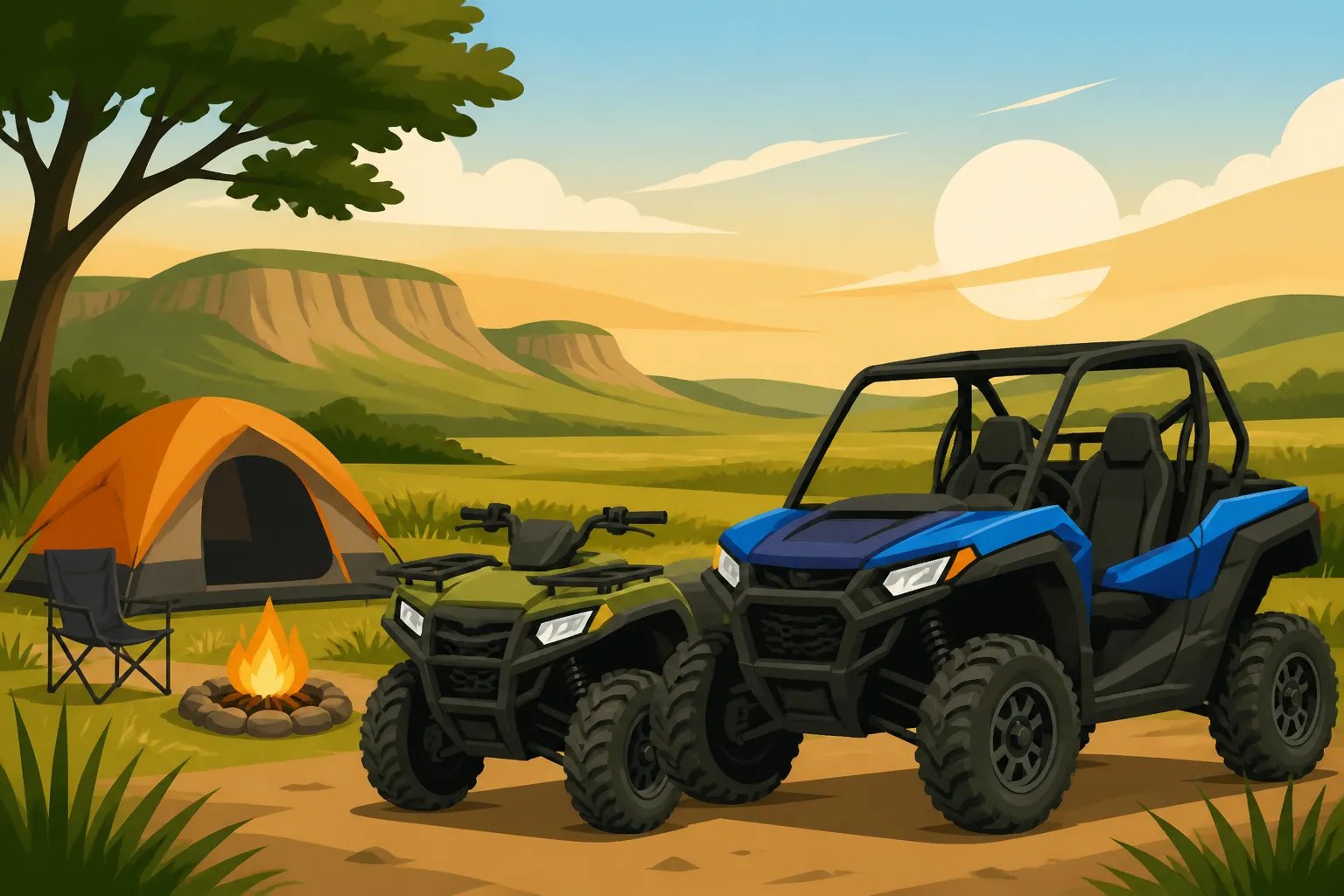
A developed campground is the easiest place to start if you want marked sites or access to facilities. The campground’s own signs and posted instructions are the first things to check: they may explain where to park, how to use fire rings, whether toilets or water are available, and whether a fee or reservation applies. Amenities and operating arrangements vary by location, so do not assume that one grassland campground works like another.
Dispersed camping is camping outside a developed campground, where permitted. It can offer more privacy, but you need to be more self-sufficient and careful about where you stop. A broad, flat-looking patch beside a road may be private land, a sensitive area, or a place where camping is not allowed. Use official land and access information rather than treating an unmarked pullout as permission to camp.
For a first trip, a developed site can make the logistics simpler: you have a defined place to park and can focus on learning the area. Dispersed camping takes more homework. Before you set out, identify the land manager, confirm that overnight camping is allowed at your intended spot, and check whether local notices have changed access or fire conditions.
Treat grassland roads as access, not automatic campsites
A road that appears quiet on a map is not necessarily a legal place to camp, and a road that reaches a scenic overlook may not have room for a trailer or a safe turnaround. Keep vehicles out of vegetation and away from routes where they could block traffic, gates, or emergency access. Avoid making a new campsite by driving across the prairie to reach a preferred view.
Grassland road riding and camping are related, but they are not the same permission. A road may be open to vehicle travel while the surrounding ground remains closed to cross-country driving. Read the designated route information and follow signs on the ground. [North Dakota Cross-Country Travel Is Banned] is a useful reminder that open-looking terrain does not automatically mean open vehicle access.
If you are planning to ride from camp, check the route before unloading. Some campsites may be near a legal road without having a designated OHV trail directly connected to them. [Roads, Not Trails, on the Dakota Prairie Grasslands] explains why a grassland road network should not be mistaken for a purpose-built trail system.
Check Access Before You Bring the Trailer
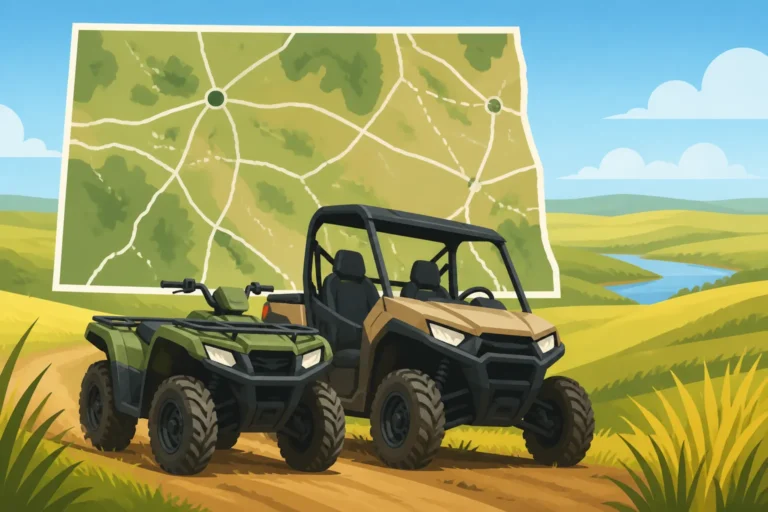
Use the official map and read it carefully
A Motor Vehicle Use Map, often called an MVUM, helps show which roads or routes are designated for motor vehicle use. Check the map for the specific grassland and area you plan to visit, and look for seasonal restrictions or other route notes. A line on a general-purpose navigation map may show a road without telling you whether it is open to the type of vehicle you intend to use.
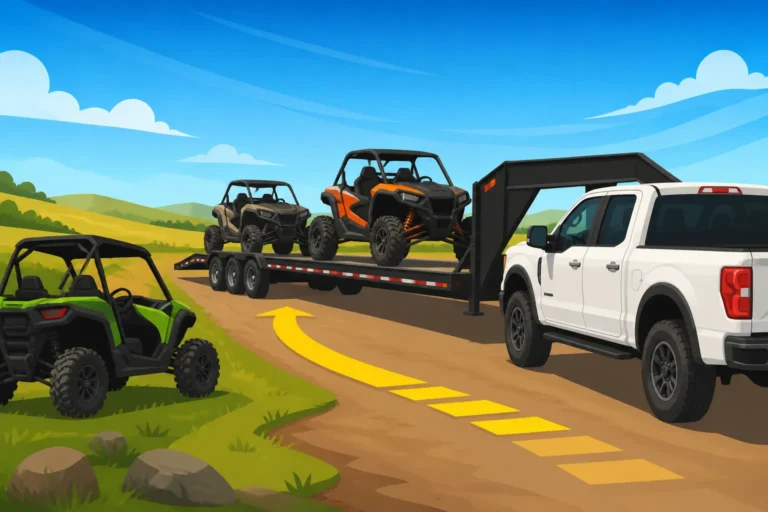
Map details matter when you are hauling a camper or trailer. A narrow road, steep approach, tight turn, or limited turnaround can become a stressful problem once you are committed to it. Review the route from the highway to the campsite, including the last few miles, and think about whether your towing setup can safely manage the surface and geometry.
Apps such as onX Offroad can be useful for route planning and for keeping track of your position, but treat any app as a planning aid rather than the final authority on access. Compare what you see in the app with the official MVUM and current signs. For more on that step, see [North Dakota Grassland Motor Vehicle Use Maps] and [Reading a Grassland Vehicle Use Map].
Confirm access on the ground and leave room for changes
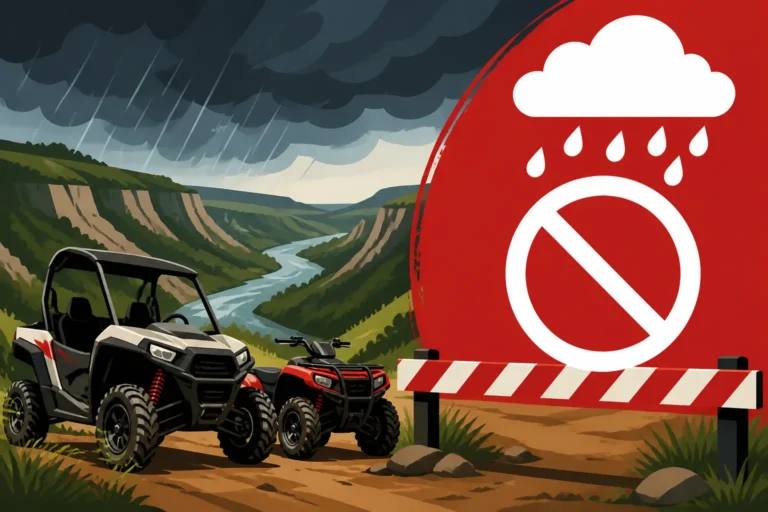
Road conditions across North Dakota grasslands can shift with rain, snow, washouts, maintenance, and seasonal restrictions. A route that was passable on a dry weekend may become muddy or rutted after a storm. Do not assume that a familiar route is still open or suitable simply because you have driven it before.
Check notices from the land manager before leaving and pay attention to signs at junctions and gates. If a road is closed, blocked, or marked for a different use, do not route around the restriction by cutting across grassland. When conditions are uncertain, choose a more accessible campground rather than risking damage to the road or getting a loaded vehicle stuck.
Leave yourself a fallback plan. Save the location of another suitable campground or a place to turn around before you reach a narrow route. Keep a paper map or offline map available in case your phone has no service. onX Offroad may help you follow your planned route, but downloading map information ahead of time is important if you expect to ride or camp in a cellular dead zone.
| Before you go | What to check | Why it matters |
|---|---|---|
| Choose a campsite | Developed campground rules or dispersed camping permission | A convenient-looking spot may not be open for overnight use |
| Plan the drive | Official MVUM, road signs, and current access notices | General map lines do not always show vehicle-use restrictions |
| Bring an OHV | Registration or permit requirements and route access | Camping permission does not automatically authorize riding |
| Prepare for weather | Road conditions, fire notices, and a backup plan | Prairie weather can change access and safety quickly |
| Pack for self-sufficiency | Water, waste supplies, offline maps, and recovery gear | Services and cell coverage may be limited |
Keep ATV and UTV Riding Separate From Campground Rules
Camping nearby does not grant trail access
One of the most common planning mistakes is assuming that because you are camping on public land, you can ride anywhere around the campsite. Your right to stay overnight and your permission to operate an OHV are separate questions. Check that the route is open to your machine and that your machine meets the applicable requirements before riding.
North Dakota’s grassland areas can include designated roads, closed routes, non-motorized areas, and private parcels. Stay on routes open to your vehicle type, and do not use a grassland road as an excuse to drive across a field or around a closure. [North Dakota Grassland Road Riding] offers more context on how to approach road-based riding in these areas.
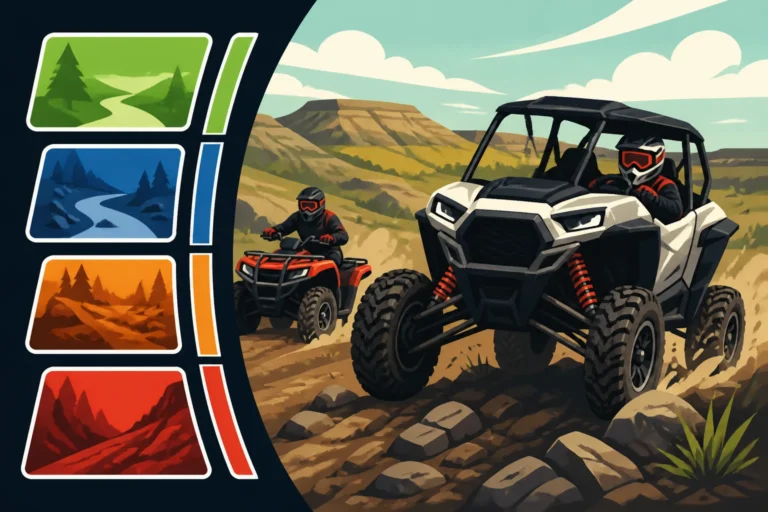
Also distinguish between a road that can be driven and a route suitable for your particular machine. Width, surface, weather, and traffic all matter. A larger side-by-side may have different practical limitations from a small ATV, and a narrow road can feel especially tight when you meet another vehicle or need to turn around. Review route information before unloading rather than discovering a restriction after the ride has started.
Check registration, permits, and rider requirements
A weekend trip can cross several different rule sets: campground requirements, land-manager access rules, and North Dakota OHV requirements. Check which registration, decal, or permit applies to your situation, including whether you are a resident or visitor. A campsite pass or state park entrance permit is not necessarily an OHV registration or riding permit.
If you are bringing a machine from another state, do not assume its home-state paperwork automatically covers every North Dakota ride. Review [North Dakota's Non-Resident OHV Permit] and [North Dakota Has No Reciprocity With Any State] before traveling. The relevant requirement can depend on the machine, where it is registered, where you plan to ride, and how long it will be in the state.
Riders in a group should check age and safety requirements as well as vehicle paperwork. A parent may be organizing the trip, but each rider still needs to understand where they are allowed to ride and what safety rules apply. Carry required documentation in an accessible place, and do not wait until an encounter with an officer to find out that it is buried in a packed trailer.
Camp Responsibly in Prairie and Badland Country
Fires need extra attention
Fire rules can change with local conditions. Before lighting a campfire, check for current restrictions and follow the instructions at your campground or campsite. A fire ring does not guarantee that fires are allowed during a restriction, and the absence of a posted warning at your site does not mean conditions are safe. [North Dakota Fire Restrictions in Dry Years] is a useful topic to review when planning a trip in dry weather.
If fires are allowed, use an established ring where provided and keep the fire manageable. Do not leave it unattended, and make sure it is fully out before you go to sleep or leave camp. Prairie wind can push embers farther than expected, so avoid starting a fire when conditions make it difficult to control. Bring a way to extinguish it and keep it within reach.
Do not gather wood from places where collection is restricted or damage live trees and shrubs for fuel. Check local guidance on firewood and use the option permitted for that location. If restrictions are unclear, skip the fire and use a camp stove only where its use is allowed. A no-fire evening is inconvenient; a wildfire can put people, property, and grassland habitat at risk.
Keep the campsite clean and protect the ground
Pack out the trash you bring in, including food scraps and small items that are easy to overlook. Leaving scraps behind can attract wildlife and make a campsite unpleasant for the next visitor. Keep food and scented supplies secured, and do not leave them outside while you are away riding.
Use toilets where provided and follow posted directions for restroom or waste facilities. If a site has no facilities, plan ahead for handling human waste according to land-manager guidance. Never dump wastewater, fuel, oil, or other liquids on the ground. A prairie campsite may look rugged, but it is still a shared place where careless disposal can affect other visitors and the land.
Avoid driving over vegetation or creating new tire tracks around camp. Repeated shortcuts can widen a disturbed area and leave ruts that collect water or become difficult to repair. Keep vehicles in designated parking or established disturbed areas, and leave the site as close as possible to how you found it. [North Dakota Trails Closed by Wet Weather] is relevant when rain makes both riding and campsite access damaging.
Make the Trip Safer and Easier to Manage
Plan for weather, limited services, and weak cell coverage
North Dakota’s open country can feel exposed, especially when wind, rain, heat, or blowing snow arrives. Check the forecast before leaving and be prepared for conditions that are less comfortable than they looked at home. Keep extra drinking water, warm or weatherproof layers, a first-aid kit, and basic repair supplies in a place you can reach without unpacking the entire vehicle.
Do not count on having reliable cellular service at every campground or riding area. Download maps before you leave service, tell someone where you are going, and agree on a check-in plan if you are traveling with a group. If a machine breaks down or weather turns poor, knowing the nearest road junction and campground can save time and reduce the temptation to take an unauthorized shortcut.
Fuel planning matters too. Some rural routes have long gaps between services, and a trailer or loaded side-by-side can use more fuel than expected. Start with a realistic range for your machine, account for detours and idling, and avoid building a plan around a fuel stop you have not confirmed. For remote riding, [Fuel Range Between Small Towns] and [Cell Dead Zones in the Badlands] cover two practical details worth considering.
Manage gates, livestock, and other visitors carefully
Grassland roads may pass through working landscapes. If you encounter a gate, follow its posted instructions and leave it in the position you found it unless a sign says otherwise. A gate left open can allow livestock to move into an area where they do not belong, while a gate closed behind you can be important to the landowner’s operation. [Gates on a Grassland Road] and [Cattle Guards and Open Range] explain why these small details matter.
Slow down around livestock, other vehicles, hikers, and horseback riders. Dust can reduce visibility for people behind you, and noise can carry a long way across open country. Give others room to pass, avoid unnecessary revving near campsites, and do not assume that a quiet road will stay empty around a blind rise or bend.
Groups should agree on a simple plan before leaving camp: who leads, who sweeps, where the group will stop, and what to do if someone becomes separated. Keep the group together at junctions and do not leave a slower rider to navigate alone. Before the trip, review [North Dakota Trail Etiquette Locals Expect] and [North Dakota Trailhead Parking Limits] to help avoid preventable conflicts at busy access points.
A simple pre-departure checklist
A little preparation prevents many of the most frustrating campground problems: arriving after dark and discovering the access road is unsuitable, finding a closure where your ride was supposed to begin, or realizing you do not have what you need to camp without services. Before leaving, work through this list:
- Choose a developed campground or verify that dispersed camping is allowed at your intended location.
- Check the campground’s posted rules, access conditions, facilities, and any reservation or payment instructions.
- Review the official MVUM and confirm that your intended road or route is open to your vehicle.
- Check North Dakota OHV registration or permit requirements for your machine and rider.
- Look for road closures, weather concerns, and current fire restrictions.
- Download maps and save a backup campsite or turnaround point.
- Pack water, waste supplies, recovery equipment, first aid, and appropriate clothing.
- Tell someone your plan and expected return time.
Once you arrive, take a moment to read the signs again. The final approach may have a closure or instruction that is not obvious on a map. If your intended site or route is unavailable, use your backup plan instead of improvising across grassland or parking in a way that blocks others.
Disclaimer
This article is for general informational purposes only and does not constitute professional advice. Laws, prices and regulations vary by location and change over time. Consult a qualified professional for guidance on your specific situation.