North Dakota Excludes Electric Bicycles
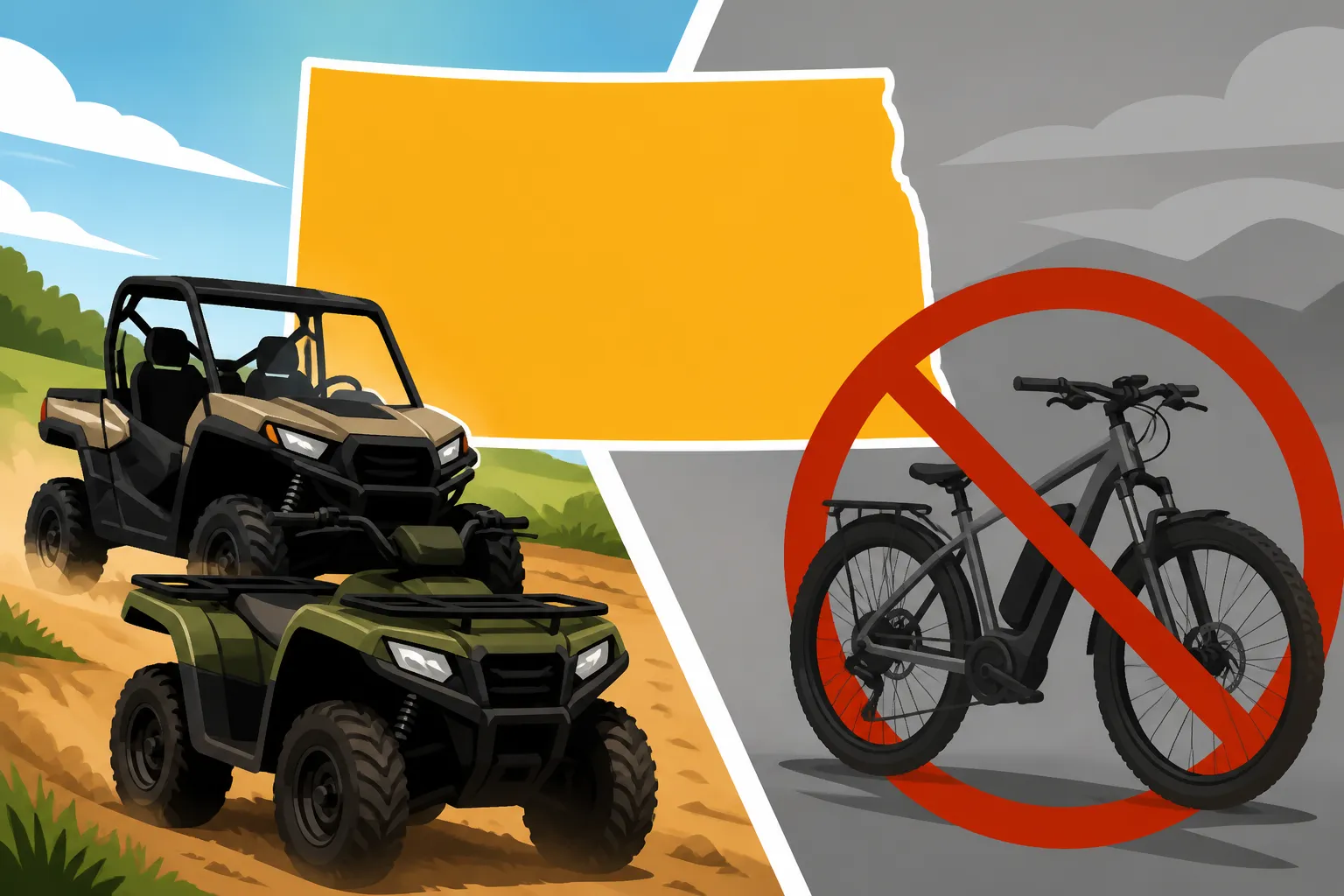
It can be incredibly confusing when you're trying to understand North Dakota's rules for off-highway vehicles, especially when new types of machines like electric bicycles blur the lines. Many riders buy an e-bike, thinking it's just another form of off-road fun, and then wonder if they need to register it, get a title, or follow the same laws as an ATV or UTV. This guide is here to clear up that confusion, explaining precisely why North Dakota law specifically excludes electric bicycles from its definition of an off-highway vehicle (OHV) and what that means for you as an owner.
Understanding North Dakota's OHV Definition: What Is an OHV Here?
North Dakota has a pretty specific way of classifying what it considers an Off-Highway Vehicle, or OHV, and it's important to get this straight right from the start. When the state talks about OHVs, it's generally referring to those powerful machines designed for conquering rough terrain – the ones that require registration, titling, and adhere to a particular set of rules. This definition is the bedrock for all the laws that follow, from where you can ride to what kind of safety gear you might need.
It's easy to assume that if a vehicle has a motor and goes off-road, it must be an OHV. However, North Dakota's statutes draw a very fine line, often focusing on the primary design, power source, and intended use. This distinction is crucial because it dictates a completely different set of legal obligations for owners. If your machine falls within the OHV definition, you're looking at things like [North Dakota's Two-Year OHV Registration] and specific equipment requirements. If it doesn't, you're exempt from those particular burdens, but you'll have a whole other set of considerations to keep in mind.
Defining Class I, II, and III Machines
When the state talks about OHVs, it breaks them down into three main classes, each with its own characteristics and sometimes specific restrictions. These are the machines that are absolutely central to the OHV world in North Dakota, and they are what most people think of when they picture off-road riding.
Class I machines are your traditional all-terrain vehicles (ATVs). Think of a quad with a straddle seat, typically designed for one or two riders, and handlebars for steering. These are often used for recreation, hunting, or light work around the property. They're built for agility and navigating diverse landscapes, from prairie trails to wooded areas. For a more detailed look, check out [North Dakota Class I Machines Defined].
Class II machines are generally side-by-sides (SxSs) or utility terrain vehicles (UTVs). These are characterized by a non-straddle seat (like a car seat), a steering wheel, and often more robust cargo capacity. They're wider, heavier, and can carry more passengers, making them popular for work applications, touring, and family adventures. [North Dakota Class II Width and Weight Limits] will give you the full scoop on what qualifies.
Class III machines are your off-highway motorcycles, or dirt bikes. These are two-wheeled vehicles with internal combustion engines, designed exclusively for off-road use. They're built for speed and maneuverability on dirt tracks and trails, distinct from street-legal motorcycles. You can learn more about these agile machines and their classifications in [North Dakota Class III Machines Under 8,000 Pounds]. The common thread for all these classes is that they are considered motor vehicles primarily designed for off-road operation, and they almost universally use internal combustion engines.
The Legal Specificity of "Motor Vehicle"
The term "motor vehicle" might seem broad, but in the context of North Dakota's OHV laws, it carries a very precise meaning that is essential for understanding why electric bicycles are treated differently. The state's definition of an OHV explicitly mentions that it must be a "motor vehicle" that is "not designed for travel on the ground on snow or ice." This is a key exclusion because it immediately differentiates OHVs from snowmobiles, which have their own distinct set of regulations.
More critically, for our discussion about e-bikes, the underlying definition of a "motor vehicle" in North Dakota statute often centers on vehicles primarily propelled by internal combustion engines or those designed for highway use. While an e-bike does have a motor, the legal framework often defaults to classifying them based on their fundamental design as bicycles, augmented by electric power. This means that even with a motor, an electric bicycle doesn't automatically get lumped into the same category as a gas-powered ATV or UTV. The distinction is about the legislature's intent and specific wording, which carefully carves out different vehicle types for different regulatory schemes. This careful wording directly impacts why you won't find yourself needing to consult forms like [North Dakota Form SFN 2872 Explained] for an electric bicycle.
Why Electric Bicycles Don't Fit the OHV Mold: The Key Distinctions
So, if electric bicycles have motors and can go off-road, why aren't they considered OHVs in North Dakota? It really comes down to how the state defines and classifies different types of vehicles. The legislative intent behind OHV laws was to regulate traditional gas-powered machines, and e-bikes simply don't align with those established parameters. This distinction isn't just a legal technicality; it reflects fundamental differences in design, power, and often, intended use, even if the user occasionally takes their e-bike onto a dirt path.
This situation can be a bit frustrating for riders who see their powerful e-bikes as capable of much of what a small dirt bike can do. You might feel like you're navigating a bureaucratic maze, but understanding these distinctions is key to staying on the right side of the law. Ultimately, North Dakota chose to treat electric bicycles more like traditional pedal bicycles with an assist, rather than full-fledged off-highway motor vehicles.
Power Source and Pedal-Assist
One of the primary reasons electric bicycles are excluded from North Dakota's OHV definition is their power source and the inherent concept of "pedal-assist." North Dakota's OHV laws, in their core definitions, are built around machines propelled by an "internal combustion engine." While an electric bicycle certainly has a motor, it's an electric motor, powered by a battery, not gasoline combustion. This difference in power generation is a significant legal dividing line.
Furthermore, many e-bikes, especially the more common classes, operate on a pedal-assist system. This means the electric motor assists the rider's pedaling, rather than purely propelling the vehicle independently like a dirt bike or ATV engine. Even throttle-assist e-bikes are generally still designed with pedals and the expectation that they function primarily as bicycles, just with an added boost. This dual nature – still fundamentally a bicycle but with electric assistance – places them outside the established framework for gas-guzzling OHVs. This legal nuance is precisely what's behind [Why North Dakota Excludes E-Bikes From the OHV Definition].
The "Bicycle" Designator
Despite their motors and often rugged frames, North Dakota's legal framework maintains that an electric bicycle is, fundamentally, still a bicycle. This designation is crucial. A "bicycle" is typically understood as a device propelled solely by human power, and while e-bikes add an electric motor, the legislature has chosen to group them with their pedal-powered cousins. This means they are generally subject to bicycle laws rather than the more stringent regulations applied to OHVs.
This can be confusing, as some modern e-bikes are incredibly powerful and can reach speeds comparable to low-displacement motorcycles. However, the legal definition looks at the core design and the presence of pedals as defining characteristics. Because they retain these "bicycle" features, they avoid the requirements for [Titling an ATV in North Dakota] or needing a specialized OHV registration. It’s a bit of a legislative loophole or a deliberate policy choice, depending on how you look at it, but it shapes how and where you can legally ride your e-bike across the state.
Weight and Speed Limits
While not explicitly the sole reason for exclusion, the typical weight and speed characteristics of electric bicycles also play a role in distinguishing them from traditional OHVs. Most e-bikes, even the heavier ones, generally fall well below the average weight of a Class I ATV or a Class III dirt bike. They are designed to be lighter and more agile, fitting closer to bicycle infrastructure.
When it comes to speed, many e-bikes are legally limited in their top assisted speed, often to 20 or 28 miles per hour, depending on the class. While some can be modified or are designed to go faster, the general regulatory approach for e-bikes acknowledges these speed limitations, which contrast sharply with the often much higher speeds and capabilities of ATVs and UTVs. For instance, a Class III machine like a dirt bike is built for performance and speed far beyond what most e-bikes are designed or legally allowed to achieve on public pathways. This difference in engineered capability and legal restrictions further cements their separate classification, meaning you won't be paying [North Dakota Excise Tax on an ATV Purchase] for your e-bike.
Implications for Electric Bicycle Owners in North Dakota: What This Means for You
As an owner of an electric bicycle in North Dakota, the fact that your machine isn't classified as an OHV has some very significant implications. It means you're operating under a different set of rules and expectations than someone with an ATV or UTV. This can be a relief in some ways, as it sidesteps many of the administrative hurdles that traditional OHV owners face, but it also brings its own unique considerations, especially regarding where you can and cannot ride.
It's tempting to think that "not an OHV" means "anything goes," but that's a dangerous assumption. While you might avoid one set of regulations, you're still bound by others. Understanding these distinctions is crucial for responsible ownership and enjoying your e-bike without unexpected legal hassles or fines. You're essentially navigating a middle ground between traditional bicycles and motorized vehicles, which requires a nuanced understanding of state and local laws.
No OHV Registration or Titling Required
This is perhaps the biggest and most immediate implication for electric bicycle owners in North Dakota: you do not need to register your e-bike as an OHV, nor do you need to obtain an OHV title for it. This is a huge relief for many, as it eliminates the recurring fees, paperwork, and trips to the motor vehicle branch that ATV and UTV owners routinely undertake. You won't have to worry about the [North Dakota Registration Exemptions Explained] because your machine isn't even in the category that requires registration in the first place.
This exemption from registration and titling also means you won't be dealing with things like [North Dakota OHV Plate or Decal: Your Choice], nor will you be subject to the initial [North Dakota Title Fee of $5] or the [North Dakota Charges $5 Registration Plus $15 Trail Tax] that other off-road enthusiasts pay. It simplifies the ownership process considerably, as you can purchase your e-bike and generally ride it without the state tracking its ownership or demanding regular renewals. This is where you can clearly see the legislative intent to keep e-bikes separate from the typical OHV classification and its associated bureaucracy.
Road and Trail Access
While the lack of OHV registration is a perk, the question of where you can actually ride your electric bicycle in North Dakota becomes more complex. Since e-bikes are legally considered a form of bicycle, they generally follow bicycle laws regarding road access. This means they are often permitted on paved and unpaved roads, bike paths, and multi-use trails where traditional bicycles are allowed.
However, this doesn't automatically grant them access to all OHV trails or areas explicitly designated for motor vehicles. In fact, many dedicated OHV trails, such as those within [North Dakota OHV Trails: All Four Riding Areas], may have their own specific rules regarding motorized vehicles, which might exclude e-bikes even if they are not considered full OHVs. Conversely, you might find that certain areas, like national grasslands, have specific motor vehicle use maps that could delineate where any motorized travel, including e-bikes, is permitted or restricted. It's vital to check local ordinances and specific trail rules, as these can vary significantly. For example, while some state parks might welcome e-bikes on bicycle paths, they might strictly prohibit them on other, more sensitive trails.
Safety Gear and Age Restrictions
Another critical difference for electric bicycle riders compared to OHV operators in North Dakota concerns safety gear and age restrictions. For OHVs, particularly for younger riders, there are often specific helmet laws and minimum age requirements for operation. For example, [North Dakota Helmet Law for Riders Under 18] applies to OHV operators, but e-bike riders are usually subject to bicycle helmet laws, which may differ.
Generally, North Dakota's laws for e-bikes tend to align more with those for traditional bicycles. This means there might not be a statewide minimum age to operate an e-bike, though local ordinances or manufacturer recommendations might exist. Similarly, while wearing a helmet on an e-bike is always a good idea for safety, it might not be legally mandated for adults in the same way it would be for a 15-year-old on an ATV. It's always prudent to wear appropriate safety gear, including a helmet, regardless of the legal mandate, but understanding the legal distinctions helps you know what's required and what's strongly recommended. You won't be asked for a [North Dakota OHV Safety Certificates at Age 12] for your e-bike, for instance.
Comparing E-Bikes to Other Excluded Machines: More Clarity on Exceptions
The exclusion of electric bicycles from North Dakota's OHV definition isn't an isolated incident. The state's laws also carve out exceptions for other types of machines that, at first glance, might seem like they belong in the OHV category but are legally treated differently due to their primary purpose or design. Understanding these other exclusions helps to solidify why e-bikes are also given their own unique status, highlighting the very specific nature of what North Dakota considers an OHV.
This helps reinforce the idea that the state isn't just randomly picking and choosing; there's a rationale, however intricate, behind how different vehicles are regulated. It's about recognizing primary function and intended legal categories. For instance, agricultural machines, despite their off-road capability, have a completely different regulatory framework than recreational OHVs.
Farm Equipment and Track Racing
North Dakota law makes specific allowances for certain types of vehicles based on their function, even if they possess characteristics that could otherwise define them as OHVs. For example, machines used exclusively for agricultural purposes on private land, or for short distances on public roads to move between fields, are often exempt from standard OHV registration and titling requirements. A farmer might use a UTV for daily chores, but its primary "farm use" designation keeps it out of the recreational OHV category for paperwork purposes. This is covered in [North Dakota's Exemption for Machines Used on Private Land].
Similarly, machines used exclusively for organized track racing on a closed course are also typically exempt from OHV registration. These vehicles, while powerful and definitely off-highway, operate in a controlled environment under event-specific rules, which negates the need for state registration designed for general public use. This [North Dakota Track Racing Exemption] ensures that competitive motorsports can thrive without being burdened by regulations intended for trail riding. These exemptions highlight that North Dakota's OHV laws are designed to regulate recreational off-highway use on public lands, not all possible scenarios involving off-road capable vehicles.
Federal vs. State Classifications
Another layer of complexity comes from the interplay between federal and state classifications. While North Dakota has its own specific definitions for OHVs and bicycles, federal agencies, particularly those managing public lands (like the Bureau of Land Management or the U.S. Forest Service), may have their own classification systems for electric bicycles, often dividing them into Class 1, 2, or 3 e-bikes based on speed and pedal-assist versus throttle operation.
These federal classifications often dictate where e-bikes are allowed on federal lands, sometimes even differentiating between the classes. For example, a federal park might permit Class 1 e-bikes on all trails open to bicycles, but restrict Class 2 or 3 e-bikes to motorized trails only. It's crucial for riders to understand that North Dakota's state-level exclusion of e-bikes from the OHV definition doesn't automatically override federal land management rules. When you're riding on federal property, you need to be aware of the federal agency's specific policies for e-bikes, which can be more restrictive or different than state law. This often involves checking signage or agency websites for particular areas, as seen when researching areas like [North Dakota Grassland Roads Open to OHVs].
What to Know Before You Ride Your E-Bike: Practical Advice
So, you've got your electric bicycle, and you understand it's not an OHV in North Dakota. That's a great start! But before you hit the trails or cruise the backroads, there are still some crucial practicalities to consider. Being exempt from OHV registration doesn't mean you're exempt from all rules, common sense, or the need for personal responsibility. In fact, in some ways, it can make it even more important to be informed, because you're navigating a less clearly defined space.
The landscape of e-bike regulation is still evolving, and local communities, landowners, and even specific trail systems might have their own nuanced rules. A little bit of proactive research and common sense can save you a lot of headaches, ensure your safety, and help preserve access for all riders. Remember, being a responsible rider helps everyone.
Local Ordinances and Posted Land
While state law might not classify your e-bike as an OHV, local jurisdictions – meaning counties, cities, and even townships – can have their own ordinances regarding where and how electric bicycles can be operated. A city might have rules about e-bike speed limits on bike paths, or completely restrict them from sidewalks. A county might prohibit all motorized vehicles (including e-bikes) on certain gravel roads or paths not specifically designated for them. This is a common point of confusion, as state law doesn't always dictate every local rule. For general guidance on motorized access, you might look at [North Dakota City Ordinances on OHV Riding] as a reference, though e-bikes are usually not considered OHVs.
Beyond official ordinances, there's the crucial matter of private property. Just like with traditional OHVs, you absolutely cannot ride your electric bicycle on private land without explicit permission from the landowner. [North Dakota Posted Land Rules for Riders] apply to everyone, regardless of what type of machine you're on. "No trespassing" means no trespassing, whether you're on a dirt bike or a pedal-assist e-bike. Always respect signs, fences, and landowner rights. If in doubt, ask for permission, or stick to clearly marked public trails where e-bikes are allowed.
Insurance and Liability Considerations
Even though you don't need OHV insurance to register your electric bicycle, that doesn't mean you shouldn't consider some form of coverage. Accidents happen, and if you're involved in a collision while riding your e-bike, especially one that causes injury to others or damage to property, you could be held financially liable. Most standard homeowner's or renter's insurance policies might offer some limited liability coverage for personal use of a bicycle, but the extent of coverage for a motorized electric bicycle can be ambiguous and often has strict exclusions for vehicles over a certain speed or power.
Consider reaching out to your insurance provider to clarify your coverage. You might find that a separate personal liability policy or an add-on to your existing policy is a wise investment. Some specialized insurance providers offer policies specifically for e-bikes that can cover theft, damage, and liability. Companies that help with legal forms, like LawDepot, can provide templates for liability waivers if you're ever lending your e-bike or participating in an organized event, helping you understand the legal landscape around personal responsibility. Knowing you're protected financially can give you significant peace of mind, especially as you explore new areas like those described in [North Dakota Ditch Riding as the Real Trail System].
Understanding the Future of E-Bike Legislation
The world of electric bicycles is relatively new compared to traditional OHVs, and legislation at both state and local levels is continually evolving. What might be allowed today could change tomorrow as technology advances, e-bike popularity grows, and communities grapple with how best to integrate these machines into existing recreational and transportation infrastructures. North Dakota, like many other states, may revisit its definitions and regulations for e-bikes in the future. We've seen significant legislative activity related to OHVs, such as [North Dakota Rules That Changed With HB 1346], which shows that laws are not static.
Staying informed is your best defense against unexpected rule changes. Keep an eye on local news, check official state and local government websites, and consider joining e-bike or cycling advocacy groups in North Dakota. These organizations often track legislative developments and can provide valuable insights and updates. The goal is to avoid finding yourself unintentionally breaking a new rule simply because you weren't aware of a change. The more informed you are, the better you can advocate for responsible e-bike use and enjoy your machine without worry. If you ever need to formalize agreements or permissions for e-bike use on certain properties, LawDepot can be a useful resource for drafting legal documents.
E-Bike vs. OHV in North Dakota: A Quick Comparison
To help clarify the distinctions we've discussed, here's a table summarizing the key differences between electric bicycles and Off-Highway Vehicles (OHVs) in North Dakota:
| Feature/Requirement | Electric Bicycle (E-Bike) | Off-Highway Vehicle (OHV) |
|---|---|---|
| Legal Classification | Generally considered a type of "bicycle" with electric assist. | "Motor vehicle" specifically designed for off-highway use. |
| Registration | Not required as an OHV. | Required (e.g., [North Dakota's Two-Year Registration Cycle]). |
| Titling | Not required. | Required (e.g., [Titling a Dirt Bike in North Dakota]). |
| Primary Power Source | Electric motor (battery-powered), often pedal-assist. | Internal combustion engine (gasoline-powered). |
| Steering/Seating | Handlebars, bicycle saddle. | Handlebars (ATV, dirt bike) or steering wheel (UTV). Straddle or non-straddle seats. |
| Helmet Law | Generally follows bicycle helmet laws (may vary by age/local). | [North Dakota Helmet Law for Riders Under 18] applies. |
| Trail Access | Typically allowed where bicycles are permitted; check local rules. | Restricted to designated OHV trails and legal ditch riding (e.g., Can You Ride an ATV in the Ditch in North Dakota?). |
| Insurance | Not state-mandated for operation; personal liability advised. | Liability insurance often required for road access or certain public lands. |
| Excise Tax | Generally subject to standard sales tax on purchase. | Subject to [North Dakota's 5 Percent Motor Vehicle Excise Tax]. |
This table provides a quick reference, but remember that specific nuances and local ordinances can always add further detail. Always verify the most current regulations for your particular riding area. For any personal legal document needs, resources like LawDepot can offer assistance.
Disclaimer
This article is for general informational purposes only and does not constitute professional advice. Laws, prices and regulations vary by location and change over time. Consult a qualified professional for guidance on your specific situation.