North Dakota State Park Entrance Permits
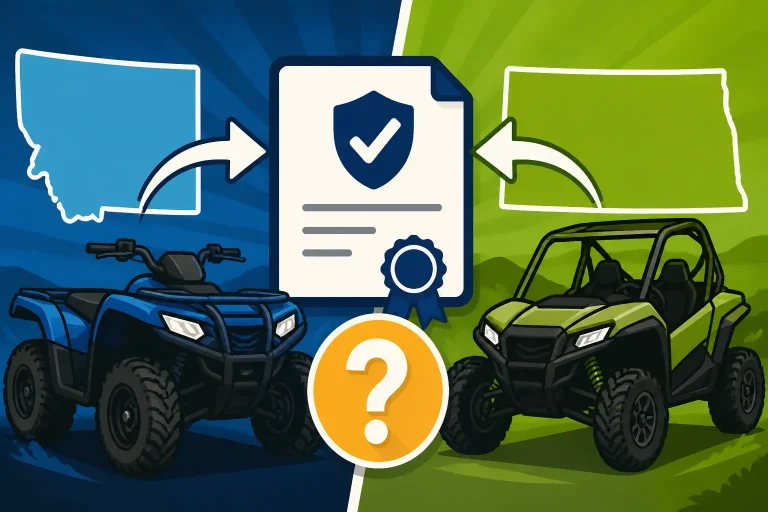
A common North Dakota trip-planning snag is assuming an ATV registration or visitor permit also covers a state park entrance. It doesn’t: park entrance permits and off-highway vehicle credentials serve different purposes, and neither automatically opens park roads or trails to riding. This guide explains what each permit does, when you may need one, and how to avoid a frustrating surprise at the entrance.
What a North Dakota State Park Entrance Permit Covers
It is for entering a state park by vehicle
A North Dakota state park entrance permit is associated with access to a state park by vehicle. It is not the same document as an OHV registration, an OHV trail tax, or a non-resident OHV permit. Think of the park entrance permit as addressing one question: whether the vehicle entering the park has the required entrance authorization.
That distinction matters when you haul an ATV or UTV to a park. The tow vehicle may need an entrance permit to enter the park, while the OHV may separately need its own registration or visitor credential to be used where OHV riding is allowed. A permit for one vehicle should not be assumed to cover every vehicle in the party.
For example, imagine you drive a pickup to a state park with a trailer carrying a registered side-by-side. The pickup’s park entrance requirement and the side-by-side’s registration status are separate issues. Having a valid registration decal on the UTV does not necessarily settle the entrance requirement for the pickup, and a park permit does not replace the UTV’s registration.
Before leaving home, identify which vehicles will enter the park and what each is doing there. A tow vehicle, a second family car, and an OHV can all raise different questions. If you are unsure what credential applies to a particular vehicle, check the North Dakota Parks and Recreation Department’s current state park entrance permit information before the trip.
It does not grant permission to ride an OHV around the park
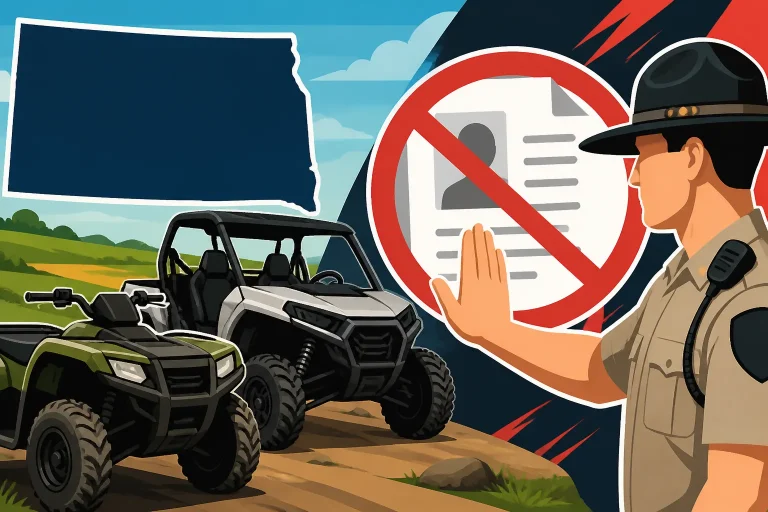
A paid entrance permit is not an invitation to ride wherever a vehicle can physically travel. State park boundaries include campgrounds, roads, parking areas, trails, beaches, and other managed spaces, and each area can have its own rules. OHV operation is not automatically allowed throughout a park just because the rider has paid an entrance fee.
This can be confusing for visitors who see a wide gravel road and assume it is open to a quad or UTV. The surface alone does not tell you whether an OHV may use it. Look for signs and posted rules, and ask park staff if the route or area is unclear. Riding onto a closed road can create a safety problem and damage park resources, even when the rider’s machine is properly registered.
The simplest mental model is to treat entrance access and riding access as two separate checks. First, confirm that each vehicle meets the park’s entrance requirements. Then confirm that the specific route or riding area is open to that machine. For broader context on park boundaries and permitted activity, see North Dakota State Parks Closed to OHVs.
This distinction also applies when a park sits near an OHV trailhead or public riding area. Being parked at a state park does not mean the surrounding landscape is open to off-trail travel. Check the trail’s managing agency, the designated access route, and any local signs before unloading or starting the ride.
Entrance Permits, OHV Registration, and Visitor Permits
Three credentials can apply to one outing
A weekend ride can involve several kinds of authorization, which is why the terminology trips people up. A state park entrance permit relates to entering a state park by vehicle. North Dakota OHV registration or a non-resident permit relates to the machine’s legal status for OHV use under the applicable rules. Trail access depends on whether riding is allowed at the particular location.
Those credentials answer different questions. A park entrance permit does not register the ATV. An OHV registration does not pay a state park entrance fee. A visitor permit, where one is required, does not make every public trail or park road rideable. It is possible to have one credential and still need another.
| Credential | What it generally addresses | What it does not automatically provide |
|---|---|---|
| State park entrance permit | Vehicle entrance to a North Dakota state park | Permission to ride an OHV on closed or undesignated areas |
| North Dakota OHV registration | Registration requirements for a machine subject to state rules | State park entrance authorization for the tow vehicle |
| Non-resident OHV permit | Applicable requirements for an out-of-state machine or visitor | Blanket access to every park, trail, or public land |
| Trail or land access permission | Whether the route or ground is open to riding | Registration or park entrance authorization |
If you are travelling from outside North Dakota, review North Dakota’s Non-Resident OHV Permit and North Dakota Has No Reciprocity With Any State. A home-state sticker or registration may not settle every North Dakota requirement. Do not treat a state park entrance permit as a substitute for checking those rules.
It helps to list credentials by vehicle rather than by family member. Write down the pickup, trailer, ATV or UTV, and any additional passenger vehicle. Then note which ones will enter a state park, which ones will be operated as OHVs, and where each activity will take place. That small bit of planning can prevent a long, avoidable conversation at a gate or registration counter.
OHV credentials are separate from park vehicle permits
North Dakota OHVs have their own registration and permit rules, which can depend on factors such as the machine, ownership, residency, and intended use. The details are different from state park entrance requirements. If you are preparing a quad or side-by-side for the season, start with How to Register an ATV in North Dakota or Registering a Side-by-Side in North Dakota.
Out-of-state riders should be especially careful not to assume that registration from home automatically provides every authorization needed in North Dakota. The state’s visitor rules and permit requirements are separate questions from whether the driver has paid to enter a state park. A machine may meet one requirement and still need another before it is legally operated.
A useful example is a Minnesota family driving to a North Dakota park for a weekend. The family may need to consider the park entrance permit for the vehicle entering the park, the OHV rules that apply to the visiting machine, and whether their planned riding location is open to that machine. Solving only the entrance-permit question leaves the other two unsettled.
The same applies to residents who own more than one machine. A park permit tied to a vehicle should not be assumed to cover an OHV, and an OHV registration should not be treated as a general-purpose park pass. Keep the relevant documents accessible, and check details for each vehicle rather than relying on a single receipt or decal to answer every question.
Choosing Between a Daily and Annual Park Permit
When a daily permit may be the practical choice
A daily state park entrance permit can suit a one-time visit, a short holiday, or a trip where you are not sure how often you will return. It keeps the decision simple: you address entrance access for that visit without buying an annual option before you know whether you will use it.
For instance, a family planning a single picnic and short hike near Lake Sakakawea may have no reason to assume they will visit several more parks that season. A visitor who is passing through North Dakota may also prefer to handle the entrance requirement for the day rather than plan around future trips that may never happen.
Daily permits can be a sensible fit when your plans are still flexible. Perhaps the weather forecast is uncertain, your group is deciding between two destinations, or you are combining a park visit with another activity. Confirm the applicable permit method for the park you intend to visit, especially if you expect to arrive outside normal staffed hours.
A daily permit is not necessarily the only cost associated with a day outdoors. Visitors may also need to account for camping, reservations, equipment, fuel, or other services, depending on the park and itinerary. Those items are separate from the entrance permit, so check the park’s information for the specific facilities you plan to use.
When an annual permit may make sense
An annual park permit may be worth considering for someone who expects to visit North Dakota state parks repeatedly. The value depends on how often you go, which vehicles are covered by the permit, and the rules for using or transferring it. Review the current terms rather than relying on a friend’s recollection of how their pass worked.
A resident who regularly spends weekends at different parks may prefer to take care of entrance authorization once rather than think about it at each visit. That convenience can be especially appealing when a trip is spontaneous: the family sees a clear Saturday forecast, loads the cooler, and heads toward a park without first having to decide whether the pass needs to be purchased.
An annual option can also be useful for people who take several kinds of trips. One month may mean camping at a lake; another may mean a day-use visit with relatives or a stop at a park on the way to a trail area. The permit may simplify park entrance planning, but it still does not eliminate the need to check park-specific restrictions or OHV rules.
The most important comparison is not just “daily versus annual.” Check whether the permit applies to the vehicle you will bring, whether it has display or proof-of-purchase instructions, and whether it covers the way your group plans to enter. For details on the annual option, see North Dakota Annual Park Permits at $35 and confirm current terms through the state park’s official information.
Buying, Carrying, and Showing the Permit
Check the purchase method before you leave
Do not assume every park entrance has a staffed office open when you arrive. A late arrival, a busy holiday weekend, or an early-morning start can mean you need to understand how the park handles entrance permits before you pull in. Check the current instructions for the particular park, including whether you can buy a permit online, at a park office, or through another authorized method.
If you plan to buy online, complete the process early enough to resolve a login or payment issue before reaching the entrance. Save the receipt or confirmation where you can find it without searching through old email while other vehicles wait behind you. A screenshot can be useful when cell reception is weak, though you should follow the park’s stated instructions for proof of purchase.
If buying in person is your preference, check where the transaction can be completed and whether that location is open at your expected arrival time. This is a practical detail, not a fussy one: a family with a trailer, tired children, and a full weekend schedule does not want to discover that its planned payment point is unavailable.
Avoid relying on an old screenshot, an expired pass, or an informal understanding of what a previous visit required. The state’s fee schedule and permit procedures can change. Before setting out, confirm current purchase options and the official instructions for the park where you plan to enter.
Keep proof easy to find and follow display directions
Once you have a permit, follow the instructions for how it must be displayed or shown. The required method can depend on the type of permit and the park’s process. If the permit is associated with a vehicle, make sure the relevant vehicle is the one covered and that the proof is accessible when requested.
A simple travel routine helps: place the confirmation in a folder on your phone, keep a copy with the vehicle documents, and tell the driver where to find it. If the family is using two vehicles, make sure the driver of each knows which permit applies to their vehicle. That avoids the common last-minute scramble where one person has the email and the other person is at the entrance.
For a camping trip, keep park-permit proof separate from OHV paperwork. A clear folder or document pouch can hold the park confirmation, registration, insurance information, and any visitor permit without mixing them together. If you need a protective pouch or a basic document organizer, Amazon is one place shoppers may compare options; the permit itself should still be obtained through an authorized park channel.
Never assume that showing an OHV decal is enough to prove a state park entrance permit, or vice versa. If an employee or ranger asks to see documentation, provide the document that addresses the specific question. Keeping the paperwork sorted makes that interaction easier and reduces the chance of confusing a park entrance fee with a machine’s legal registration.
Planning an ATV or UTV Visit to a State Park
Confirm where the machine may be ridden
Before loading the trailer, identify the exact park or riding area and verify the rules for that location. Some riders plan around a park because it is near a trail, has a campground, or offers convenient parking. Those features do not establish that OHVs may be operated throughout the park itself.
Look for designated OHV areas, authorized trails, and posted routes. If you cannot find clear information, contact the park or land manager before riding. Ask a direct question: “Can this type of registered OHV use this specific route or area?” A precise question is more useful than asking generally whether “ATVs are allowed,” since rules can differ between the park and nearby land.
When a state park is part of a larger itinerary, note where the park ends and the ride area begins. A legal trail may be nearby without being part of the park. The route between the two may involve public roads, private property, or a closed park road. Do not assume you can ride from a campsite to a trailhead unless that connection is explicitly permitted.
For a broader look at the difference between entrance access and riding access, Park Entrance Versus Trail Access is a useful companion topic. If your trip includes a designated North Dakota OHV area, review its current trail rules, parking arrangements, and closures independently of the park entrance permit.
Treat parking, unloading, and trail access as separate steps
A successful trip often involves several small logistics decisions. You may need a legal place to park the truck and trailer, a permitted area to unload, and a designated place to begin riding. Even if the state park entrance permit is in order, those steps can still be governed by local signs and operating rules.
Before unloading, check whether the parking area is intended for trailers and whether the group can maneuver safely without blocking other visitors. Large trailers can be difficult to turn around in a crowded day-use area. If you are meeting friends, pick a clearly identified staging location and share the location with the group before anyone arrives.
Be mindful of other park users. Walkers, cyclists, families with small children, and people carrying fishing gear may be sharing nearby areas. Keep the machine off walkways and landscaped ground, and do not use a campground loop as an informal test track. Respecting boundaries helps protect the places riders rely on and avoids creating tension with visitors who are there for quieter activities.
If you carry riding gear, secure it before leaving the vehicle unattended. Helmets, gloves, goggles, and a basic repair kit should be organized so that unloading does not become a pile of loose gear in a busy parking area. Amazon may be useful for comparing replacement storage bags or small gear organizers, but choose products that suit your machine and riding needs rather than treating a shopping list as a substitute for checking park rules.
Common Permit Mistakes and How to Avoid Them
Mistaking a state park permit for an OHV permit
This is one of the easiest errors to make because both credentials are associated with the same outing. Someone buys a park permit, sees a receipt in the glove box, and assumes the quad is fully covered. But the permit may address only the vehicle entrance requirement, not the OHV’s registration or visitor obligations.
To prevent the mix-up, label your documents by purpose. Keep a “park entrance” confirmation with trip materials and a separate “OHV registration or permit” record with the machine paperwork. If you travel with multiple machines, note which credential corresponds to each one. The extra organization is particularly helpful when several adults share driving and unloading responsibilities.
A second mistake is assuming the OHV is allowed to ride inside any park because it is registered. Registration addresses the machine’s legal status; it does not override restrictions on a specific park road, trail, or facility. Confirm where the machine may operate, and obey signs even if another visitor tells you that riding is usually tolerated.
When in doubt, ask the agency responsible for the place you intend to use. A park employee can clarify park-specific access, while the agency responsible for OHV registration can address the machine’s paperwork. Asking the right office the right question is faster than trying to untangle the rules after reaching the entrance.
Assuming one permit covers every vehicle or every park
A family might arrive in two cars, with one vehicle carrying camping supplies and another towing a UTV. It is risky to assume that a single entrance permit covers every vehicle in the group. Read the permit terms carefully and make sure the vehicle covered by the permit matches the one entering the park.
Likewise, do not assume that a permit or procedure that worked at one park applies in exactly the same way at another. State park rules are set within a broader system, but individual facilities can have different entrance arrangements, operating hours, or instructions. Verify the information for the destination you are actually visiting.
If the trip includes more than one park, check the permit’s validity and conditions before deciding that one purchase will cover the entire itinerary. A permit may have a particular period of use, vehicle association, or display requirement. Do not infer those details from the word “annual” or “daily”; use the published terms.
For travelers who also plan to ride on other public land, separate the land-access question from the park entrance question. Federal grassland roads, state-managed riding areas, private land, and state parks can each have different rules. A valid entrance permit at one destination does not grant access to land managed by another agency.
A Simple Pre-Trip Checklist
Work through the questions in order
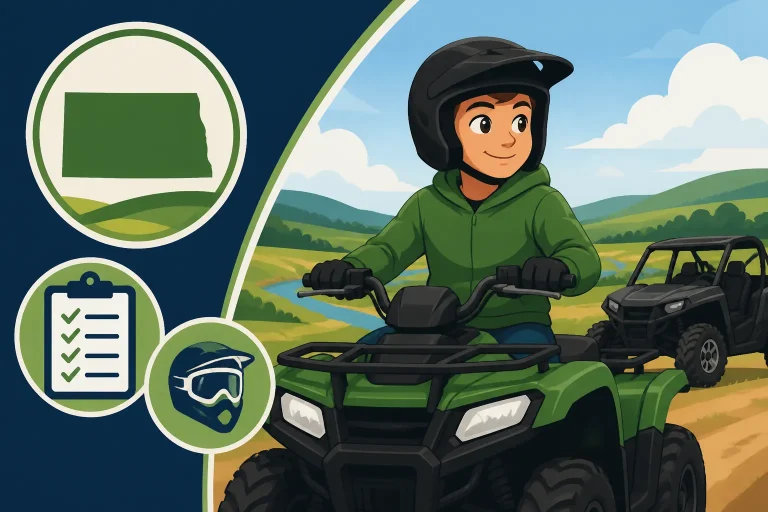
A short checklist is more reliable than trying to remember everything while loading. Start with the destination, then the vehicles, then the riding plan. This order helps you avoid paying for or carrying the wrong document while leaving another requirement unresolved.
- Name the destination. Write down the state park, campground, trailhead, or other location you intend to visit.
- List the vehicles entering the park. Include the tow vehicle, additional cars, and any other vehicle that will enter.
- Check the park entrance permit rules. Confirm the applicable permit type, purchase method, and proof or display instructions.
- Check the OHV paperwork. Confirm registration or visitor-permit requirements for each machine.
- Confirm riding access. Identify the exact authorized route or riding area and look for closures or restrictions.
- Plan parking and unloading. Confirm where a trailer can be parked and where unloading is permitted.
- Save the paperwork. Keep confirmation and machine documents easy to retrieve, including when cellular service is limited.
- Recheck before departure. Review current park notices and trail conditions, especially after storms or other disruptive weather.
This approach works whether you are a local making a spontaneous day trip or a visitor planning a longer stay. It also gives each adult in the group a clear role. One person can confirm entrance details, another can check the OHV rules, and the driver can verify the route and parking plan.
For visiting riders, add a residency check to the list. The rules for a North Dakota resident and a non-resident machine may differ, and an out-of-state registration does not necessarily resolve every North Dakota requirement. The related guide North Dakota Visitors Staying Over 30 Days can help frame that question when a trip is longer than a quick weekend visit.
Prepare for weather, connectivity, and changing plans
North Dakota weather can turn a straightforward day trip into a different kind of outing. Strong wind, rain, muddy ground, or a sudden temperature change may affect whether you want to ride, where you can park, and whether a trail is open. Check the park’s notices before leaving rather than relying on conditions from a previous visit.
Do not make a low-signal entrance or trailhead the first time you discover that your permit confirmation is buried in an email account. Save documents ahead of time and carry the information in a form you can access offline. A printed copy may be a useful backup when permitted by the park’s instructions, particularly for a group where not everyone has the same phone or account access.
If your plans change and you decide to visit another park, pause and check that destination’s entrance requirements. A detour may be easy in theory but can create a new permit question, especially if different vehicles enter or the group decides to camp instead of making a short day visit. Treat each destination as a fresh check rather than assuming the original plan covers the change.
A small amount of practical gear can reduce the stress of travel, but it should support—not replace—good planning. If you are comparing a phone mount, document pouch, or weather-resistant storage, Amazon is one possible place to look for product options. Check fit, durability, and suitability for your vehicle before buying, and keep the official permit and park information as the source for access rules.
Frequently Asked Questions
Is a state park entrance permit the same as an OHV registration?
No. A state park entrance permit relates to entering a state park by vehicle, while OHV registration or a visitor permit relates to the machine and its legal status for applicable OHV use. You may need to consider both if you are driving into a park and carrying or operating an ATV or UTV.
It also helps to keep the word “permit” in context. A park entrance permit does not automatically authorize riding on park roads, trails, or undeveloped ground. Check the specific park’s rules and use only designated routes where OHV operation is allowed.
Does a park entrance permit let me ride my ATV inside the park?
Not by itself. The permit addresses entrance, not blanket riding permission. State park areas can have different restrictions, and the fact that a machine can physically travel on a road or path does not mean that route is open to OHVs.
Check the park’s official information, follow posted signs, and ask staff if the route is unclear. If your plans involve a nearby trail, confirm that it is a designated riding area and identify the legal route between the park and trailhead.
Does a North Dakota resident need a state park entrance permit?
Visitors should check the park entrance rules for the particular location and vehicle. Do not assume that residency removes an entrance requirement, or that a state park permit is only relevant to visitors from outside North Dakota. The applicable permit and any exemptions should be confirmed through the state’s current park information.
Residents who regularly visit parks may want to compare the convenience of daily and annual options. The decision depends on expected use and the current permit terms, including which vehicle the permit covers.
Can an out-of-state OHV sticker replace a state park entrance permit?
No. An out-of-state machine’s registration or sticker and a park entrance permit address different requirements. The home-state credential may be relevant to whether the machine meets North Dakota OHV rules, but it does not automatically satisfy a state park’s vehicle entrance requirement.
Visitors should check both matters independently. Review the North Dakota visitor rules for the machine, then check the park entrance instructions for the vehicle entering the park. Also confirm where the OHV may legally be operated.
Should I buy a daily or annual park permit?
That depends on how often you expect to visit, which vehicles the permit covers, and the current conditions attached to each option. A daily permit may suit a single visit or a short trip. An annual option may be more convenient for frequent park users, but only if it fits their vehicle and plans.
Compare the current terms rather than relying on an old receipt or another rider’s experience. Consider how many vehicles will enter, whether you expect to visit multiple parks, and how easy it is to obtain or show the permit.
What should I do if I arrive and cannot find my permit confirmation?
Use the park’s posted instructions or contact park staff for guidance. Do not assume that an OHV registration decal, an old receipt, or a screenshot for another vehicle will serve as proof of the park entrance permit. If possible, save your confirmation offline before the trip and keep a backup with the vehicle documents.
A clear filing system prevents this problem in the first place. Keep the park entrance confirmation separate from the OHV registration and any visitor permit, and make sure the person driving knows where the relevant document is stored.
Disclaimer
This article is for general informational purposes only and does not constitute professional advice. Laws, prices and regulations vary by location and change over time. Consult a qualified professional for guidance on your specific situation.