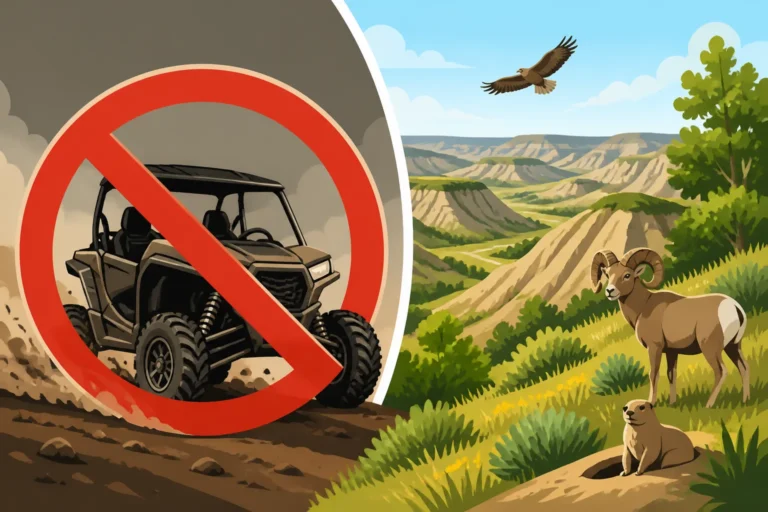
Bottineau as a Riding Base
Planning an ATV or UTV weekend around Bottineau can feel confusing: the town is a handy base, but it is not the same thing as a trailhead, and nearby riding options have their own access and seasonal details. This guide explains how to use Bottineau as a practical starting point, plan a Turtle Mountain ride, and sort out the checks that can save you a wasted drive.
Why Bottineau Works as a Riding Base
A small-town base near Turtle Mountain
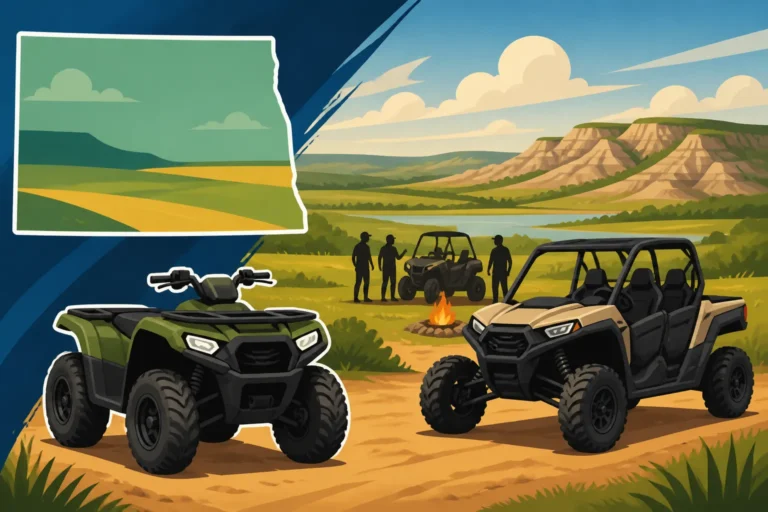
Bottineau is a useful place to organize a northeastern North Dakota riding trip because it puts you near Turtle Mountain and gives you a town to return to for meals, supplies, and overnight plans. That can be easier than trying to make a remote trailhead your whole base, especially if your group includes people who want to ride and people who would rather explore the area another way.
It helps to separate “staying in Bottineau” from “riding in Bottineau.” Your lodging may be in town, while your actual machine access is at a designated riding area outside it. Before unloading, confirm the specific legal access point and the route you intend to use. A machine being close to a road, public land, or a scenic area does not automatically mean you can ride there.
The nearby Turtle Mountain riding area is a natural focus for many visitors. If you are comparing it with other North Dakota destinations, start with Turtle Mountain Riding in North Dakota and check how its riding experience fits your machine, group, and plans. It is a different sort of trip from a long-distance trail journey: you will want to understand the riding area’s layout and access rather than assume you can roam between town and the mountain.
What Bottineau is and is not
Bottineau can make logistics simpler, but it is not a guarantee that every nearby road, trail, or parcel is open to motorized riding. That distinction matters in a region where public roads, managed recreation areas, private property, and non-motorized routes may sit close together. A line that looks rideable on a general map is not proof that it is a designated OHV route.
Use Bottineau as your place to plan, fuel up, meet your group, and handle the practical parts of a weekend. Treat the riding area itself as a separate destination with its own rules. Check the specific trailhead location, permitted vehicle types, posted width restrictions, parking arrangements, and any temporary closures before you leave town.
This is particularly helpful if your group is bringing both ATVs and side-by-sides. A route that suits a narrow quad may not suit a wider UTV, and a machine’s registration does not override a trail’s posted limits. For a broader look at how local trail characteristics affect vehicle choice, see North Dakota Trails With Width Limits.
Planning a Ride at Turtle Mountain
Confirm the trailhead and route before unloading
For a Turtle Mountain outing, identify the trailhead you plan to use before you start driving. The Sjule Road entrance is one important location to research; do not rely on a vague map pin or an old set of directions when hauling a trailer. Review Finding the Sjule Road Entrance to Turtle Mountain and make sure the directions match the access point you intend to reach.
Once there, take a few minutes to check signs and orient everyone. Agree on a meeting place, a turnaround plan, and what to do if a rider gets separated. These small steps can prevent the familiar “I thought we were taking the other fork” problem that turns a relaxed group ride into a search party. If your group has different experience levels, choose a route and pace that the least experienced rider can manage comfortably.
Turtle Mountain is often described in terms of a relatively compact trail network, but do not use a mileage figure alone to decide how long a ride will take. Surface conditions, stops, traffic on shared routes, weather, and your group’s pace all affect the day. Turtle Mountain’s 12 Miles in North Dakota gives useful context for thinking about the area, but confirm the trail configuration and open routes before setting a firm schedule.
Match your machine and group to the riding day
A short-looking ride can still be tiring if you are navigating unfamiliar turns, riding in changing weather, or travelling with children and first-time riders. Build in time for breaks, water, and a careful pace. If you are bringing a side-by-side, check posted width restrictions and any gate or access constraints before you tow it all the way to the trailhead.
Use a simple planning table to decide what needs checking before departure:
| Planning question | Why it matters | What to confirm |
|---|---|---|
| Which trailhead are we using? | A town address may not lead to legal OHV access | Entrance, parking, and directions for the specific riding area |
| Is the route open? | Weather or maintenance can affect access | Official status and posted notices |
| Does every machine fit? | Width or vehicle rules may differ by route | Machine dimensions and trail restrictions |
| Is the group prepared? | Breakdowns and separation are harder to manage remotely | Meeting points, communication plan, basic supplies |
| Are permits and documents in order? | Requirements can differ for residents and visitors | Registration, permits, and safety requirements that apply to each rider |
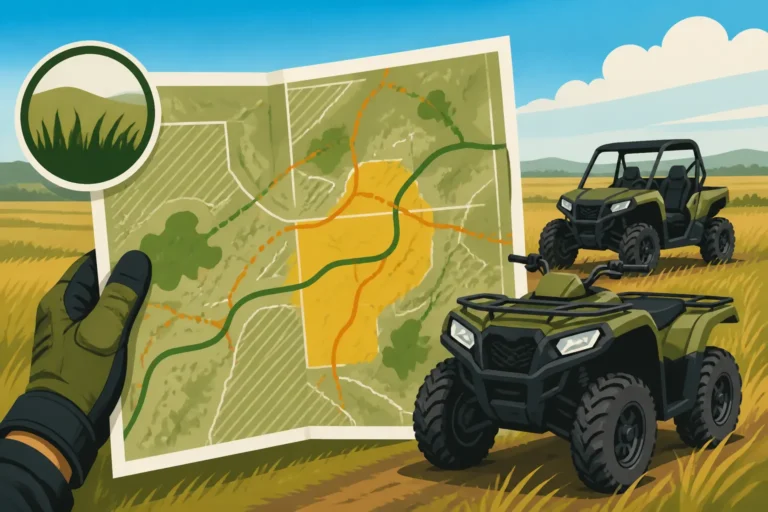
Mapping tools can help you understand the area, but treat them as planning aids rather than permission to ride. Some riders use onX Offroad to review route lines and get a sense of terrain before traveling. Compare what you see there with official access information and signs on the ground; a mapped line does not, by itself, establish that a route is open or legal.
Making Bottineau Work for a Weekend
Plan lodging, parking, and non-riding time
A good Bottineau weekend plan accounts for the trailer as well as the riders. Before booking a place to stay, ask whether it can accommodate your vehicle and trailer, where you can park them, and whether there is enough room to turn around safely. If you are arriving with several machines, do not assume that ordinary lodging parking will work for a long trailer or a group convoy.
If you want to camp, distinguish between a campground near your riding destination and a campground that allows you to ride directly from your campsite. Those are not always the same thing. Check whether the campground permits trailers, whether it offers suitable parking, and what rules apply to starting or loading machines there. North Dakota Trails With Camping can help you think through the camping side of a riding trip, while North Dakota Trails With Trailer Parking is a useful companion when the trailer is a major part of your plan.
Bottineau also works for groups where not everyone wants to spend the whole day on an OHV. You can plan a ride for part of the group and leave another part with a separate local outing. Just make the arrangements explicit: set a return time, decide where everyone will meet, and make sure the riders know whether they are expected to remain together or can split into smaller groups.
Build a flexible itinerary
For a first visit, keep the schedule forgiving. Arrive with enough time to confirm the trailhead, review posted information, and unload without rushing. Make the first ride a familiarization loop rather than an ambitious all-day push. If everyone is comfortable and conditions are suitable, you can adjust the next day’s plan.
A practical outline might look like this:
- Before leaving home: Confirm machine paperwork, required permits, lodging arrangements, trailer parking, and the trailhead route.
- On arrival in Bottineau: Check supplies and fuel plans, review the day’s route with the group, and confirm that everyone knows the meeting point.
- At the riding area: Read posted signs, check conditions, keep to permitted routes, and make a conservative first ride.
- After riding: Inspect machines for damage or mud, secure them for the night, and review the next day’s plan while the details are fresh.
If rain, wind, or a closure changes the plan, do not try to improvise access across unmarked ground. Use the time for a town-based alternative, maintenance, or a different confirmed activity. Flexible planning is much less frustrating than reaching a locked or unsuitable entrance and trying to invent a route on the spot.
Rules, Conditions, and Local Ride Etiquette
Check access and permit requirements
Before riding, make sure each machine and rider meets the requirements that apply to the trip. North Dakota registration, visitor permits, and safety requirements can depend on details such as residency, machine type, and the rider’s age. Visitors should review North Dakota’s Non-Resident OHV Permit rather than assume a home-state registration or sticker automatically covers every North Dakota riding situation.
Trail access is also distinct from state park access. A park entrance permit, where required, is not necessarily the same as authorization to ride a particular OHV route. Likewise, a registration decal does not grant permission to cross private property or use a closed route. Check signs at the riding area and follow the agency or land manager’s instructions.
For route conditions, use more than one source when practical. Official notices, a phone update, and signs at the trailhead can help you avoid relying on an old online map. The guide to North Dakota Trail Status by App and Phone is useful when you are deciding how to check conditions before making the drive. onX Offroad can help you organize your route notes, but it should sit alongside authoritative closure and access information rather than replace it.
Ride considerately and adapt to conditions
Good trail etiquette matters even on a short weekend visit. Keep to designated routes, slow down around other users, and avoid creating dust or noise that makes the area unpleasant for people nearby. If you encounter a closed gate, a posted restriction, or a route that appears damaged, stop and reassess rather than treating the obstacle as something to work around.
Wet ground deserves particular care. A route that seems passable at first can become rutted quickly, and a heavy UTV can leave damage that remains long after the ride. If the surface is soft or the posted information advises against riding, turn back. Local conditions can change faster than a trip plan, so a willingness to shorten the ride is part of being prepared.
For a first visit, it is also worth reading North Dakota Trail Etiquette Locals Expect. The basics—staying on permitted routes, yielding appropriately, packing out what you bring, and respecting signs and other users—make a meaningful difference. Keep your group within sight or establish reliable check-in points, and make sure everyone understands that the day’s plan can change if weather, trail conditions, or access rules require it.
Disclaimer
This article is for general informational purposes only and does not constitute professional advice. Laws, prices and regulations vary by location and change over time. Consult a qualified professional for guidance on your specific situation.