North Dakota Speedometer Rules on a Quad
Navigating North Dakota's vast landscapes on your ATV or UTV is an experience like no other, but when your adventures take you from the trails to public roads, the rules of the road apply. One piece of equipment often overlooked until it’s too late is the speedometer, which isn't just a convenience but a legal requirement for road-legal operation. This guide will walk you through everything you need to know about North Dakota's speedometer rules for quads and side-by-sides, helping you stay compliant and safe on the pavement and gravel.
Why a Speedometer Matters for Road Riding in North Dakota
It’s easy to think of a speedometer as something only cars need, but for OHV riders venturing onto North Dakota's roads, it quickly becomes indispensable. The state has specific regulations that govern when and how you can operate your off-highway vehicle on public thoroughfares, and knowing your speed is paramount to adhering to these laws. Without an accurate way to measure your speed, you’re essentially guessing, which can lead to serious consequences.
Understanding the Law's Intent
North Dakota's laws regarding OHV equipment, including speedometers, are primarily designed for safety and to ensure that off-highway vehicles, when used on roads, integrate as predictably as possible with other traffic. The intent isn't to make riding your quad or side-by-side more complicated, but to protect all road users. When you're on a public road, whether it's a paved county highway or a gravel section line, you're sharing that space with passenger cars, trucks, and sometimes even agricultural equipment. Their drivers expect you to be operating within the legal speed limits, and a working speedometer is the tool that makes that expectation achievable. It's about maintaining order and preventing accidents by providing objective data to the rider.
Imagine you're cruising down a picturesque country road, enjoying the scenery, but you've lost track of your speed. That 55 mph speed limit might seem easy to gauge, but an ATV or UTV feels different at various speeds than a car does. What feels like 45 mph could easily be 60 mph, putting you at risk of a citation or, worse, being unable to react safely to an unexpected obstruction or traffic situation. The law simply provides a clear, measurable standard for safe operation.
Staying Within Posted Limits
One of the most obvious reasons for needing a speedometer is to stay within the posted speed limits. North Dakota has different speed limits depending on the type of road and the classification of your OHV. For example, while many gravel roads are open to registered OHVs, you're still expected to adhere to the limits, which can vary. If you're on a paved road posted at 55 mph, you absolutely need to know if your machine is exceeding that. [North Dakota Rules for Riding a Gravel Road] and [North Dakota Rules for Riding a Paved Road] both emphasize the importance of speed adherence.
This becomes especially critical when considering where and how you’re allowed to ride. Some Class III machines, for instance, have specific allowances on roads posted at 65 mph, provided the machine is capable of maintaining the flow of traffic. Without a speedometer, how could you ever truly know if you're meeting that requirement or accidentally putting yourself in a dangerous situation by going too slow or too fast? It's not just about avoiding a ticket; it's about making informed decisions in real-time about your vehicle's speed relative to the environment around you.
Safety for All Road Users
Beyond just legal compliance, a speedometer is a crucial safety device for both you and others on the road. Speed is a major factor in accident severity. If you're traveling too fast for conditions or exceeding the limit, your reaction time decreases, and the stopping distance of your vehicle increases dramatically. This is true for any vehicle, but perhaps even more so for OHVs, which often have a higher center of gravity and different handling characteristics than traditional cars.
Think about a scenario where a deer suddenly jumps out, or a farm vehicle unexpectedly pulls onto the road from a field approach. Your ability to react safely hinges on knowing your speed. If you’re going 60 mph in a 45 mph zone, that extra speed severely diminishes your capacity to avoid a collision. Furthermore, for other drivers, erratic or unpredictable speeds from an OHV can be confusing and dangerous. A rider who consistently maintains a legal and predictable speed, aided by an accurate speedometer, contributes to a safer environment for everyone sharing the road. This also ties into overall expectations when law enforcement performs [North Dakota Equipment Checks at a Stop] – they want to see you're ready to share the road responsibly.
North Dakota's Specific Speedometer Requirements for OHVs
When it comes to outfitting your quad or UTV for road use in North Dakota, the state leaves little room for ambiguity regarding speedometers. These aren't just suggestions; they are explicit legal mandates that must be met if you plan to operate your machine on public highways and roads. Understanding these specifics is crucial to avoid penalties and ensure your riding experience is both enjoyable and lawful.
The "Miles Per Hour" Mandate
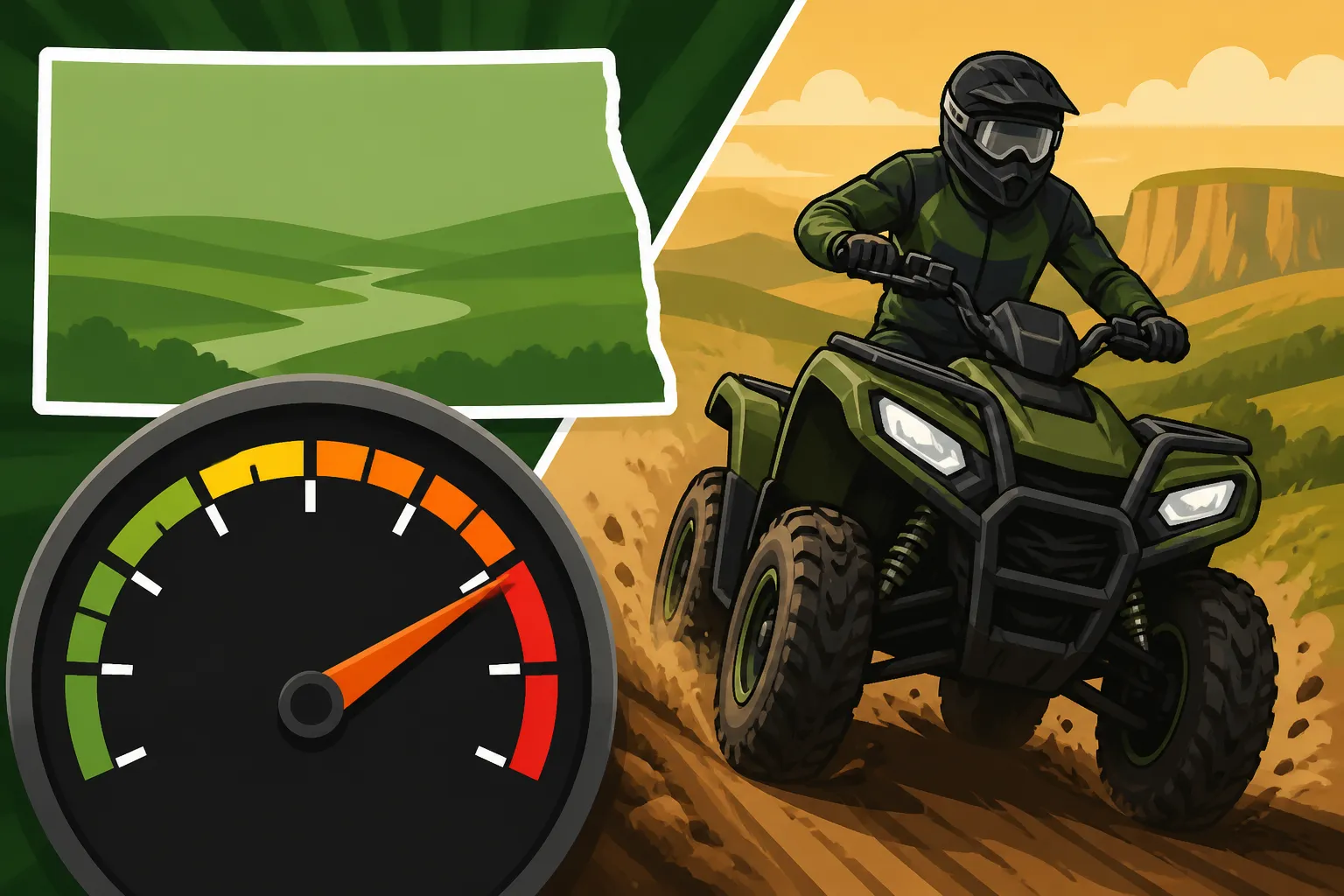
North Dakota's law is quite clear: any off-highway vehicle operated on public roads and highways that requires a speedometer must have one that registers in "miles per hour." This isn't just a minor detail; it's a critical specification. Unlike some jurisdictions that might accept kilometers per hour with a conversion chart, North Dakota explicitly states MPH. This is to ensure immediate and unambiguous comprehension of speed limits, which are universally posted in MPH across the state. The reason behind this specific requirement is straightforward: ease of understanding for the rider and consistent enforcement for law enforcement. If you're riding a machine that uses a different measurement system, you're not meeting the state's legal criteria. This is why [Why North Dakota Requires a Speedometer in Miles Per Hour] is so important.
This mandate means that if you've imported a machine from a country that primarily uses the metric system, or if your aftermarket speedometer only displays in KPH, you will need to either replace it or find a model that has an MPH display mode. There’s no legal workaround for this particular requirement when operating on North Dakota’s public thoroughfares. It ensures that every rider, at a glance, can relate their current speed directly to the posted speed limit signs they encounter.
Applicability: When and Where It's Required
The requirement for a speedometer isn't universal for all OHV operation; it specifically kicks in when you're taking your quad or UTV onto public roads or highways. This includes paved roads, gravel roads, and even the "ditch bottom" or "back-slope" riding areas that are permitted under specific conditions. As you can read in [North Dakota Equipment Required on a Roadway], a speedometer is listed alongside other essential items like headlights, taillights, and mirrors. If your machine is solely used for private land adventures, track racing, or purely off-road trail systems that never cross public roads, then a speedometer isn't a legal necessity. However, the moment your wheels touch a public right-of-way, including crossing a paved highway, the requirement generally applies.
Consider a rider using their UTV for farming purposes who needs to cross a county road to get from one field to another. Even this "transitory operation" typically falls under the umbrella where road-legal equipment, including a speedometer, is expected. The intent is that any interaction with public roads should be conducted with the full suite of safety equipment. This also applies if you're riding in designated areas like the [North Dakota Ditch Riding: The Legal Right Explained], where speed control is paramount to safety and compliance with local ordinances.
What Happens Without One
Operating an OHV on a public road in North Dakota without the legally required equipment, including a speedometer that registers in miles per hour, can lead to various penalties. At a minimum, you could face a citation for an equipment violation. This might start with a warning, especially if you're a first-time offender or genuinely unaware, but it can quickly escalate to fines. Law enforcement officers have the discretion to issue tickets for such infractions, and these costs can add up, especially if combined with other violations.
Beyond monetary penalties, an officer might deem your machine unsafe for road operation, potentially preventing you from continuing your ride on public roads until the issue is rectified. Imagine being miles from home, having your adventure cut short because your speedometer isn’t working or isn't in MPH. This inconvenience alone can be a significant deterrent. Furthermore, in the unfortunate event of an accident, a missing or non-compliant speedometer could be used as evidence of negligence, potentially impacting insurance claims or liability in civil cases. It's simply not worth the risk to skip out on this basic safety and legal requirement.
Beyond Legalities: Practical Benefits of a Working Speedometer
While legal compliance is a compelling reason to ensure your quad or UTV has a working speedometer, its utility extends far beyond just avoiding fines. A reliable speedometer is a powerful tool that enhances your riding experience, improves safety, and aids in the overall management and enjoyment of your machine. It’s about being an informed and prepared rider, whether you’re on a long trail ride or just running a quick errand on a rural road.
Maintenance and Performance Tracking
A speedometer, often integrated with an odometer (which tracks distance), is incredibly useful for maintaining your machine. Knowing the precise mileage allows you to stick to manufacturer-recommended service intervals. When did you last change the oil? When is the air filter due for cleaning or replacement? When should you check your belt or adjust your valves? These questions are easily answered when you can accurately track your machine's total distance traveled. This data helps prolong the life of your engine and other critical components.
Without a speedometer and odometer, you're left guessing or relying on engine hours, which isn't always as precise for certain maintenance tasks. Regular maintenance based on accurate mileage can prevent costly breakdowns down the line and ensure your machine is always running at its best. It's an investment in the longevity and reliability of your quad or UTV, keeping you out on the trails and roads rather than stuck in the garage.
Fuel Efficiency and Range Management
Knowing your speed can significantly impact your fuel efficiency. Riding at consistently high speeds typically consumes more fuel. With a speedometer, you can consciously adjust your throttle input to maintain a more economical speed, stretching your fuel tank further, especially on long rides in remote areas where fuel stops are scarce. This is particularly useful for machines that might not have a precise fuel gauge, forcing you to rely on mental calculations or approximate range.
For example, if you know your UTV gets optimal mileage around 30 mph, and you’ve got a long stretch of gravel road ahead, your speedometer allows you to stick to that efficient speed. This helps with [North Dakota's 30 mph Capability Rule] when a machine needs to be able to reach certain speeds to be road legal. Planning a multi-hour adventure? An accurate speedometer, coupled with an odometer, helps you calculate your remaining range with much greater precision, reducing the anxiety of running out of gas miles from anywhere. It empowers you to better plan your routes and fuel stops, especially when you’re out exploring unfamiliar territory or riding with a group.
Navigation and Group Riding
When you're riding with friends, especially in a new area, having a working speedometer is a game-changer for navigation and maintaining cohesion within the group. If the lead rider calls out a speed to maintain, or a map suggests a certain speed for a particular section of the trail, your speedometer allows you to match that pace precisely. This prevents the group from getting spread out too far or constantly having to wait for slower riders.
Moreover, if you’re using GPS or paper maps that provide estimated travel times based on average speeds, your speedometer helps you verify and adjust those estimates in real-time. It’s about staying oriented and on schedule, especially when exploring sprawling areas like the Pembina Gorge or the Roughrider OHV Trail. A consistent speed, measured by your speedometer, contributes to a smoother, safer, and more enjoyable group riding experience, reducing the chances of someone getting lost or separated.
Troubleshooting and Upgrading Your OHV Speedometer
Just like any other component on your off-road machine, speedometers can sometimes malfunction or simply not meet your needs. Whether you're dealing with an erratic reading, a complete failure, or looking to enhance your riding experience with more advanced features, understanding how to troubleshoot and upgrade your speedometer is valuable knowledge for any North Dakota rider.
Common Speedometer Issues
Speedometer problems can manifest in several ways, from completely dead displays to intermittent readings or inaccurate speeds. One of the most common culprits for a dead or erratic digital speedometer is a loose or damaged connection. These machines endure a lot of vibration, mud, and water, which can wreak havoc on electrical wiring. Check the main power lead to the unit, as well as the sensor wire that typically runs down to one of your wheels (often the front left). Corrosion in connectors is another frequent issue, especially in North Dakota's varied climate.
If your speedometer is reading inaccurately, the problem could be with the sensor itself – it might be dirty, misaligned, or damaged. Sometimes, changes to tire size can throw off the calibration; if you've recently put on larger or smaller tires, your speedometer might need adjustment. For mechanical speedometers, a broken cable or a worn gear in the wheel hub is usually the cause. Always start with the simplest checks: power, connections, and sensor cleanliness, before digging into more complex diagnostics.
Aftermarket Options and Installation
If your stock speedometer bites the dust, or you're looking for an upgrade, the aftermarket is brimming with options. Many riders opt for digital speedometers that often come with additional features like odometers, trip meters, tachometers, and even temperature gauges, all in one compact unit. These units typically work by a magnetic sensor mounted near a wheel, counting rotations to calculate speed. For accurate readings, ensure you get a unit that allows for manual calibration based on your tire size. Brands like SuperATV offer robust and feature-rich aftermarket speedometers and gauges that are designed to withstand the harsh conditions of off-road riding.
When installing, follow the manufacturer's instructions closely. The key is secure mounting to prevent vibration damage, and careful routing of wires away from moving parts or excessive heat. Many aftermarket kits are relatively straightforward to install for someone with basic mechanical skills, but if you're uncomfortable with electrical work, it's always best to consult a professional. A good installation ensures not just functionality, but also durability, which is crucial for the rough and tumble life of an ATV or UTV in North Dakota.
Keeping Your Speedometer Calibrated
Even the best speedometer can give you inaccurate readings if it's not properly calibrated. The most common reason for calibration issues stems from changing tire sizes. A speedometer calculates speed based on the number of wheel rotations over a given time, combined with the tire's circumference. If you install larger tires, each rotation covers more ground, and your speedometer will read slower than your actual speed. Conversely, smaller tires will make it read faster. This is a crucial point for riders who frequently change tire setups for different terrains or seasons.
Many modern digital speedometers, including those offered by companies like SuperATV, have a calibration mode where you can input your tire circumference or perform a known-distance calibration. It's a good practice to periodically check your speedometer's accuracy against a known speed source, such as a GPS unit or by timing yourself over a measured mile. If your machine is equipped with larger-than-stock tires, take the time to recalibrate your speedometer to ensure your displayed speed accurately reflects your true speed. This not only keeps you compliant with North Dakota's laws but also helps prevent dangerous situations where you might unknowingly exceed a speed limit.
| Required OHV Road Equipment in North Dakota | Purpose | Details |
|---|---|---|
| Speedometer | Legal compliance & safety | Must register in miles per hour (MPH) for public road use. |
| Headlamp | Visibility & safety after dark | Visible from 300 feet, white or amber light. |
| Taillamp | Rear visibility & safety after dark | Visible from 500 feet, red light. |
| Brake Light | Warning to following vehicles | Must illuminate when brakes are applied. |
| Mirrors | Rearward visibility | At least one mirror, 10 square inches, for viewing 200 feet to the rear. |
| Horn | Audible warning device | Capable of emitting sound audible from 200 feet. |
| Muffler | Noise control | Must be in good working order, no excessive noise. |
| Brakes | Stopping capability | Functional front and rear brakes. |
| Spark Arrester | Fire prevention | US Forest Service approved. |
| Roll Bar/Cage (UTVs) | Occupant protection | Manufacturer installed or equivalent. |
Remember, these requirements are for when you operate your OHV on any public road, highway, or ditch area where it's allowed. [What an Officer Can Ask to See] includes verifying that your machine has these necessary safety features. Staying informed and keeping your equipment in top shape ensures you can enjoy North Dakota's riding opportunities responsibly and safely.
Disclaimer
This article is for general informational purposes only and does not constitute professional advice. Laws, prices and regulations vary by location and change over time. Consult a qualified professional for guidance on your specific situation.