Do You Need a License for an ATV in North Dakota?
It's a common question that swirls through the minds of many off-highway vehicle (OHV) enthusiasts, especially when you're itching to explore the vast landscapes of North Dakota: "Do I need a driver's license to ride my ATV or UTV?" The answer, like many things involving laws and regulations, isn't a simple yes or no, and misunderstanding it can lead to frustration or, worse, a costly citation. This guide is here to untangle the nuances of North Dakota's OHV laws, clarifying exactly when a driver's license is required, what age restrictions apply, and what other crucial paperwork you'll need to keep your adventures legal and worry-free across the prairie and beyond.
The Core Question: Do You Need a Driver's License for Your OHV in North Dakota?
When you first get your hands on a shiny new ATV or UTV, the excitement is palpable. You're probably picturing wide-open spaces, dusty trails, and the thrill of the ride. But before you even think about hitting the throttle, a fundamental question often pops up: do I need a driver's license just to operate this thing? The answer here is a bit more straightforward than you might expect, but it comes with some very important caveats that every rider in North Dakota needs to understand.
No, Not for the OHV Itself
Let's cut right to the chase: No, you do not need a standard motor vehicle driver's license simply to operate an ATV or UTV in North Dakota on private land or on designated public OHV trails. This is a huge relief for many riders, especially those who primarily stick to private property or the established trail systems designed specifically for off-road recreation. The state differentiates between operating an OHV as an off-road recreational machine and operating a motor vehicle on public roads. Think of it like this: you don't need a driver's license to ride a bicycle in your backyard, and generally, the same principle applies to your quad or side-by-side when you're truly off-highway.
This distinction is crucial. If your riding consists entirely of tearing up your own acreage, cruising around a friend's farm with their permission, or sticking strictly to places like Pembina Gorge's dedicated OHV trails, then your typical driver's license isn't a prerequisite for operation. The focus in these scenarios shifts more towards rider safety, machine registration, and respecting private property rules rather than your driving qualifications for a car or truck. However, as we'll explore, the moment you consider venturing beyond these specific environments, the rules change dramatically, and your driver's license quickly becomes paramount.
When a Driver's License Becomes Necessary
Now, here's where the critical nuance comes in, and it's where many riders inadvertently run into trouble. While you might not need a license to simply operate an OHV in a purely off-road setting, your driver's license absolutely becomes a non-negotiable requirement if you intend to take your ATV or UTV onto any public road, highway, or right-of-way where OHVs are legally permitted. North Dakota allows OHVs on certain public roads under very specific conditions, and operating your machine in these environments reclassifies it, in the eyes of the law, as a "motor vehicle" for that specific purpose.
This means if you're planning to use your ATV to cross a highway, ride along a section line, traverse an open gravel road to get to a hunting spot, or utilize the shoulder of a paved road where allowed, you must possess a valid driver's license. It’s not just a suggestion; it’s a legal mandate. The state's reasoning is clear: when you're interacting with regular traffic, even if it's minimal, you need to demonstrate the same level of knowledge, skill, and legal authorization as any other driver. Without a valid driver's license in these situations, you're not just risking a ticket for an OHV violation; you could face penalties similar to operating any other unregistered or unlicensed motor vehicle on a public roadway. This is a common pitfall, especially for younger riders or those who assume their off-road machine is immune to standard traffic laws. Understanding this distinction is the first step in ensuring your North Dakota riding experiences are both exhilarating and entirely lawful.
Age, Safety Certificates, and Other Rider Requirements
Beyond the question of a driver's license, North Dakota has a comprehensive set of rules regarding who can ride an OHV, focusing heavily on age and safety. These regulations are designed to protect riders, especially younger enthusiasts, and ensure everyone has a basic understanding of safe operation. It's not just about having the right machine; it's about having the right training and authorization for the operator.
The Under-16 Rule and Safety Certificates
North Dakota takes the safety of its younger riders seriously. If you're under the age of 16, there's a specific requirement you need to meet before you can legally operate an OHV on public lands or trails: you must successfully complete an approved OHV safety training course and obtain a safety certificate. This isn't just a suggestion; it's law. The [North Dakota Safety Course Minimum Age] is 12, meaning riders can start their safety education early to be ready when they hit the trails. This certification ensures that young riders understand critical safety principles, the rules of the trail, and how to handle their machine responsibly.
The safety course covers a wide range of topics, from proper riding gear and pre-ride inspections to environmental stewardship and emergency procedures. You'll learn about terrain hazards, group riding etiquette, and how to safely navigate various obstacles. The goal is to instill a strong foundation of safe riding practices from an early age. Once you pass the course, you'll receive your [North Dakota Safety Certificates at Age 12], which acts as your official documentation. It's vital to carry this certificate with you whenever you're riding on public lands. There are exceptions, of course: a rider under 16 may operate an OHV on private land if they have the express permission of the landowner or the person in control of the land. They can also ride on private land under the direct supervision of a parent or guardian. However, the moment they leave that private property for a public trail or road, that safety certificate becomes essential.
The Importance of Registration, Not Licensing
While we're talking about rider requirements, it's absolutely crucial to distinguish between a "driver's license" for the operator and "registration" for the machine itself. Many new OHV owners confuse the two, but they are entirely separate legal obligations. Even if you're a seasoned rider with a valid driver's license, your ATV or UTV still needs to be properly registered with the state of North Dakota if you plan to operate it anywhere off your own private land. The short answer to [Do You Need to Register an ATV in North Dakota?] is almost always "yes" for public use.
Registration is about the machine's legality, not the operator's driving ability. When you register your OHV, you're essentially getting it on the state's books, proving ownership, and contributing to the upkeep of the very trails and public areas you'll be riding. Part of this registration includes a trail tax, which directly funds the creation and maintenance of OHV trails across the state. Without proper registration, even if you have a valid driver's license and a safety certificate, your machine isn't legally allowed on public trails, ditches, or roads. It's a two-pronged approach to legal riding: the rider must be qualified (driver's license for roads, safety certificate for under-16s) and the machine must be authorized (registered). Failing to register your machine can lead to significant fines, regardless of your personal licensing status.
Navigating North Dakota's Road Rules with Your OHV
Alright, let's talk about taking your OHV where the blacktop or gravel begins. North Dakota is quite unique in its approach to allowing OHVs on public roads, but it’s not a free-for-all. There are very specific rules, equipment requirements, and, as we've already established, a crucial need for a valid driver's license when you make the jump from dirt to asphalt or gravel. This is where your off-road machine sometimes needs to transform, at least in function, into something more akin to a street-legal vehicle.
When Your ATV Becomes a "Motor Vehicle" on the Road
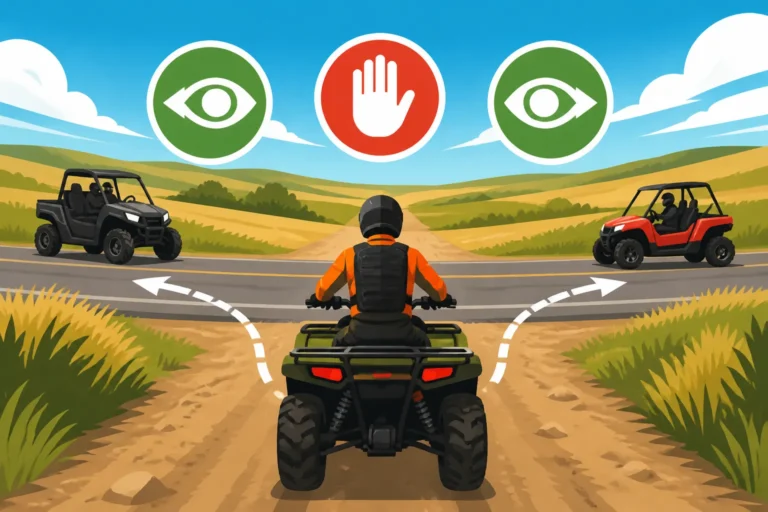
The moment your ATV or UTV leaves private land or a designated off-road trail and enters a public road, it begins to be treated, in many respects, like any other motor vehicle. This reclassification isn't just semantic; it triggers a whole host of legal requirements designed to ensure safety and prevent conflicts with other traffic. If you're going to ride on public roads, you absolutely must have a valid driver's license, just as you would in your car or truck. There's no exception for an OHV.
Beyond the license, your machine itself needs to be equipped for road use. North Dakota law specifies certain equipment that must be present and functional on your OHV if you're operating on public roadways. This includes a headlamp visible from at least 300 feet, a taillamp, at least one rear-view mirror offering 10 square inches of reflective surface, a horn audible from 200 feet, and a working speedometer that displays miles per hour. While many factory-fresh ATVs and UTVs might have some of these components, others will require aftermarket additions. This is where products from companies like SuperATV become invaluable. They offer a wide range of road-legal kits, mirrors, horns, and lighting solutions that can help you bring your off-road beast into compliance with North Dakota's street-legal requirements, ensuring your machine has the [North Dakota Mirror and Horn Requirements] and the [North Dakota Headlamp Distance Standards] met. It's not just about avoiding a ticket; it's about being visible and audible to other drivers, which is paramount for safety.
Specific Road Types and Restrictions
North Dakota's allowance for OHVs on roads isn't uniform across all surfaces or locations. It's a patchwork of specific rules that every rider needs to commit to memory. Ignorance of these rules is no excuse, and getting caught in the wrong place can lead to significant penalties.
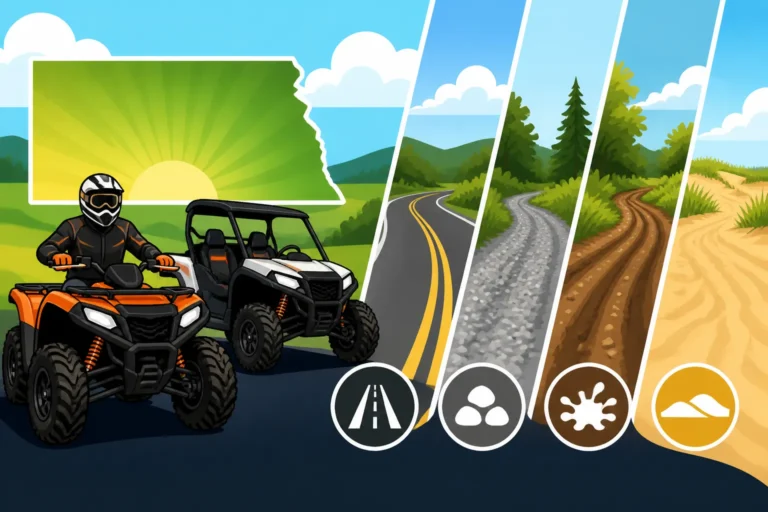
- Gravel Roads: Generally, [North Dakota Gravel Roads Open to Registered Machines] for OHV use. This is a huge benefit for hunters, farmers, and recreational riders needing to connect trails or access remote areas. However, all the equipment requirements mentioned above still apply, and you must hold a valid driver's license. You’re expected to follow all traffic laws, including speed limits, stop signs, and yielding to other vehicles.
- Paved Roads: The rules get stricter for paved surfaces. OHVs are typically allowed on [North Dakota Paved Roads Posted at 55] mph or less. However, there are often restrictions on specific roads, and some cities and counties have their own ordinances. You can't just cruise down the main street of every town. Always check local regulations first. Again, a valid driver's license is a must, and your machine must be properly equipped.
- Ditch Riding: North Dakota has a unique provision for ditch riding, making it a common way to travel by OHV across the prairie. The [North Dakota Ditch Riding: The Legal Right Explained] allows for the operation of OHVs in the ditch bottom or back-slope of public roads, but not on the inslope or shoulder. This can be a tricky distinction to master, and there are specific rules about when and how you can enter or exit the ditch, pass obstructions, and travel at night. Critically, if you're ditch riding, you are still on a public right-of-way, meaning your machine needs to be registered and you, as the operator, must possess a valid driver's license. This is not a loophole to avoid licensing; it's an extension of road use under specific conditions.
It's clear that navigating North Dakota's roads on an OHV requires careful attention to detail. Equipping your machine with robust, road-legal components, such as those offered by SuperATV, is a smart investment to meet these demands. You'll also want to be mindful of your machine's capabilities; some smaller OHVs might not meet the minimum speed requirements for certain roads, even if legally equipped. Always remember that when you're on a public road, you are part of the larger traffic system, and responsibility, including having a driver's license, rests squarely on your shoulders.
Avoiding Penalties: What Happens if You Don't Comply
Ignoring North Dakota's OHV laws, whether it's about rider licensing, machine registration, or road-legal equipment, isn't just a minor oversight. It can lead to significant legal and financial headaches that quickly sour any fun you might have had. Understanding the consequences is a powerful motivator for staying compliant.
Consequences of Unlicensed Operation on Roads
Let's reiterate: if you operate your ATV or UTV on a public road or right-of-way where a driver's license is required, and you don't have one, you're looking at serious trouble. This isn't just an "OHV ticket"; it can often be treated like driving any other motor vehicle without a license. This can result in:
- Fines: Expect a monetary penalty. These can range from a basic citation to much higher fines, especially if combined with other violations. Recent legislative changes, like [North Dakota HB 1346 and the 2025 Penalty Increase], indicate a trend towards stricter enforcement and higher costs for non-compliance.
- Impoundment: Your pride and joy, your ATV or UTV, could be impounded. This means not only will you be without your machine, but you'll also incur towing and storage fees on top of any fines. Getting it back can be a lengthy and expensive process.
- Criminal Charges: Depending on the specifics of the situation (e.g., repeat offenses, reckless operation, or if it's tied to other illegal activities), operating without a license on public roads could escalate to misdemeanor charges. This goes beyond a simple traffic ticket and can have long-term consequences for your record.
- Insurance Issues: If you're involved in an accident while operating an OHV without a required driver's license, your insurance company might deny coverage. This could leave you personally liable for damages, injuries, and legal costs, which can be astronomical. Don't assume your personal auto insurance covers your OHV by default; [North Dakota Insurance Requirements at Registration] are specific for OHVs, and personal liability is key.
These consequences underscore the importance of always carrying your valid driver's license when operating on public roads. It's a small piece of plastic that can save you a world of grief.
The Broader Picture: Riding Responsibly
Beyond the specific legal requirements for a driver's license, North Dakota's OHV laws are ultimately geared towards promoting responsible and safe riding for everyone. Compliance with all regulations—driver's license when needed, proper machine registration, and age-appropriate safety certification—creates a safer environment for you, your passengers, and other recreational users or landowners.
Responsible riding also means:
- Respecting Posted Land: Always know where you're riding and have permission if you're on private property. [North Dakota Posted Land Rules for Riders] are clear, and trespass can lead to serious legal issues.
- Operating Safely: This includes wearing appropriate safety gear (like a helmet, especially if you're under 18), never riding impaired, and operating within your skill level and your machine's capabilities.
- Being a Good Steward: Stay on designated trails, avoid sensitive ecological areas, and pack out what you pack in. The beauty of North Dakota's natural environment depends on all of us being responsible.
In summary, while you might not always need a driver's license to operate an ATV or UTV in North Dakota, you absolutely need one when you take your machine onto public roads or rights-of-way. Combine that with proper registration, a safety certificate for younger riders, and a machine equipped with components that allow for legal road travel (perhaps from a trusted source like SuperATV), and you'll be set for countless hours of enjoyable and legal riding. Stay informed, ride safe, and enjoy everything North Dakota's diverse terrain has to offer!
Disclaimer
This article is for general informational purposes only and does not constitute professional advice. Laws, prices and regulations vary by location and change over time. Consult a qualified professional for guidance on your specific situation.