Tracked Dirt Bikes and North Dakota Paperwork
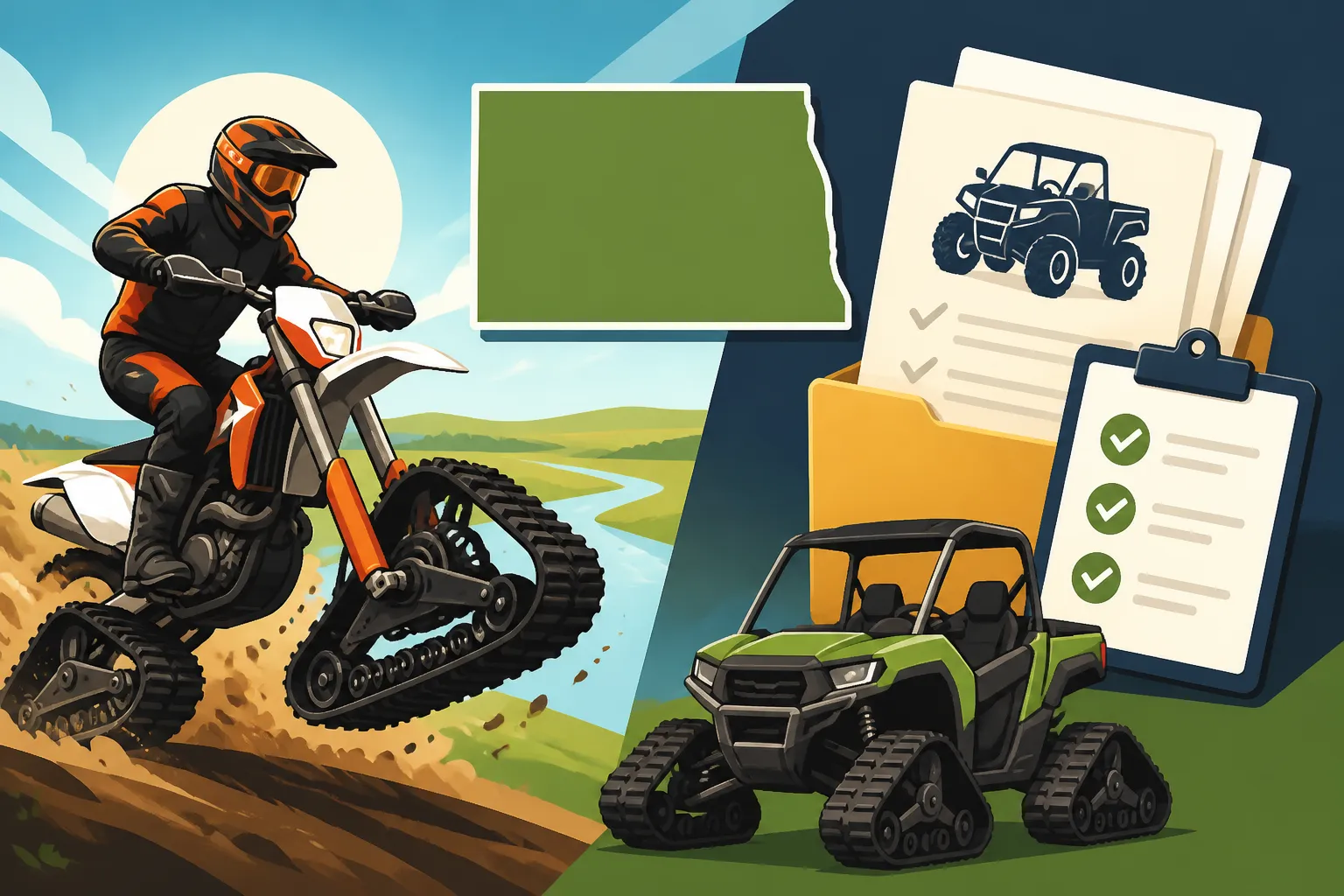
It's easy to assume that a dirt bike is a dirt bike, regardless of what's underneath it, but when you swap out those knobby tires for a set of tracks, North Dakota's paperwork requirements take a distinct turn. This guide will walk you through the often-confusing world of registering and permitting your tracked dirt bike, ensuring you're squared away before hitting the frozen prairies or the specific trails designed for such machines.
Understanding North Dakota's Definition of an OHV and Where Tracked Dirt Bikes Fit In
Navigating the rules for off-highway vehicles (OHVs) in North Dakota can feel like trying to find your way through a blizzard without a compass. Most riders are familiar with the standard classifications for ATVs, UTVs, and dirt bikes, but tracked machines introduce a layer of complexity that often catches owners by surprise. The state has specific definitions that dictate not just registration, but also special permits and where you can actually ride your unique machine.
The Standard OHV Definition
In North Dakota, an OHV is generally defined as any motorized vehicle used for off-highway travel, designed to travel on land and not on rails. This includes your typical ATVs, UTVs, and dirt bikes. For these conventional machines, the process is fairly straightforward: get your [North Dakota OHV Registration Cost] figured out, make sure you meet [North Dakota ATV Title Requirements], and you're usually good to go for general off-road use, subject to local ordinances and posted land rules. The state organizes these machines into Class I, II, and III, largely based on their design, weight, and intended use. For instance, most dirt bikes would fall under the Class I category, meaning they're designed to be straddled by the operator.
However, this standard definition primarily contemplates machines with wheels. The moment you replace those wheels with tracks, you've introduced a significant change that alters how the state views and regulates your machine. It’s not just an aesthetic modification; it triggers a whole different set of considerations from a regulatory standpoint. The key difference lies in the impact tracks have on the terrain and their operational characteristics, which often mimic those of snowmobiles, even if the base machine is clearly a dirt bike.
How Tracks Change the Game
When a dirt bike is converted to a tracked machine, it fundamentally changes its interaction with the ground. Tracks distribute weight over a much larger surface area, which can be less damaging on certain soft terrains but also allows for travel over deep snow that would be impossible for wheeled vehicles. This capability is what often draws riders to tracked conversions, especially during North Dakota's long winters. But because of this change in capability, the state requires different paperwork. It’s not enough to just have a standard OHV registration; a tracked dirt bike is treated almost like a hybrid, crossing into territory that would otherwise be reserved for dedicated snow machines.
The state recognizes that these machines, while still dirt bikes at heart, function differently enough to warrant their own specific rules. This distinction isn't arbitrary; it often relates to environmental concerns, trail maintenance, and ensuring that the right types of vehicles are on the right types of terrain at the right times of the year. For example, a wheeled dirt bike might be banned from a particular trail during mud season, while a tracked machine could potentially cause different kinds of rutting or disturbance. It's about preserving the trails and managing usage effectively. Therefore, understanding this fundamental difference is the first step in ensuring you have all your ducks in a row.
The Special Permit for Tracked Dirt Bikes in North Dakota
One of the most significant pieces of paperwork you'll encounter for your tracked dirt bike in North Dakota is the special permit. This isn't just an optional extra; it's a mandatory requirement that sets these machines apart from their wheeled counterparts. Many riders are unaware of this nuance until they're stopped on a trail or trying to navigate the registration process.
Why a Separate Permit Exists
The reason behind this separate permit boils down to how North Dakota manages its recreational trails, especially those that cater to snowmobiles. Tracked dirt bikes, with their ability to traverse deep snow, share a lot of operational characteristics with snowmobiles. Because of this, they are often permitted to use designated snowmobile trails during the winter months when wheeled vehicles are naturally excluded. The permit acts as a specific authorization for this use, helping the state manage and fund the maintenance of these shared resources. Without this permit, riding your tracked machine on a designated snowmobile trail, or even on public lands where such machines are regulated, could lead to a citation. [Why a Tracked Dirt Bike Needs Its Own $25 Permit] explains this rationale in more detail, highlighting the state's efforts to categorize and manage different types of recreational vehicles appropriately.
This isn't just about trail access; it's also about accountability and funding. The fee collected for this permit contributes directly to the overall management and upkeep of the trail systems, much like the trail tax included in standard OHV registrations. It ensures that those who use these specialized facilities contribute to their sustainability. So, while it might seem like an extra step, it's a vital part of supporting the very places you want to ride. Ignoring this permit is like trying to hunt without a license; you might get away with it for a while, but the consequences, when caught, aren't worth the risk.
The Cost and Validity of the Permit
The [North Dakota Tracked Dirt Bike Permit at $25] is specifically priced to cover the administrative costs and contribute to trail funds. This permit is typically valid for a calendar year, running from January 1st to December 31st, regardless of when you purchase it. This means if you buy it in October, it will still expire on December 31st of that same year. It’s crucial to keep this in mind when planning your purchase, especially if you're thinking about winter riding near the end of the year. You don't want to find yourself needing to renew it just a couple of months after buying it.
When you obtain this permit, it’s important to understand that it's separate from your general OHV registration. Think of it as an "add-on" for a specific capability. You'll likely need to display proof of this permit, often in the form of a decal or a card you carry with you. Always double-check the current requirements for placement or carrying instructions. This permit is an acknowledgement that your machine is equipped for snow travel and is authorized to use the infrastructure provided for such activities. Keep an eye on its expiration date, just like you would with your main registration, to avoid any unexpected issues while you’re out enjoying the trails.
Where the Permit Allows You to Ride
This specialized permit primarily grants access to designated snowmobile trails during the snow season. Without it, even if your tracked dirt bike has a regular OHV registration, you could be cited for being on a snowmobile trail. It's a key distinction because [Snowmobile Trails Closed April to November] to wheeled vehicles are specifically opened up for machines like yours (and actual snowmobiles) during the winter. This permit essentially gives your tracked dirt bike a "snowmobile pass" for those trails.
However, it's important to remember that this permit does not grant unlimited access everywhere. It doesn't automatically mean you can ride your tracked dirt bike on roads, private land without permission, or other areas where OHVs are generally restricted. You still need to adhere to all standard OHV laws, including rules regarding age, helmet use, and operating on public versus private property. The permit is a targeted authorization, not a blanket permission slip. Always check local ordinances and trail signs to ensure you're riding legally and responsibly. If you're a visitor, you might also be interested in [Why a Visitor Buys Two Permits] if you're bringing a tracked machine and staying beyond North Dakota's general visitor exemption.
Registering Your Tracked Dirt Bike: The Core Requirements
Even with a special permit for its tracks, your dirt bike is still fundamentally an off-highway vehicle, and as such, it must meet North Dakota's general registration requirements. This is where many owners get confused, thinking the track permit somehow replaces the need for standard OHV registration. It doesn't. You need both to be fully compliant for public land use.
When Standard OHV Registration Still Applies
For the most part, if you plan to operate your tracked dirt bike anywhere beyond your own private property, you're going to need a full North Dakota OHV registration. This means going through the same process as someone registering a traditional ATV or UTV. The state collects the standard registration fees and the off-highway trail tax to help maintain public riding areas. The fact that your machine has tracks is an additional detail, not a replacement for this core requirement. This registration covers the legal operation of your dirt bike as an OHV in general, while the track permit addresses its specific use as a snow-capable machine on designated trails. Think of it like a truck owner needing both a general vehicle registration and a special permit to haul an oversized load; one doesn't negate the other.
This applies whether your dirt bike is brand new or you've just converted it with a track kit. If you buy a tracked dirt bike from a dealer, they will typically handle the initial registration paperwork for you, much like they would for any other OHV. However, if you purchase one privately or convert your existing wheeled dirt bike, the responsibility falls to you to initiate the registration process. Ignoring this can lead to penalties, especially if you're found riding on public lands without valid registration. For detailed steps on the process, you can refer to [How to Register an ATV in North Dakota], as the general steps are quite similar for a tracked dirt bike.
Essential Documents for Registration
Gathering the correct paperwork is often the biggest hurdle in any vehicle registration process, and tracked dirt bikes are no exception. You'll need proof of ownership, which usually comes in the form of a certificate of title. If you're buying a new tracked dirt bike, the dealer will provide you with the necessary manufacturer's statement of origin (MSO) or certificate of origin (MCO). For a used machine, you'll need the previously issued title, properly signed over to you by the seller. If you've converted a wheeled dirt bike, you'll use its existing title. In situations where a title might be lost or never issued, alternative proofs of ownership, such as a notarized bill of sale or a [North Dakota Statement of Ownership Form SFN 2903], might be accepted, though it can complicate the process. Websites like LawDepot can be incredibly helpful for creating legally sound bills of sale or other ownership transfer documents if you're dealing with a private transaction.
You'll also need to complete the official OHV registration application form, which requests details about your machine, yourself, and its intended use. Make sure all the information is accurate and complete to avoid delays. Proof of identity and residency, such as a valid driver's license, will also be required. It’s always a good idea to call your local motor vehicle branch or the North Dakota Department of Transportation before you go, just to confirm any specific documents they might need for a tracked dirt bike, especially if it’s a homemade conversion or an unusual situation. Being prepared saves you time and frustration.
The Role of Titling with a Tracked Machine
Titling your tracked dirt bike is a foundational step, just as it is for any other OHV in North Dakota. The title is the legal document that establishes ownership. Without a valid title in your name, you cannot register the machine for public use, nor can you legally sell or transfer it later on. [Titling a Dirt Bike in North Dakota] covers the general principles, and these apply directly to a tracked dirt bike. The title fee itself is usually a one-time charge, separate from the biennial registration fee, but it’s paid during the initial registration process.
If you’re purchasing a tracked dirt bike that has never been titled or registered in North Dakota, you'll need to submit the appropriate title application, along with your proof of ownership and any required excise taxes. If you're converting an already titled dirt bike, your existing title remains valid, but you'll still need to ensure its registration is current and that you acquire the separate tracked dirt bike permit. The titling process can be a bit more complex if you're dealing with a machine that has a murky ownership history or if it's been heavily modified. In such cases, having clear documentation, perhaps drafted with the help of a service like LawDepot, can be invaluable in proving your ownership to the state. The title is your ultimate proof of who legally owns the machine, and it's something you want to keep secure.
Navigating Common Scenarios with Tracked Dirt Bikes
Owning and operating a tracked dirt bike in North Dakota can involve a few unique situations, from purchasing the machine to understanding where you can legally ride it. Being prepared for these scenarios will save you a lot of headaches down the line.
Buying a Tracked Dirt Bike New or Used
When you’re in the market for a tracked dirt bike, whether it’s a brand-new machine with a track kit installed from the factory or a used one from a private seller, there are specific things to look out for in terms of paperwork. For a new machine, the dealer will typically handle all the initial titling and registration. They'll submit your [North Dakota Excise Tax on an ATV Purchase] and get the ball rolling on your registration. Make sure they also inform you about the separate tracked dirt bike permit, as some dealers might not be fully versed in this specific nuance, especially if they primarily sell wheeled OHVs.
If you're buying a used tracked dirt bike from a private seller, the responsibility for paperwork falls entirely on you. This is where you need to be especially diligent. First and foremost, verify the seller's ownership by checking the title. Ensure the VIN on the title matches the VIN on the machine. You'll need the seller to properly sign over the title to you. It's also highly advisable to create a detailed bill of sale, even if not strictly required in all cases, to document the transaction. A template from a resource like LawDepot can ensure you cover all the necessary legal points, including the purchase price and date, which are critical for excise tax calculations. Ask the seller about the machine's current registration status and if they had the special tracked dirt bike permit. If not, you'll need to account for obtaining both yourself. Never buy a used machine without a clear chain of title; it can be a nightmare to register later.
Riding on Public vs. Private Land
The distinction between public and private land is paramount for any OHV rider in North Dakota, and it's especially critical for tracked dirt bikes. On your own private land, you generally have much more freedom. If your machine never leaves your private property, [North Dakota Registration Exemptions Explained] might apply, meaning you might not need to register it at all. However, as soon as you venture onto public lands, roads (where permitted), or even across section lines, you must have all your paperwork in order: valid OHV registration, current title in your name, and the specific [North Dakota Tracked Dirt Bike Permit at $25] if you intend to use it where its tracks give it an advantage, such as on designated snowmobile trails.
Even on public lands, the rules can vary greatly. Some areas might allow general OHV use but prohibit tracked machines, or vice versa. Always check local regulations, forest service maps, or state park rules before you ride. The permit opens up access to specific snowmobile trails, but it does not open up every public area. Remember that [North Dakota's Exemption for Machines Used on Private Land] is strictly for private land, and it does not extend to public ditches, section lines, or state-managed trails. Misunderstanding this can lead to fines and legal trouble. Always err on the side of caution and assume you need all permits and registrations if you're not on your own fenced property.
Out-of-State Visitors with Tracked Machines
North Dakota welcomes riders from other states, but if you're bringing a tracked dirt bike, pay close attention to the visitor rules. Generally, if your OHV is properly registered in another state or province, you can ride in North Dakota for up to 30 consecutive days without needing a North Dakota registration. This is covered by [North Dakota's 30-Day Out-of-State Rule]. However, this exemption typically applies to the registration itself.
The special permit for tracked dirt bikes is a different story. Since it's tied to the specific operational characteristics of the machine (its tracks and ability to use snowmobile trails), visitors may still need to acquire this specific North Dakota permit, even if their home state registration is valid. It's often viewed as an access permit for specific infrastructure rather than a general registration. Therefore, if you're visiting North Dakota with a tracked dirt bike and plan to use it on any designated snowmobile trails or similar public areas, it is highly advisable to obtain the [North Dakota Tracked Dirt Bike Permit at $25] to avoid any issues. Check with the North Dakota Parks and Recreation Department before your trip to confirm the latest requirements for out-of-state tracked machine operators, as rules can sometimes be updated.
Here's a quick comparison of the paperwork for a standard dirt bike versus a tracked dirt bike in North Dakota:
| Requirement | Standard Dirt Bike (Wheeled) | Tracked Dirt Bike (Snow Capable) | Notes |
|---|---|---|---|
| OHV Registration | Required for public land/trail use | Required for public land/trail use | Both machines need standard OHV registration and trail tax. |
| Titling | Required for proof of ownership | Required for proof of ownership | Essential for legal ownership and transfer. |
| Tracked Bike Permit | Not applicable | REQUIRED ($25) | Specific permit for snow-capable machines, valid Jan 1 – Dec 31. |
| Trail Access | General OHV trails (seasonal), private land, roads (limited) | General OHV trails (seasonal), Snowmobile Trails (winter), private land, roads (limited) | Track permit grants access to snowmobile trails when open to snow travel. |
| Out-of-State | 30-day registration exemption | 30-day registration exemption, but track permit likely needed | Visitors need to confirm track permit requirements regardless of home state registration. |
Disclaimer
This article is for general informational purposes only and does not constitute professional advice. Laws, prices and regulations vary by location and change over time. Consult a qualified professional for guidance on your specific situation.