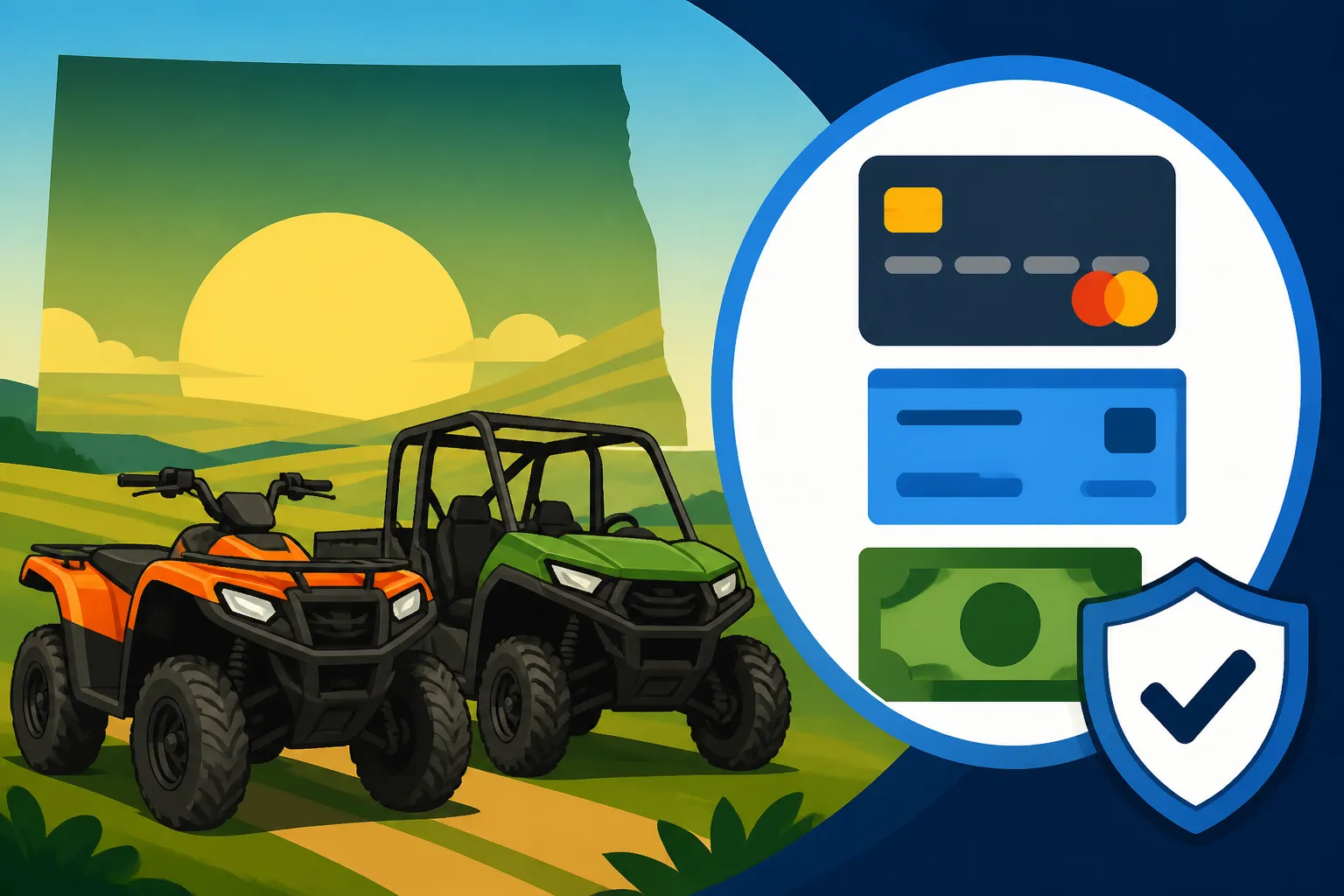
North Dakota Registration Payment Methods
Navigating the ins and outs of registering an ATV or UTV in North Dakota can feel like a labyrinth, especially when you get to the point of actually paying for everything. Many folks worry about whether their preferred payment method will be accepted, if there will be hidden fees, or how to ensure their payment goes through smoothly and securely. This guide is here to untangle the complexities of North Dakota's payment methods for OHV registration and titling, helping you understand all your options and avoid unnecessary headaches.
Understanding the Types of Payments Accepted
When it comes to paying for your off-highway vehicle (OHV) registration and title in North Dakota, you've got a few options. It's not a one-size-fits-all situation, and knowing what's accepted where can save you a lot of time and potential frustration. Whether you prefer the tangible security of cash or the convenience of plastic, there's likely a method that works for you.
Cash and In-Person Payments
For many, cash is king, offering a straightforward, immediate way to pay. When you choose to pay with cash, you'll need to do so in person at a designated location, typically a motor vehicle branch office. This method has its advantages: there are usually no additional processing fees, and you receive an immediate receipt as proof of payment. It's a clear, definitive transaction.
However, carrying large sums of cash comes with its own set of risks, and you'll want to ensure you have the exact amount needed to avoid any complications, as not all offices may have extensive change on hand. It's often a good idea to confirm the precise amount of your [North Dakota Registration Cost Per Year] and any associated fees, like the [North Dakota Title Fee of $5] or the [North Dakota Charges $5 Registration Plus $15 Trail Tax], before you head out. Paying in person also means adhering to the office's operating hours and potentially dealing with wait times, which can be a real drag when you've got other things on your to-do list.
Checks, Money Orders, and Certified Funds
If you're not keen on carrying cash but still prefer a traditional paper-based payment, checks, money orders, or cashier's checks are generally accepted. These methods offer a clear paper trail, which can be incredibly helpful for your records, especially when dealing with something as important as vehicle registration. When writing a personal check, make sure it's drawn from a valid U.S. bank account and that you have sufficient funds to cover the amount. The check should be made out to the North Dakota Department of Transportation or as otherwise specified by the motor vehicle branch.
Money orders and cashier's checks offer an extra layer of security, as they are prepaid or guaranteed by a financial institution. This can be particularly reassuring for larger sums, such as when you're paying [North Dakota's 5 Percent Motor Vehicle Excise Tax] on a new purchase. They eliminate the risk of a bounced check, ensuring your payment is processed without delay. Always keep the receipt from your money order or cashier's check purchase, as this serves as your proof of payment until your registration documents arrive. This option is often preferred for mail-in registrations, providing peace of mind that your payment is secure.
Credit and Debit Card Options
The convenience of paying with a credit or debit card is undeniable for many, allowing for quick transactions without needing to carry cash or write checks. Most motor vehicle branch offices and online portals will accept major credit and debit cards. This is a popular option because it integrates seamlessly into our modern financial lives, letting you leverage your existing banking relationships or credit card rewards.
However, there's often a catch: processing fees. Many governmental agencies, including those handling OHV registrations, pass on the cost of credit card processing to the consumer. These fees are usually a percentage of the total transaction or a flat fee, and they can add a small, unexpected amount to your overall cost. It's always wise to inquire about any potential processing fees before you commit to paying with a card, whether in person or online. While convenient, make sure you understand the full cost before swiping your card.
Navigating Online and Mail-In Payment Processes
Beyond walking into a physical office, North Dakota also offers ways to handle your OHV registration and payment from the comfort of your home or office. These options provide flexibility, but they each come with their own considerations, especially regarding timing and documentation.
Online Payment Portals
In an increasingly digital world, online payment portals offer a streamlined and efficient way to take care of your North Dakota OHV registration. This is often the quickest method for renewals, where your information is already in the system. You typically access these portals through the North Dakota Department of Transportation's official website. You'll need your existing registration information, possibly your VIN, and a valid credit or debit card.
The benefits here are clear: 24/7 access, no travel required, and often instant confirmation of your payment. This can be a huge relief, especially if you're up against a deadline. You'll usually receive an email confirmation that serves as immediate proof of your payment, and your new [North Dakota OHV Plate or Decal: Your Choice] will be mailed to you shortly after. While incredibly convenient, always double-check that you are on the official government website to protect your financial information. Avoid clicking on suspicious links and ensure the site address is secure (look for "https://").
Paying by Mail
For those who prefer a less digital approach or don't have immediate access to a motor vehicle branch, paying by mail remains a viable option. This method involves sending your completed registration forms, such as [North Dakota Form SFN 2872 Explained] for new titles, along with a check or money order, through the postal service. It's crucial to ensure all your paperwork is filled out accurately and completely before mailing it. You don't want your payment rejected because of a missing signature or incorrect information.
When sending payment by mail, consider using certified mail with a return receipt requested. This provides undeniable proof that your payment was sent and received, which can be invaluable if there's any dispute or delay in processing. Remember that mail-in payments will naturally take longer to process than in-person or online transactions, so factor in postal delivery times and internal processing times when considering your deadline. It's not uncommon for [North Dakota Registration Processing Time] to take several weeks.
Payment for Dealer-Assisted Registrations
When you purchase a new or used OHV from a licensed dealer in North Dakota, a significant portion of the registration and titling process, including payment collection, is typically handled directly by the dealership. This is designed to be a convenience for you, the buyer, streamlining what can otherwise be a multi-step process. The dealer will usually collect the purchase price, any [North Dakota Excise Tax on an ATV Purchase], the [North Dakota Title Fee of $5], and the initial registration fees all at once. They then remit these funds and the necessary paperwork to the state on your behalf.
While convenient, it's essential to understand exactly what you're paying for when you get the final invoice from the dealer. This means looking closely at line items beyond the machine's price, such as [North Dakota Dealer Safety Fee of $5] or "doc fees." Reputable dealers will provide a transparent breakdown of all costs. Always ask for a detailed receipt and confirmation that your registration and title application have been submitted. This ensures you're protected and know that your new machine is on its way to being legally yours and ready for the trails. Platforms like LawDepot can be useful resources if you ever need to generate a clear bill of sale for a private transaction later on, or simply want to understand the components of legal sales documents.
Common Pitfalls and Best Practices for OHV Payments
Even with clear instructions, things can sometimes go sideways during payment. A minor oversight can lead to frustrating delays or even penalties. Knowing what to watch out for and how to maintain meticulous records can save you a world of trouble.
Avoiding Payment Delays and Rejections
One of the most common reasons for payment delays or rejections is simply an incorrect amount. Always verify the total cost of your registration, title, and any applicable taxes or fees before submitting your payment. Even a small discrepancy can cause your application to be returned. Another frequent issue with checks is incorrect payee information; ensure the check is made out to the proper entity (e.g., North Dakota Department of Transportation). Expired credit cards, insufficient funds, or security holds from your bank can also lead to online payment failures.
To avoid these pitfalls, double-check all figures and names. If paying online, ensure your credit card information is current and that your bank is aware of any large transactions. If you're mailing a payment, make a copy of your check and all forms before sending them off. This way, if anything goes awry, you have all the information needed to quickly rectify the situation without starting from scratch. Be proactive, and you'll keep things moving smoothly.
Record Keeping and Proof of Payment
Keeping meticulous records of your OHV payments is not just a good idea; it's a critical best practice. This documentation serves as your primary defense should any questions or discrepancies arise regarding your registration status. Whether you pay in cash, by check, or with a card, always obtain and retain a physical or digital receipt. For online payments, print the confirmation page and save the email confirmation. For mail-in payments, keep a copy of the check or money order stub, and use certified mail to get a delivery receipt.
These records prove not only that you paid but also when you paid. This can be especially important if your documents are delayed in the mail or if you need to demonstrate compliance, for example, if you sell the machine and need to show [North Dakota Ownership Transfer in 15 Days] was initiated on time. A well-organized file with your [North Dakota Bill of Sale Form SFN 2888], title application, and payment receipts provides a complete history of your OHV's legal standing. Should you need to create any official documents for sales or other purposes, resources like LawDepot can assist in ensuring they are legally sound and clearly document all financial transactions.
Understanding Related Fees Beyond Registration
It’s easy to focus solely on the base registration fee, but there are often several other charges that factor into the total cost of getting your OHV legally ready for North Dakota's trails and roadways. Understanding these additional fees helps you prepare your payment accurately and avoids any surprises. The two main components for most OHVs are the registration fee and the [North Dakota Off-Highway Trail Tax], which are often combined into one total figure, such as the [North Dakota Charges $5 Registration Plus $15 Trail Tax] for a two-year cycle.
Beyond that, if you're titling a new machine or transferring ownership, you'll pay a one-time [North Dakota Title Fee of $5]. And for most purchases, whether from a dealer or a private seller, you'll encounter [North Dakota's 5 Percent Motor Vehicle Excise Tax]. This excise tax is calculated on the purchase price and is collected at the time of titling. There might also be personalized plate fees if you opt for something custom, or a specific permit fee if you have a unique machine like a tracked dirt bike. Knowing all these components means you can ensure your chosen payment method covers the full, accurate amount, preventing any rejections or delays in getting your OHV legal.
What to Do If Your Payment Doesn't Go Through
It's a frustrating scenario: you've submitted your payment for your OHV registration or title, only to find out it didn't go through. Perhaps a check bounced, a credit card was declined, or a mailed payment was returned. Don't panic, but don't ignore it either. Addressing the issue promptly is key to avoiding further complications.
Steps to Resolve Payment Issues
The first step is to identify why the payment didn't go through. If it was an online transaction, check your email for any rejection notices, which often specify the reason (e.g., incorrect card number, insufficient funds, expired card). For checks, contact your bank to see if it bounced and why. If you mailed a payment and haven't heard back, and the processing time has exceeded expectations, you might need to contact the motor vehicle department directly.
Once you know the reason, you can take corrective action. If it was an error on your part, such as incorrect information, carefully resubmit your payment with the correct details. If it was a bank issue, resolve it with your financial institution first. You'll typically need to contact the [Registering at a Motor Vehicle Branch] office or the central Department of Transportation office to discuss how to resubmit your payment and ensure your application is still on file. Have all your documentation ready, including copies of your original application and any prior payment attempts. Remember, timely resolution is crucial to prevent your OHV from being considered unregistered.
Consequences of Delayed or Unpaid Registration
Ignoring a rejected or delayed payment for your OHV registration can lead to serious consequences. The most immediate is that your OHV remains unregistered, which means you could be riding illegally. [North Dakota Penalties for Riding Unregistered] can include fines and other legal repercussions, making your fun day on the trails quickly turn into a costly headache. An unregistered machine also means you might not be able to legally ride on public lands or designated trails, severely limiting your enjoyment and utility of the vehicle.
Furthermore, if the delay is prolonged, you might accrue additional fees, such as late penalties, or even face difficulties renewing your registration in the future. For new purchases, a delay in titling and registration means you don't officially own the vehicle in the state's eyes, which can create problems if you need to prove ownership for insurance claims or eventual resale. It’s always in your best interest to resolve any payment issues as quickly as possible to ensure your OHV is legally compliant and ready to ride without worry.
Summary of Payment Methods and Considerations
To help you quickly compare the different payment options for your North Dakota OHV registration and titling, here's a handy overview:
| Payment Method | Where Accepted | Key Advantages | Key Disadvantages | Best For… |
|---|---|---|---|---|
| Cash | In-person at Motor Vehicle Branches | Immediate receipt, no processing fees | Security risk, need exact change, travel required | Quick, in-person transactions with specific amounts |
| Personal Check | In-person, Mail-in | Paper trail, no processing fees (usually) | Risk of bouncing, processing time, mail delays | Mail-in renewals, secure paper trail |
| Money Order/Cashier's Check | In-person, Mail-in | Guaranteed funds, secure paper trail | Purchase fee, processing time, mail delays | Mail-in payments for larger sums or security |
| Credit/Debit Card | In-person, Online Portals | Convenient, immediate, 24/7 access (online) | Potential processing fees, online security risks | Fast renewals, convenient digital transactions |
| Dealer Payments | Through Licensed Dealerships | Streamlined, all-in-one process | Potentially less transparency on fees | New purchases, comprehensive service |
Disclaimer
This article is for general informational purposes only and does not constitute professional advice. Laws, prices and regulations vary by location and change over time. Consult a qualified professional for guidance on your specific situation.