Registering at a Motor Vehicle Branch
Trying to get your new-to-you ATV or UTV legally registered in North Dakota can feel like a trek across a muddy pasture on a hot summer day – a lot of work, confusing, and you’re not quite sure you’re headed in the right direction. This guide is here to cut through the confusion and walk you step-by-step through the process of registering your off-highway vehicle (OHV) at your local North Dakota Motor Vehicle Branch, ensuring you’re ready for the trails and ditches.
Why Your Local Motor Vehicle Branch is Your Best Friend (or Foe)
When it comes to the nitty-gritty of getting your off-highway vehicle (OHV) registered and titled in North Dakota, the thought of navigating state government websites or mailing off forms can be a bit daunting. It's easy to feel like you're just a number in a vast system, hoping your paperwork doesn't get lost in the shuffle. That's why, for many folks, the local motor vehicle branch can feel like both a blessing and a bit of a headache all at once. It’s where the rubber meets the road, or in this case, where your ATV or UTV gets its legal footing.
The Convenience Factor of In-Person Service
There's something genuinely comforting about walking into a physical office when you've got questions about paperwork. Instead of staring blankly at a screen, wondering if you've filled out a line correctly, you get to talk to a real person. This isn't just about friendliness; it's about accuracy. A clerk at your local North Dakota Motor Vehicle Branch can often spot a missing signature, an incorrectly transposed VIN, or a common mistake on a form that an online system might just accept, only for your application to be rejected weeks later.
Imagine you've just bought a used quad from a private seller in Bottineau. You've got the bill of sale, the old title, and you're pretty sure you know what to do, but a quick question about where the lienholder information goes on a specific form pops up. Being able to ask that question right then and there, get an immediate, clear answer, and ensure everything is perfect before you leave, can save you a ton of time and frustration down the road. It minimizes the chances of your application getting kicked back, which means you get your [North Dakota OHV Plate or Decal: Your Choice] much faster and can hit the trails around Pembina Gorge without worry.
Common Misconceptions About the Process
Many riders, especially those new to North Dakota or new to OHV ownership, harbor a few misconceptions about how to register their machines. One common thought is, "It's too complicated, I'll just mail everything to Bismarck." While mailing is an option, it removes the immediate feedback loop. If there's an error, you won't know until the forms make their way to the central office, get reviewed, and then get mailed back to you, often with a letter explaining what needs correction. This can add weeks, if not months, to the process.
Another misconception is that you have to go to a specific "main" office, perhaps in Bismarck or Fargo, for all OHV registrations. The reality is that most motor vehicle branches across the state are equipped to handle your ATV and UTV registration and titling needs. Whether you're in Minot, Williston, or a smaller town, your local branch is usually the best first stop. They're there to help residents, and they understand the local nuances and common issues that might arise. Don't feel like you need to make a long drive if you have a local option; embrace the convenience of your community's service center.
Gathering Your Essentials: What to Bring
Walking into the motor vehicle branch without the right paperwork is a surefire way to turn a quick errand into a frustrating delay. It's like heading out for a ride and realizing you forgot your helmet – completely preventable and a major setback. Before you even set foot in the door, make sure you've collected all the necessary documents and funds. Being prepared is half the battle won, and it makes the entire process smoother for both you and the clerk assisting you.
Proof of Ownership: Title, MSO, or Bill of Sale
This is arguably the most critical piece of the puzzle. You need to prove that the ATV or UTV you're trying to register actually belongs to you. The type of document you'll need depends on how you acquired the machine:
- Manufacturer's Statement of Origin (MSO): If your OHV is brand new, you'll receive an MSO from the dealer. This is essentially the birth certificate of your machine, proving it's never been titled before. Ensure all owner information on the MSO matches your identification.
- Previous Owner's Title: For a used machine purchased from a private party that was previously titled in North Dakota or another state, you'll need the original title, properly signed over to you by the previous owner. Pay close attention to where signatures are required and make sure the seller completed their portion accurately, including odometer readings if applicable (though often not for off-road-only machines).
- Bill of Sale: In some cases, especially for older machines or those coming from states that don't title all OHVs, you might primarily have a [North Dakota Bill of Sale Form SFN 2888]. This form is crucial for private sales, detailing the transaction, the machine's VIN, the sale price, and the names of both buyer and seller. If you're wondering how to formalize a private sale or what a good bill of sale should include, resources like LawDepot can provide templates that ensure all the necessary legal information is present, offering peace of mind for both parties. If the machine has no title at all, you might be looking at [North Dakota Registration Without a Title], which can involve additional steps like a [North Dakota Statement of Ownership Form SFN 2903].
Ensuring a clear and unbroken chain of ownership is paramount. If there's any ambiguity or missing information, the motor vehicle branch might ask for additional documentation or clarification.
Personal Identification and Residency Verification
You'll need a valid, government-issued photo ID. This typically means your North Dakota driver's license or state-issued identification card. This isn't just to confirm who you are, but also to ensure you're a legal resident of North Dakota if you're seeking a resident registration.
For new residents moving into the state, or for those whose ID might still reflect an out-of-state address, you might need additional proof of North Dakota residency. This could include a utility bill in your name at your North Dakota address, a lease agreement, or other official mail. The clerks need to verify that you genuinely reside in the state to process a standard registration. It's always best to be over-prepared when it comes to proving you call North Dakota home. For more specific details on what constitutes proof, check out [North Dakota Registration and Proof of Residency].
Funds for Fees and Taxes
This is where your wallet comes in! Registering an OHV involves several fees and taxes, and it’s important to know what to expect. While I can't give you exact current dollar amounts, I can tell you the types of charges you'll encounter:
- Registration Fee: This is the core cost to get your machine registered for the two-year cycle.
- Off-Highway Vehicle Trail Tax: This is a dedicated fee that goes towards maintaining and developing OHV trails across the state. It's often collected concurrently with your registration fee. For example, you might see something like [North Dakota Charges $5 Registration Plus $15 Trail Tax] mentioned on your receipt.
- Title Fee: This is a one-time fee for issuing your OHV title, typically a nominal charge. See [North Dakota Title Fee of $5] for more information on this specific cost.
- Motor Vehicle Excise Tax: North Dakota imposes a motor vehicle excise tax on the purchase price (or fair market value) of an OHV. This is often 5% of the machine's value. You'll pay this at the time of titling. It applies whether you bought from a dealer or a private seller. Delve deeper into this with [North Dakota's 5 Percent Motor Vehicle Excise Tax]. This tax is crucial, and understanding how it's calculated, especially if you had a trade-in, is important. For instance, [Does a Trade-In Lower North Dakota's 5 Percent Excise Tax?] explains how your taxable base might be reduced.
Most motor vehicle branches accept cash, checks, and often credit or debit cards, but it's always a good idea to confirm payment options with your local branch beforehand. Bringing enough funds to cover all potential charges will prevent you from having to run to an ATM mid-process.
Navigating the Forms: A Step-by-Step Guide
The stack of forms at the motor vehicle branch can look intimidating, but once you break them down, they're quite manageable. The clerks are there to guide you, but having a general understanding of what each form is for and what information it requires will make the process much smoother and faster. Think of it as knowing the basic trail etiquette before hitting a new riding area – it just makes everything better.
The Title Application (SFN 2872)
This is the big one. The North Dakota Department of Transportation (NDDOT) form SFN 2872 is your application for a Certificate of Title and Registration. It's where you formally request ownership and registration of your OHV. You'll need to provide detailed information about:
- Yourself: Full name, address, driver's license number, and contact information.
- The OHV: The Vehicle Identification Number (VIN), make, model, year, fuel type, and body style. Accuracy here is absolutely critical. Double-check the VIN against your machine, the bill of sale, and the previous title. A single digit off can cause major headaches.
- Lienholder Information: If you've financed your OHV, your bank or credit union will be a lienholder. Their full name and address must be accurately recorded on this form, as they will hold the physical title until the loan is paid off.
It's tempting to rush through forms, but taking your time with SFN 2872 is vital. Any discrepancies could lead to delays or even rejection of your application. For a complete breakdown of what goes on this form, check out [What the Title Application SFN 2872 Asks For].
Bill of Sale and Statement of Ownership
These forms are critical, especially in private sales or when dealing with machines that might have a less-than-perfect paper trail.
- [North Dakota Bill of Sale Form SFN 2888]: For any private sale, this document is your primary record of the transaction. It should clearly state the buyer's name, seller's name, the date of sale, the purchase price, and a full description of the OHV, including the VIN. Both buyer and seller should sign it. A well-crafted bill of sale is your proof of purchase and helps establish the value for excise tax purposes. If you're drafting one yourself or want to ensure you have all the necessary legal clauses, services like LawDepot can be invaluable for creating customized, legally sound documents for your specific situation. This helps protect both parties in the transaction.
- [North Dakota Statement of Ownership Form SFN 2903]: This form comes into play in more unique circumstances, such as when you're registering a homemade OHV or an older machine where the original title has been lost and cannot be replaced by the prior owner. It essentially allows you to attest to your ownership under certain conditions, providing details on how you acquired the machine and what steps you've taken to confirm its history. This isn't a form you'll use for every registration, but it's important to be aware of its existence for those tricky situations, especially for those older machines that have been passed down through generations of a family.
Understanding Excise Tax Declaration
When you register and title your OHV, you'll also be declaring its value for excise tax purposes. As mentioned, North Dakota's excise tax is typically 5 percent of the purchase price or the fair market value of the machine.
- Purchase Price vs. Fair Market Value: If you bought your OHV from a dealer, the purchase price is usually straightforward. For a private sale, the agreed-upon purchase price on your bill of sale will generally be used. However, if the NDDOT suspects the declared price is significantly lower than the machine's actual value (e.g., if a relative sold it to you for a dollar), they might ask for an appraisal to determine the fair market value. This ensures everyone pays their fair share. Read more about this distinction in [North Dakota Excise Tax on a Private Sale] and [North Dakota Excise Tax on a Dealer Purchase].
- No Stacking Sales Tax: A common point of confusion is how North Dakota's excise tax differs from traditional sales tax. Here's the good news: you won't pay both sales tax and this excise tax on your OHV purchase. The 5 percent excise tax is what applies to titled motor vehicles, which includes ATVs and UTVs. This helps simplify the tax structure for these types of purchases.
- Trade-In Impact: If you traded in an old machine towards the purchase of a new one, the excise tax will typically be calculated on the net difference – the price of your new OHV minus the trade-in value. This can offer a nice tax saving. To understand how this works in detail, refer to [Does a Trade-In Lower North Dakota's 5 Percent Excise Tax?]. Always bring documentation of your trade-in if applicable.
Completing these forms accurately and honestly is crucial. They are legal documents, and providing false information can have serious consequences.
What Happens After You Hand Over the Paperwork
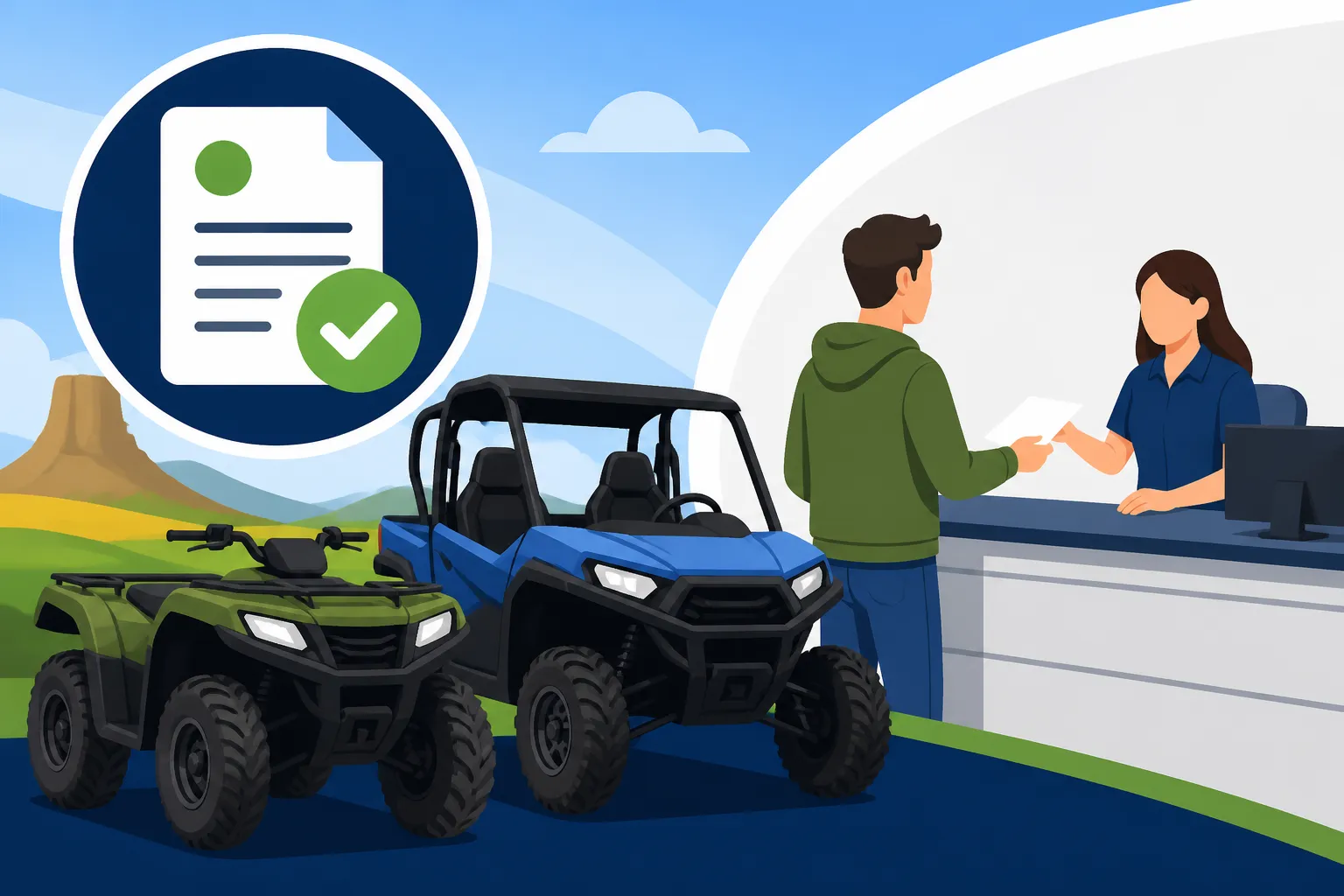
You've gathered your documents, filled out the forms, and stood patiently in line. Now comes the moment of truth: handing everything over to the motor vehicle branch clerk. This isn't just a simple transaction; it's a critical review process that can determine whether you leave with your temporary registration in hand or a list of corrections to make. Understanding this final stage will help manage your expectations and ensure a smooth wrap-up to your visit.
The Clerk's Review and Common Pitfalls
Once you present your stack of documents, the clerk will meticulously go through everything. They're looking for several key things: completeness, accuracy, and consistency. They'll verify your identification, cross-reference the VINs on all documents, check for all required signatures, and ensure all fees and taxes have been correctly calculated. Think of them as the gatekeepers, ensuring every piece of the puzzle fits perfectly.
Common reasons an application might get flagged include:
- Missing Signatures: The number one culprit! Forgetting a buyer's or seller's signature on a title or bill of sale is an easy oversight that causes immediate rejection.
- Incorrect or Illegible VINs: Transposing a digit or having a VIN that doesn't match across all documents is a major problem.
- Missing Supporting Documents: Forgetting the MSO for a new machine or a crucial bill of sale for a private purchase.
- Unclear Chain of Ownership: If the names on the previous title don't logically flow to your name, or if there are multiple assignments that aren't clearly documented.
The beauty of in-person service is that a good clerk can often catch these errors on the spot. They can point out exactly what needs to be fixed, sometimes even allowing you to correct it right there if it's a minor oversight like a missing initial. This immediate feedback saves you the frustration of receiving a rejection letter weeks later.
Receiving Your Decal or Plate and Temporary Permit
If all your paperwork is in order and your fees are paid, congratulations! You'll typically receive a temporary registration permit right away. This permit allows you to legally operate your OHV while the permanent decal or plate is processed and mailed to you. It's usually a piece of paper you can keep with your machine or on your person, proving you're legally registered.
North Dakota's OHV registration operates on a [North Dakota's Two-Year OHV Registration] cycle, with registrations typically expiring in even-numbered years. You'll receive a physical decal (for Class I, II, or III OHVs that are generally smaller) or a license plate (for some larger, road-capable machines, though most OHVs get decals) in the mail a few weeks after your successful registration. The decal needs to be prominently displayed on your machine according to state regulations. Knowing the rules for your specific OHV class is important, as [North Dakota OHV Plate or Decal: Your Choice] is technically accurate, but often determined by the machine type.
The Central Office Review and Title Issuance
While you'll walk out with your temporary registration, the actual Certificate of Title isn't usually issued on the spot. Your application and supporting documents are forwarded to the NDDOT's central office in Bismarck for final review and processing. This is where your official title is printed and mailed to you (or to your lienholder, if you financed the machine).
This review process ensures consistency and accuracy across all registrations statewide. It’s a behind-the-scenes step that takes time. Don't be alarmed if your physical title doesn't arrive immediately. The temporary permit you received is your legal proof until then. The timeframe can vary, but generally, you can expect your title in a few weeks. If you're anxiously waiting, you can get a better idea of what happens during this period by looking at [Waiting for a Title After Bismarck Central Office Review]. Just remember, patience is a virtue in this stage of the process!
Special Scenarios and Common Questions
The standard registration process is usually straightforward, but off-highway vehicle ownership often comes with unique circumstances. From buying a machine across state lines to dealing with a vintage quad that has no records, these situations can add layers of complexity. Knowing how to approach these special scenarios before you visit the motor vehicle branch can save you a world of trouble and ensure you’re not caught off guard.
Registering a Machine Purchased Out-of-State
So, you found the perfect deal on a UTV in Minnesota or Montana, and now you’re bringing it home to North Dakota. That’s great, but there are a few extra steps you might need to take compared to an in-state purchase. The biggest hurdle often involves verifying the VIN and ensuring all previous state paperwork is in order.
North Dakota wants to make sure the machine you’re bringing in is legitimate and that you are its rightful owner. This might involve a VIN inspection, where an authorized agent (sometimes a law enforcement officer or certain dealership personnel) physically verifies the VIN on the machine matches the paperwork. If the previous state didn't title OHVs, or if the title is old or damaged, you might need additional documentation to prove ownership, such as multiple bills of sale in the chain. It’s always best to bring all available paperwork, even if you’re unsure it’s needed. For specific requirements, especially for vehicles coming from outside the U.S., researching [North Dakota Registration for an Imported Machine] is a good idea.
Handling a Machine With No Existing Paperwork
This is one of the more challenging scenarios for OHV owners. Perhaps you inherited an old farm quad, or you bought a vintage dirt bike at an auction years ago, and there was simply no title or clear bill of sale ever exchanged. When a machine legitimately has [North Dakota Machines With No Paperwork], the path to registration becomes a bit more complicated, but not impossible.
You'll need to work closely with the NDDOT, likely starting with your local motor vehicle branch. They may require a detailed [North Dakota Statement of Ownership Form SFN 2903], where you explain how you acquired the machine, how long you've had it, and what efforts you've made to find previous owners or documentation. You might also need to provide a sworn affidavit attesting to these facts. In some cases, a VIN inspection will be mandatory to ensure the machine isn't stolen. Resources like LawDepot can be extremely helpful here, allowing you to create affidavits or custom bills of sale (even if retroactively) that can assist in establishing a paper trail and proving your continuous ownership to the state. The goal is to establish "proof of continuous possession" and reassure the state that you're the rightful, legal owner. This process can take time and may involve review by the central office, so be patient and thorough.
Dealer Purchases vs. Private Sales
While the end goal of registration is the same, the journey differs slightly depending on whether you purchased your OHV from a licensed North Dakota dealer or a private seller.
- Dealer Purchase: When you buy a new or used OHV from a dealer, they often handle much of the registration and titling paperwork for you. They'll collect the necessary fees and taxes (including the excise tax and often a small dealer safety fee), prepare the title application, and submit it on your behalf. This is a huge convenience, as the dealer is familiar with the process and ensures everything is done correctly. You'll typically just need to sign a few forms and provide your ID. They'll give you a temporary permit, and your permanent decal/plate and title will arrive in the mail.
- Private Sale: If you're [Buying From a Private Seller in North Dakota], the responsibility for all the paperwork falls squarely on your shoulders. You'll need to ensure the seller properly signs over the title, that you have a complete and accurate [North Dakota Bill of Sale Form SFN 2888], and that you bring all necessary documents to the motor vehicle branch yourself. While it requires more effort on your part, understanding each step, as outlined in this guide, will empower you to handle it confidently. Just ensure all your documents, especially the signed-over title and bill of sale, are in perfect order before you head to the branch.
Required Documents for OHV Registration
When registering your Off-Highway Vehicle (OHV) at a North Dakota Motor Vehicle Branch, the documents you need can vary slightly based on how you acquired your machine. This table provides a quick overview to help you prepare.
| Document Type | New from North Dakota Dealer | Used from North Dakota Private Seller | Used from Out-of-State Seller | Homemade Machine (No Prior Title) |
|---|---|---|---|---|
| Proof of Ownership | Manufacturer's Statement of Origin (MSO) | Properly signed-over Title & Bill of Sale | Out-of-state Title (if applicable) & Bill of Sale | [North Dakota Statement of Ownership Form SFN 2903] |
| Bill of Sale | Dealer Invoice / Purchase Agreement | [North Dakota Bill of Sale Form SFN 2888] | Bill of Sale (even if non-ND form) | May be required for parts purchases |
| Personal ID | Yes | Yes | Yes | Yes |
| Proof of ND Residency | Yes (if ID is out-of-state) | Yes (if ID is out-of-state) | Yes | Yes |
| Title Application (SFN 2872) | Dealer often prepares, you sign | You prepare & sign | You prepare & sign | You prepare & sign |
| VIN Inspection | Rarely needed | Rarely needed | Possibly | Possibly |
| Funds for Fees/Taxes | Yes (paid to dealer) | Yes (paid to branch) | Yes (paid to branch) | Yes (paid to branch) |
Disclaimer
This article is for general informational purposes only and does not constitute professional advice. Laws, prices and regulations vary by location and change over time. Consult a qualified professional for guidance on your specific situation.