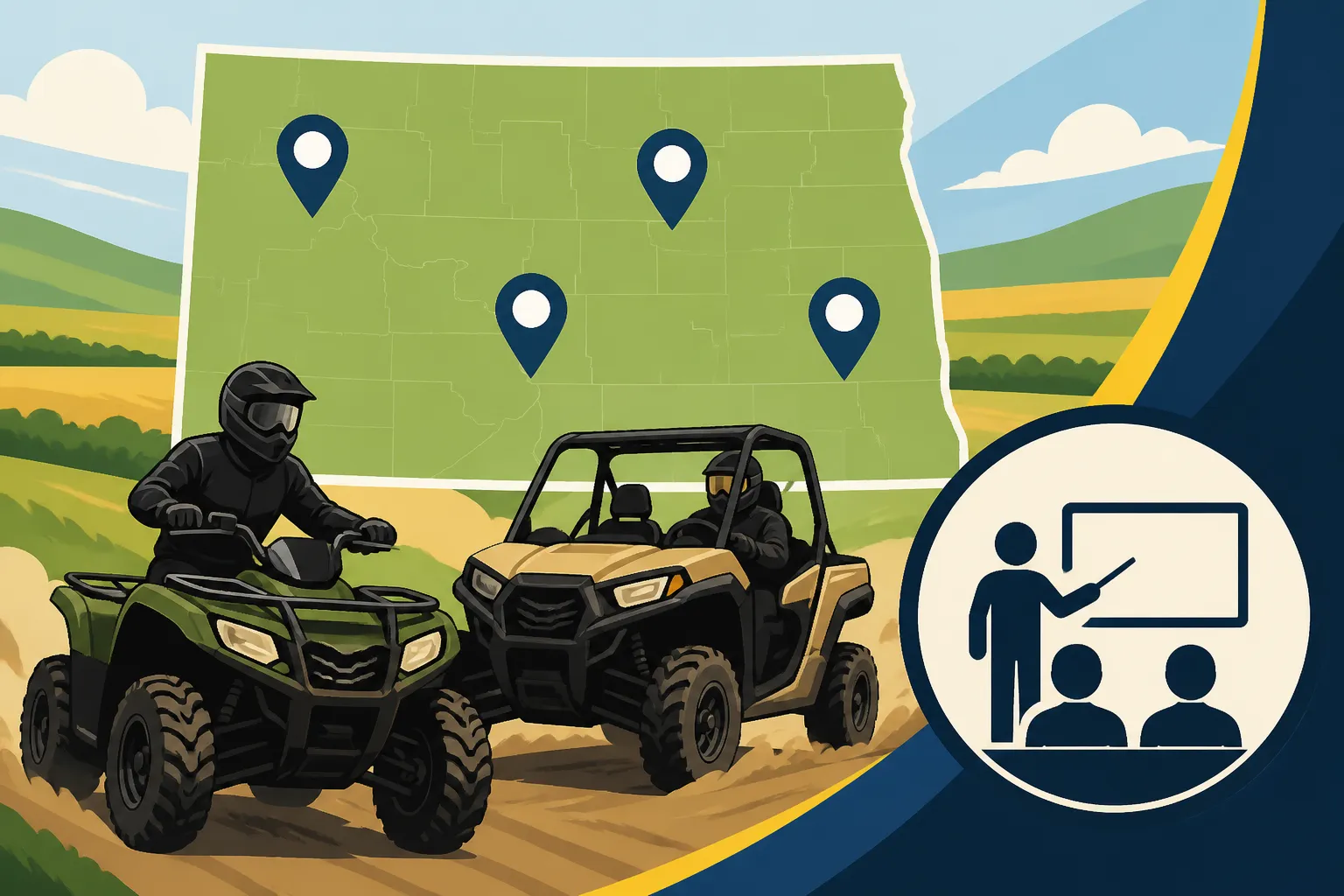
Classes Scheduled Around the State
Finding an ATV or UTV safety class in North Dakota can take more than checking one date: classes are held in different places, and availability changes. The practical approach is to confirm whether you need a certificate, look for an official class near you, and verify the details before making plans. Here’s how to do that and what to check before attending.
How to find a North Dakota class
North Dakota safety classes are scheduled around the state, but you should not assume that every community has a class on a regular timetable. Local offerings can depend on instructor availability, enrollment and the time of year. A class that suited a family last season may not be offered at the same location or time this season.
Start with the state’s official OHV safety-training information and its current class schedule. Look for the event details that matter to you: the date, location, age or eligibility requirements, how to register, and whether the class is in person. If you find a listing on a community calendar or social media page, verify it with the official course information or the listed organizer before traveling.
The state’s safety training program is the right place to begin when you need to know what training is recognized. North Dakota Safety Training Run by the State explains the state program, while North Dakota Safety Class Schedule is a useful reference for the scheduling question. Course availability and registration instructions can change, so use the latest official information rather than relying on an old event announcement.
Try searching by the part of the state you can reasonably reach, not just by your hometown. A nearby class might be listed under a state park or another community, and a longer drive may be worthwhile if it fits your schedule. If no date works, check again later; new offerings may be posted as instructors and venues are arranged.
When reviewing an event listing, confirm these points before you sign up:
- The course is for OHV riders. A class for another type of vehicle or activity may not meet your need.
- The class is recognized for the certificate you need. Do not assume that any general riding clinic counts as state safety training.
- The student meets the eligibility requirements. Age rules can affect when a student may take the course or how the certificate applies.
- The location and arrival instructions are clear. Confirm the facility, check-in time and any directions from the organizer.
- Registration is complete. A listing may describe a class without reserving a place for you.
- The class has not changed. Check for a cancellation, a venue change or an update shortly before leaving.
The schedule is only part of the answer. Before booking, make sure the course actually addresses the requirement that applies to the rider. North Dakota Safety Course Age Floor of 12 and North Dakota Riders Under 16 are relevant when deciding whether a young rider needs training and when they may take it. Rules can depend on age and riding circumstances, so confirm the situation rather than relying on a class title alone.
Choosing between an in-person class and an online option
An in-person class is a good fit for riders who learn best with an instructor and want a scheduled session. It also gives families a chance to ask questions about safe operation and riding decisions. The trade-off is practical: you need to travel to the location, fit the date into your calendar and follow the organizer’s registration instructions.
An online option may be more convenient if an approved course is available and the rider is comfortable learning independently. However, do not assume that an online course is accepted for every purpose or that it replaces an in-person class listed for a particular requirement. Check the state’s current guidance before choosing a format. North Dakota Online Safety Course Option and North Dakota Classroom Safety Classes can help you compare the available paths.
| Option | May suit you if | What to confirm |
|---|---|---|
| Scheduled in-person class | You prefer instructor-led learning or want a fixed class date | Location, registration, eligibility, and whether the course satisfies your requirement |
| Online course | You need flexibility and can complete training remotely | That the course is currently recognized and that the student meets its age rules |
| Class arranged for a group | Several riders need training and a shared date would help | Whether an instructor can provide it, group arrangements, and any required lead time |
A course’s format does not tell you by itself whether it is the right one. Check who provides it, what certificate or completion record it produces, and how that record is issued. If you need proof for a particular rider, keep the course confirmation and certificate information together. Who Issues North Dakota’s OHV Safety Certificate can help clarify why the issuer matters.
For a group, contact the program or organizer early rather than waiting for an advertised public class. A group session may require advance coordination, and the organizer may need to know the number and ages of participants. Booking a Four-Hour OHV Class for Your Crew covers the group-planning angle. Confirm the actual duration and format with the organizer; don’t assume every class follows the same schedule.
What to check before registering
Before you reserve a place, confirm that the student is eligible for that course. Age can affect both enrollment and the rules for riding. A child who is close to an age threshold may need a different answer from an older teen, and the fact that a class accepts a student does not automatically settle when or where that student may operate an OHV. Check the age guidance and any applicable supervision rules separately.
Next, read the listing carefully for what the student must bring or complete beforehand. Some events require advance registration, while others may provide additional instructions after enrollment. Follow the official listing rather than guessing about materials, arrival time or check-in. If the directions are incomplete, contact the organizer before traveling.
It also helps to plan for the machine and the learning environment. If the class includes practical activities, ask whether participants need to bring an ATV or UTV, and whether the course supplies equipment. Do not assume that a personal machine is required or that one will be provided. Ask about clothing, protective equipment, weather arrangements and any restrictions on machine type. Those details can vary by event.
If you are registering a young rider, make sure the student’s information is entered correctly. Names and other details on a course record may matter when the certificate is later presented or checked. Ask how the completion record is issued and whether the student should keep a physical copy, an electronic copy or both. Showing a Certificate on Demand explains why being able to produce proof can matter after training.
A short checklist can prevent a wasted trip:
- Confirm that the course is an approved North Dakota OHV safety course.
- Check the student’s age and eligibility against current state guidance.
- Register using the instructions for that specific class.
- Verify the address, arrival time and any required equipment.
- Check for schedule changes before departing.
- Save the confirmation and ask how the certificate or completion record will be provided.
If you cannot find a suitable date, do not treat an old listing as proof that a class is still active. Check the official schedule again, look for an approved online option, or ask the state program how to find another offering. Avoid paying for a third-party class until you have confirmed that it meets the requirement you are trying to satisfy.
What a class does and does not cover
A safety certificate and permission to ride are different things. Completing a course does not, by itself, register a machine, provide a visitor permit, open private property to you, or make every trail or roadway legal to ride. Keep training, machine paperwork and access rules separate when planning a ride.
For example, a resident and a visitor may face different permit questions. A machine’s registration status does not replace a rider’s training requirement, and a rider’s certificate does not replace a required permit. North Dakota Has No Trail Permit for Residents and North Dakota’s Non-Resident OHV Permit address permit questions. For visitors, North Dakota Has No Reciprocity With Any State is useful because a home-state credential or sticker should not be assumed to cover North Dakota requirements.
Before your first ride, check the machine’s registration or permit status, the rider’s eligibility, and the rules for the land or route you plan to use. Private property, public trails, roads and other public land can have different access requirements. If the plan involves a state park, check park access and entrance rules separately; a safety class does not serve as a park entrance permit.
The same distinction applies to the certificate itself. Keep the completion record, but do not treat it as a general license for every rider, machine or location. If a family’s circumstances are unusual—for example, a student is near an age cutoff, a visitor is staying for an extended period, or a rider will use a particular kind of machine—check the specific rule before relying on a broad summary.
A well-chosen class is useful preparation, not a substitute for checking the details of a trip. Find a current, recognized course; confirm the student qualifies; and keep the training record accessible. Then verify the separate registration, permit and access rules that apply to the machine and riding area.
Disclaimer
This article is for general informational purposes only and does not constitute professional advice. Laws, prices and regulations vary by location and change over time. Consult a qualified professional for guidance on your specific situation.