North Dakota Permits Sold at Any State Park
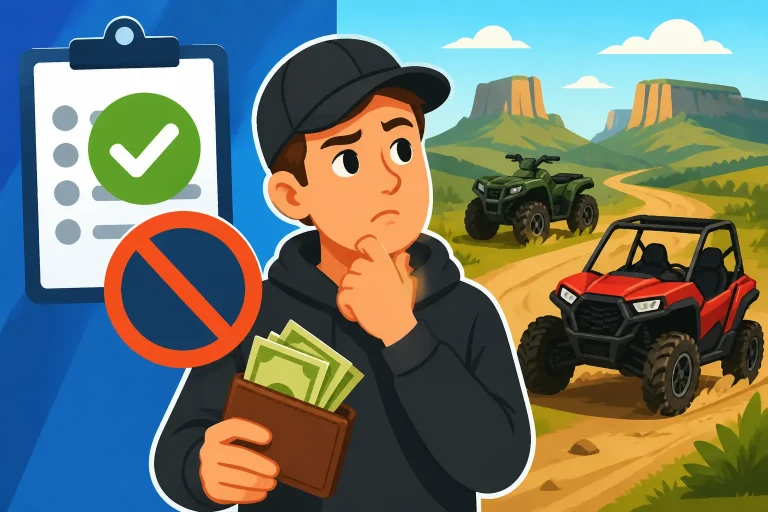
A North Dakota state park can be a convenient place to buy an OHV permit, but the permit’s purpose is easy to misunderstand. It is not the same as a park entrance permit, and buying one at a park does not automatically open every nearby trail. Here’s how park sales work, who may need a permit, and what to check before you unload your ATV or UTV.
What You Can Buy at a North Dakota State Park
North Dakota state parks are one in-person option for visitors buying an off-highway vehicle permit. That can be helpful if you are already traveling through the state, decide to ride after you arrive, or prefer to speak with staff rather than purchase online.
The permit is intended for qualifying nonresident OHV use in North Dakota. It applies to the machine, not simply to the person who bought it. If you bring more than one machine, do not assume one permit covers the whole group. Check the current requirements for each vehicle before riding.
A park is a sales location, not necessarily the place where you will ride. Buying a permit at a state park does not mean that the park allows OHV riding on its grounds. Riding access depends on the land manager and the specific route or riding area. For a broader explanation of what the visitor permit covers, see North Dakota’s Non-Resident OHV Permit.
What “sold at any state park” means in practice
A park can give you a convenient place to ask about and purchase the permit, but it is worth confirming the details before making a special trip. Park offices and visitor services may have different operating hours, and availability can depend on staffing or seasonal operations. A park entrance station, campground host, or unattended payment station may not offer the same services as a staffed office.
Before heading to a park specifically to buy a permit, check the park’s current contact information or call ahead. Ask whether staff can issue the OHV permit at that location, what information you need to bring, and whether the office will be open when you arrive. This is especially useful if you expect to arrive outside normal business hours.
If the park cannot issue the permit at the time you arrive, you may be able to purchase it online instead. Review North Dakota Permits Sold Online before you travel so you know what options are available and how to have proof ready for the ride.
What to have ready
Have the machine’s identifying information available. That may include its make, model, vehicle identification number, and registration details. If you are carrying paperwork, make sure the identifying information is legible and matches the machine you plan to operate.
It also helps to know who owns the machine and who will be using it. If the ATV or UTV belongs to someone else, a rental company, or a family member, ask the owner what documentation is available and whether any special conditions apply. Do not rely on memory for a VIN or registration number; a clear photo of the vehicle identification label can prevent delays.
You may want a small waterproof document pouch for the permit information and other papers you need on a ride. Some riders use a phone case or pouch purchased from a local outdoor shop or a retailer such as Amazon, but choose a setup that keeps documents readable and does not interfere with safe operation. Keep a backup photo of important paperwork on your phone, while remembering that a photo may not substitute for any required physical permit or certificate.
Who Needs a Nonresident Permit
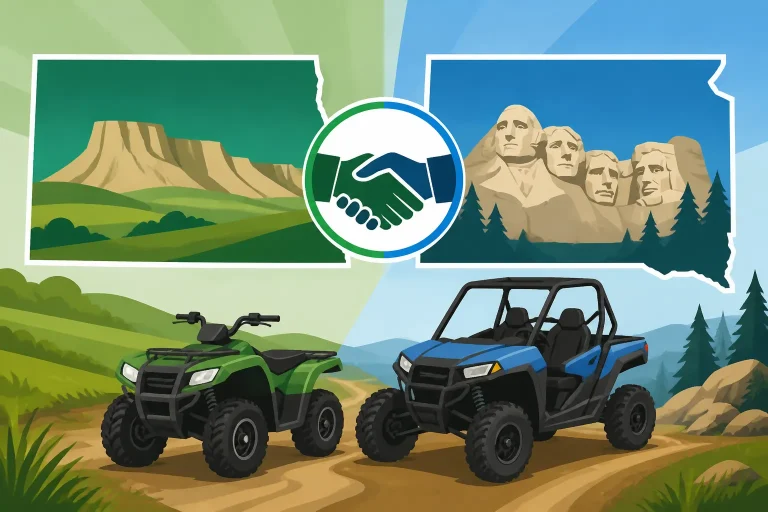
The park-sale option is mainly useful to riders visiting North Dakota with a machine from another state or country. North Dakota does not have broad reciprocity that lets a visitor assume an out-of-state registration or sticker automatically satisfies every North Dakota OHV requirement. Check North Dakota Has No Reciprocity With Any State before relying on the paperwork you use at home.
A visitor may be exempt from registering the machine in North Dakota for a limited period and still need a North Dakota nonresident permit to ride. Those are separate questions: one concerns whether the machine must be registered in North Dakota, and the other concerns the permit required for nonresident use. For the registration side of the issue, see North Dakota’s 30-Day Out-of-State Rule and Why a Visitor Pays Even Though Exempt.
Do not interpret a short visit as an automatic exemption from every requirement. The machine’s home registration, the length of its stay, where you intend to ride, and whether the machine falls within North Dakota’s OHV definition can all matter. If you will be in the state for an extended stay, or keep a machine at a North Dakota cabin or other property, check the rules that apply to that situation rather than relying on advice for a weekend visitor.
One machine is not necessarily covered by another machine’s permit
If your family brings two ATVs and a UTV, treat them as separate machines when checking permit requirements. A permit associated with one machine should not be assumed to authorize another. This is easy to overlook when a group shares one purchase or one person handles the paperwork.
Before you buy, write down each machine’s identifying details and confirm which machines need permits. That is often easier than trying to sort out a missing permit at the trailhead. If you add a machine after your first purchase, verify whether you need a separate permit for it.
The same caution applies to a rental. Ask the rental provider what paperwork comes with the machine and whether the North Dakota visitor permit is already addressed. Do not assume the rental agreement, home-state registration, or a park entrance purchase takes care of the OHV permit. The provider should be able to explain what is included and what the renter must arrange.
A long stay calls for a fresh check
The rules for a brief visit may not fit someone who keeps riding in North Dakota beyond the visitor period. If you are moving to the state, leaving your machine there for much of the year, or riding repeatedly over an extended stay, check whether North Dakota registration becomes necessary and what steps are required.
It is better to resolve that before the visitor period ends. Keep records of when the machine entered the state and the paperwork it carries. If your situation does not fit the ordinary weekend-visitor case, ask the relevant state office what applies rather than trying to infer the answer from the permit alone.
A Park Entrance Permit Is a Different Purchase
A common source of confusion is the word “permit.” North Dakota has park entrance requirements that are separate from the OHV permit. Paying for vehicle access to a state park does not, by itself, meet the requirements for operating an ATV or UTV. Likewise, purchasing an OHV permit does not automatically cover park entrance charges.
Think of them as two separate permissions:
| What you are paying for | What it addresses | What it does not automatically provide |
|---|---|---|
| Nonresident OHV permit | The applicable state requirement for a visiting OHV | Permission to ride on every public or private parcel |
| State park entrance permit or fee | Entry to a state park under its current rules | Authorization to operate an OHV where riding is not allowed |
| Trail or site access | Use of a particular area, route, or facility | A substitute for required vehicle paperwork |
| Landowner permission | Access to private land when required | A substitute for state permit or registration requirements |
Before leaving the park, make sure you have handled both the vehicle requirement and any entrance or site-access requirement for your destination. If you are camping, bringing a truck and trailer, or using a park as a staging point, check the park’s current rules for those activities too. Information about the separate charge is covered in North Dakota State Park Entrance Permits.
A permit also does not grant permission to ride on land simply because it is public. Some public areas prohibit OHVs, while others allow them only on designated routes or under particular conditions. Private land requires the appropriate permission. Confirm the rules for the specific riding area, not just the location where you bought your permit.
That distinction matters when your plan includes a state park and a separate trail system. A park might be a convenient place to stop, camp, or buy paperwork without being an OHV riding destination. Check route maps and land-manager notices before you unload. For example, trail access and conditions can differ between state-managed riding areas, federal grassland roads, and local routes.
Buying at a Park Without Losing Ride Time
A little planning can make an in-person purchase quick. The main risk is arriving at a park expecting a counter to be open, then discovering you need to find another sales option or delay your ride.
Confirm the sales location and hours
Use the park’s current contact details and ask directly whether it sells nonresident OHV permits. Confirm the office hours for the day you plan to arrive, whether a staff member will be available to issue the permit, and whether the location accepts the payment method you intend to use. Rules and procedures can change, so rely on current information rather than an old forum post or a past visit.
If you are traveling on a weekend, holiday, or during a shoulder season, calling ahead is especially useful. A park may be open to visitors while a particular service counter is closed. If you cannot reach staff, consider buying before you leave home through the current online option rather than relying on a last-minute stop.
Prepare information before you reach the counter
Have the machine’s details ready and make sure you know how many machines your group is bringing. If the purchase form or staff asks for ownership or registration information, you can respond without searching through a trailer full of gear.
A short checklist helps:
- List each ATV or UTV that will be operated.
- Record the make, model, and VIN for each machine.
- Gather the home-state registration or ownership information.
- Confirm who will be buying the permit and what payment options are accepted.
- Ask whether the issued proof must be displayed, carried, or both.
- Save the receipt and any permit confirmation with the machine’s paperwork.
If staff issue a decal or other physical proof, follow the instructions for placement and care. Do not put it somewhere that will be scraped off by a tie-down, covered by an accessory, or hidden from view. If the instructions are unclear, ask before leaving the counter.
Keep a photograph of the permit and receipt as a backup record. A phone image can help you retrieve information if paper gets wet, but do not treat it as a replacement for a required decal or other physical proof. A waterproof pouch can help protect papers in a pack or vehicle storage compartment. Amazon is one possible place to find a document pouch, but an ordinary sealed folder may work just as well if it stays secure and readable.
Buy before the ride, not at the trail entrance
A park purchase can be convenient when the park is on your route, but do not make it the only step in your ride plan. Some trailheads are not located near a staffed park office, and cell service may be unreliable in remote areas. Buying ahead gives you time to fix an error in machine details or deal with a payment problem before the group is ready to ride.
Keep the permit information accessible to the person operating the machine, not only with the person driving the tow vehicle. If several riders split up, each should know where the relevant documents are and what to show if asked. A second copy of the purchase confirmation in a shared phone folder or printed ride packet can help the group stay organized.
Amazon may be useful for a simple waterproof sleeve or small document organizer if you need one before a trip, but the important part is not the brand. The papers should stay protected, remain easy to retrieve, and not be stored where they can interfere with controls or safe riding.
What the Permit Does Not Settle
Buying the permit is one step, not a complete riding plan. You still need to confirm that your machine is allowed where you intend to ride and that the group meets any separate operator requirements.
Check the destination’s access rules
A North Dakota permit does not guarantee access to every trail, road, park, or public parcel. Some areas have designated routes, width restrictions, seasonal closures, or weather-related closures. Others do not allow motorized riding. Check the map and status information from the land manager before departure, especially after heavy rain or during a closure period.
Do not assume that every road or trail shown on a general map is open to OHVs. Use the map or notice for the agency that manages the ground. If you plan to ride more than one area, check each location separately.
Check who is riding
The machine’s permit does not replace rider-specific requirements. North Dakota has separate safety training rules for some younger riders. If a child or teen is joining the trip, confirm the age-related requirement and whether the rider must carry or be able to show a certificate. See North Dakota OHV Safety Certificates at Age 12 for the safety-certificate rules.
Also check passenger and equipment rules. A passenger should only ride where the machine is designed to carry one, and riders may need appropriate protective gear. If your route includes public roads or ditches, additional road-use rules can apply. A visitor permit does not make an otherwise prohibited road movement legal.
Know what to show during a check
Keep the permit proof and the machine’s other relevant paperwork accessible. If an officer or land manager asks about the machine, you should be able to identify it and explain the paperwork you have. Keep the original documents in a safe, dry place and avoid leaving them loose where they could blow out of a vehicle or get soaked.
A small organizer in the tow vehicle can hold copies, but do not depend on a document left in the truck if the rider may be stopped away from it. Amazon offers various organizers and sleeves, though a pocket-sized folder or resealable waterproof pouch is enough for many riders. Choose something that is easy to open with gloves off and does not create clutter in the riding area.
A Simple Pre-Trip Plan
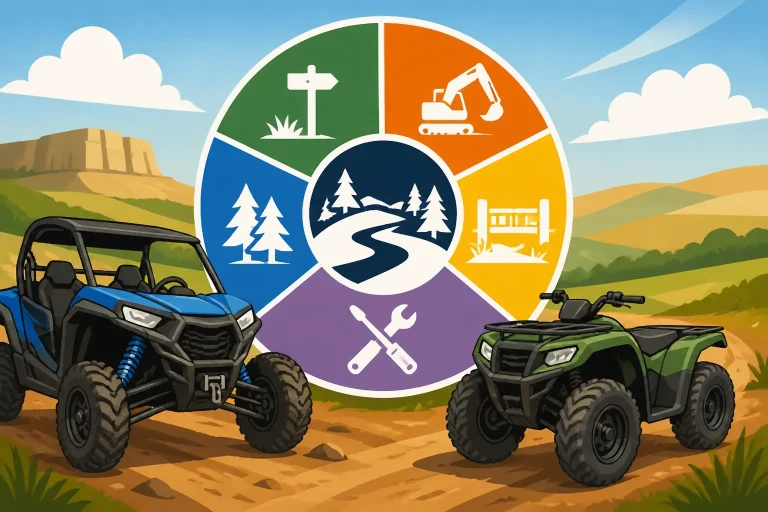
If you want to buy the permit at a state park, make the purchase part of a broader paperwork and access check. That avoids the mistaken assumption that the park counter can solve every issue connected to an OHV trip.
Before departure, confirm the following:
- Whether each machine needs a North Dakota nonresident permit.
- Whether a short-visit rule or longer-stay requirement applies to your situation.
- Whether your chosen park sells the permit and will have a staffed sales point open.
- What vehicle information and payment method you need.
- Whether the permit is a separate purchase from park entrance access.
- Whether the destination actually allows OHV riding.
- Whether any route is closed or restricted.
- Whether younger riders need a safety certificate.
- How the permit proof should be displayed or carried.
- What paperwork should stay with the rider and what can remain in the tow vehicle.
If the trip changes after you buy the permit, recheck the rules for the new destination. A permit purchased at one park may still satisfy the relevant permit requirement for a visitor, but that does not answer whether the new route is open or whether another access fee applies. For help thinking through the difference between a state permit and actual riding access, see Which Ground a Visitor Permit Opens to You.
The practical takeaway is straightforward: a North Dakota state park can be a useful place to purchase a nonresident OHV permit, but confirm that the location can issue it when you arrive. Bring the machine details, treat each vehicle’s paperwork separately, and check park access and riding rules as distinct questions. That small amount of preparation can keep a counter visit from becoming the part of the trip that determines when you finally get on the trail.
Disclaimer
This article is for general informational purposes only and does not constitute professional advice. Laws, prices and regulations vary by location and change over time. Consult a qualified professional for guidance on your specific situation.