Kimball Bottoms and the Missouri River
Kimball Bottoms is a popular place to ride near the Missouri River, but river-bottom terrain can change quickly. A route that looked simple on a dry day may become muddy, soft, or cut off after high water. This guide explains what to expect, how to prepare, and how to ride responsibly while checking access and conditions before you unload.
What to expect at Kimball Bottoms
An open riding area near Bismarck
Kimball Bottoms is an off-highway vehicle riding area along the Missouri River, south of Bismarck. It is known as an open riding area rather than a tightly marked loop system, so riders may encounter broad, informal riding space instead of a single signed route that guides every turn. The riding experience can feel less predictable than following a numbered trail.
The area is often described as roughly 400 acres, but the practical space available to ride can vary with water, mud, closures, and posted boundaries. Treat the area’s size as a general sense of scale, not a promise that every part is open or reachable during your visit. For a closer look at the area’s footprint and setting, see [Kimball Bottoms' 400 Acres in North Dakota].
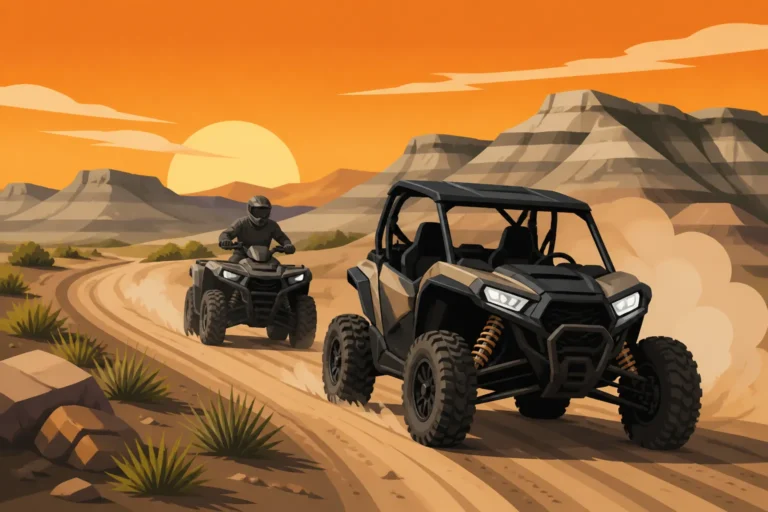
Expect a mix of open ground, uneven surfaces, sandy or silty patches, and tracks formed by other riders. A utility ATV may suit someone exploring at a relaxed pace, while a sport quad may appeal to riders who want room to maneuver. Side-by-side drivers should be especially attentive to soft edges, narrow passages, and any width restrictions posted at access points.
The Missouri River changes the ride
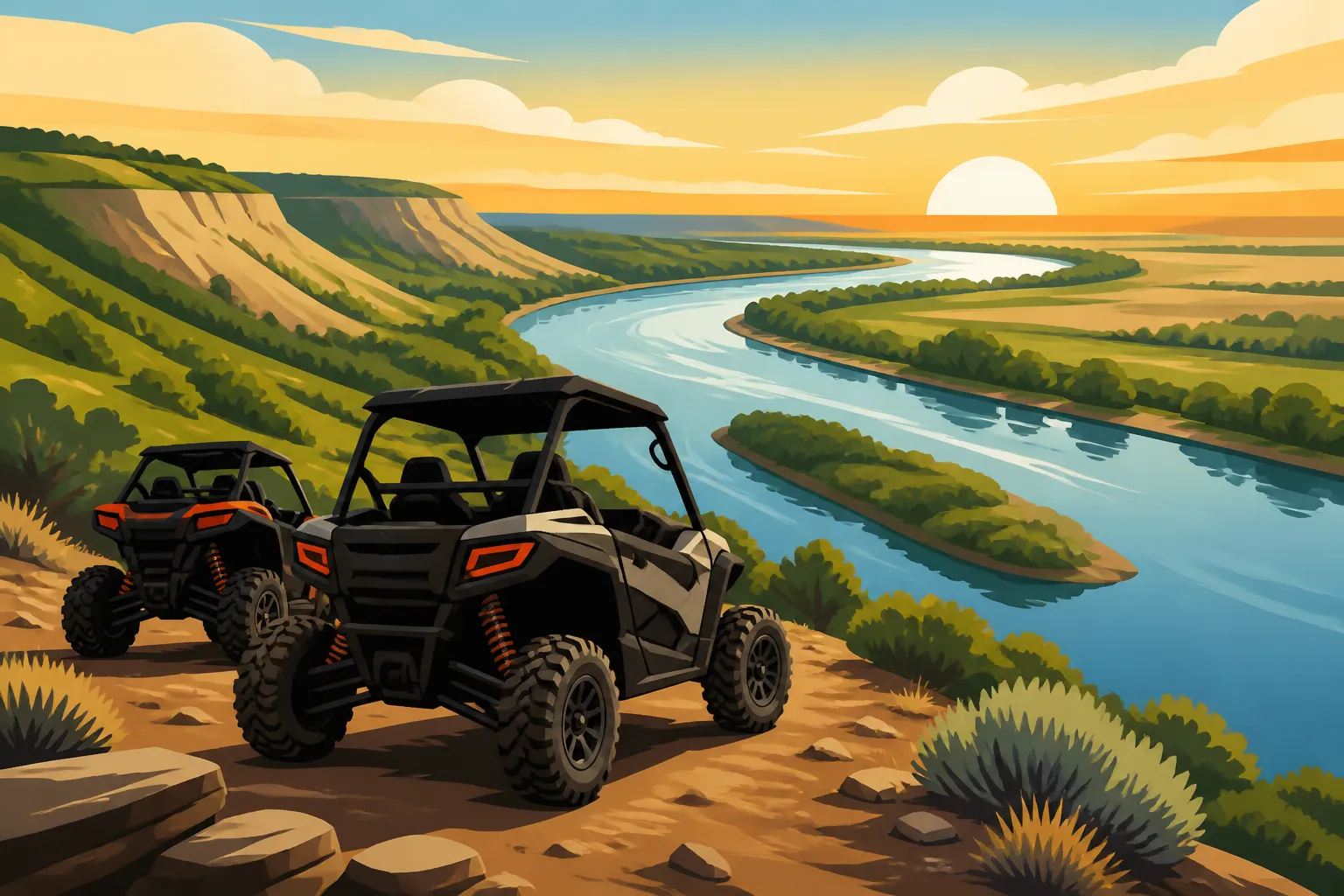
The river is part of Kimball Bottoms’ appeal, but it also makes the landscape changeable. Water levels and weather can affect the condition of low-lying ground, and a familiar route may not be passable on a later visit. Mud can conceal ruts, holes, debris, or a firm-looking surface that gives way under a machine’s weight.
Do not treat a sandbar, riverbank, or shallow-looking channel as a casual extension of the riding area. Water depth, current, soft sediment, and hidden drop-offs can be hard to judge from the seat. Keep a clear margin from the water and avoid entering channels or crossing flowing water unless access is explicitly permitted and the crossing is safe. The guide to [North Dakota Sand Bars at Low Water] offers useful context for why exposed sand does not necessarily mean stable ground.
Flooding can also affect access roads, parking, and the usable riding area. Before a trip, check for notices about closures or high water rather than relying on an old photo, a social post, or a memory of how the area looked last season. [Flooding at Kimball Bottoms] explains why river conditions deserve their own place in your trip planning.
Plan your visit before unloading
Check access, boundaries, and current conditions
Before leaving home, confirm that the riding area is open and that the approach you plan to use is accessible. Recent rain, river conditions, maintenance, or other temporary restrictions may change what is practical. If you arrive and see a closure sign, barrier, or posted restriction, do not go around it just because tracks appear beyond it.
Kimball Bottoms sits in a river corridor where land management and boundaries can be easy to misunderstand. Do not assume that every nearby bank, field, access road, or stretch of shoreline is part of the area open to riding. Land ownership and rules can change across short distances, so stay within clearly authorized riding space. [North Dakota Riding on Corps of Engineers Land] is a helpful reminder that public land does not automatically mean unrestricted OHV access.
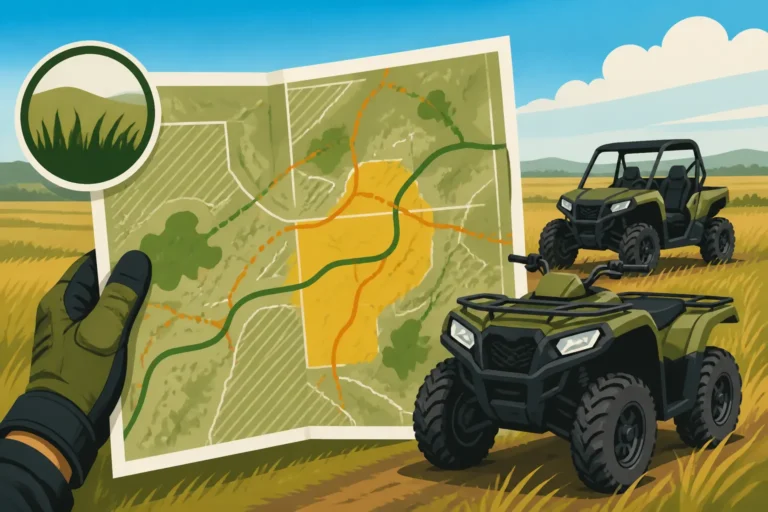
A map can help you understand where you are, but it cannot replace signs on the ground or official closure information. Some riders use onX Offroad to review a route and orient themselves before a trip. If you use it, download or save the information you need before heading out, and compare what you see on screen with posted boundaries and current local notices. Apps can help with navigation; they do not grant permission to ride.
It is also important not to assume that open terrain means unrestricted cross-country travel in adjacent areas. Stay inside the designated riding space and follow marked limits. For a broader explanation of this distinction, see [North Dakota Cross-Country Travel Is Banned].
Choose a machine and route that fit the conditions
A route that suits one machine may be a poor match for another. A wider side-by-side may be harder to place through ruts or between obstacles than a compact ATV. A two-wheel-drive machine may struggle in soft ground where a more capable setup could continue, but extra traction does not make flooded or unstable terrain safe.
Use a conservative first pass to learn the surface. Avoid charging into a muddy patch, following deep ruts without checking their depth, or turning sharply on loose sand. If a section looks uncertain, stop on firm ground and inspect it from a safe distance. Turning back is a sensible riding decision, not a failure to complete the outing.
| Condition you notice | What it may mean | Safer choice |
|---|---|---|
| Water covering a track | The depth and surface beneath it may be unclear | Do not enter unless the crossing is permitted and you can confirm it is safe |
| Fresh, deep ruts | The ground may be soft or churned up | Slow down, keep distance, and choose a firmer route |
| Wet clay or sticky mud | Traction and steering may change abruptly | Avoid forcing your way through; turn around before becoming stuck |
| Sand near the river | The surface may shift or hide a drop-off | Keep away from the water’s edge and avoid unverified crossings |
| Closure sign or barrier | Access is restricted, even if tracks continue beyond it | Stop and use an authorized area or another riding destination |
For trip planning, onX Offroad can be one way to keep a route reference available, especially if cell coverage is inconsistent. Still, use it as a supplement to official information and visible signs, not as a substitute for either.
Ride safely in river-bottom terrain
Prepare for soft ground, weather, and limited help
A quick ride can become a long recovery if a machine bogs down, overheats, or develops a mechanical problem away from the parking area. Bring drinking water, basic first-aid supplies, a charged phone, and gear suited to the forecast. If you ride with others, agree on a regrouping point and a simple plan for what to do if someone gets separated.
A tow strap can be useful, but recovery should be done carefully. Attach it only to appropriate recovery points and keep people clear of a tensioned strap. Avoid spinning tires in deep mud: it can dig a machine in farther, damage the riding surface, and make a straightforward recovery much harder. For longer trips or group outings, [Carrying a Tow Strap on the Prairie] covers a practical item worth thinking through before departure.
Check the weather and recent rainfall, not just the sky above the parking area. Conditions at the river can differ from those across town, and wind, heat, blowing dust, or a sudden shower can change how comfortable and visible the ride feels. If the surface is already wet, consider postponing. Riding through saturated ground can deepen ruts and leave damage that lasts beyond the day’s outing.
Maps and phone service are not guaranteed to work the way you expect once you are riding. onX Offroad may help you orient yourself, but save key map information before you leave and do not rely on a live connection for every decision. Let someone know where you plan to ride and when you expect to be back, particularly if your group is traveling from outside the Bismarck–Mandan area.
Keep the group, other visitors, and land in mind
Open riding areas can bring together riders on different types of machines, with different levels of experience. Keep speed controlled where sightlines are short, slow down around parked vehicles and groups, and leave room for dust to settle before passing. A large machine can be difficult to hear or see when wind and engine noise are competing.
If you are riding with children or less experienced drivers, choose a conservative area away from busy approaches and establish simple rules before starting. Agree on hand signals, set a pace that everyone can manage, and stop somewhere safe if a rider falls behind. A parent or experienced rider should not assume a child can follow an adult’s line through soft ground or around a hidden rut.
Respect other people’s space and the landscape. Do not leave trash, cut across areas that appear closed, or create new tracks outside the authorized riding area. Avoid disturbing wildlife, livestock, or other visitors, and give people near the river plenty of room. Good etiquette matters especially at popular locations where a few careless choices can affect access for everyone.
Registration and permits are separate questions from whether a particular patch of ground is open for riding. Confirm that your machine and situation meet applicable North Dakota requirements before the trip. Visitors should review [North Dakota Non-Resident OHV Permit], while anyone new to local rules can start with [North Dakota OHV Trails: All Four Riding Areas] to understand how Kimball Bottoms fits among the state’s riding options.
Make the day easier from arrival to departure
Use a simple arrival and ride routine
When you reach the area, pause before unloading. Look for current signs, barriers, parking instructions, and any notices about conditions. Check that your trailer is positioned safely and that it is not blocking an access route or taking space needed by others. At busy times, a little patience at the staging area can prevent a stressful start.
Before riding, do a quick machine check: tires, controls, lights if needed, fuel, and any loose straps or cargo. Make sure everyone knows the plan and has the gear they need. Then begin with a short, cautious ride close to your starting point. That first loop helps you judge traction and visibility before you commit to exploring farther.
If you use onX Offroad or another map tool, set your starting point and review your route before you move. Keep the phone secured, and do not operate it while driving. If the route on your screen appears to lead beyond a sign or into uncertain terrain, trust the boundary on the ground and turn back.
At the end of the ride, check the machine for packed mud, loose parts, or damage before loading it. Clean mud from areas where it could interfere with controls or cooling, and secure the vehicle and equipment for the drive home. If conditions were poor, note what you encountered so your next visit can be planned more thoughtfully.
Have a backup plan if conditions are poor
Kimball Bottoms may not be the right choice every day. If recent rain has left the ground soft, high water has affected access, or a closure is in place, do not try to salvage the trip by exploring unapproved neighboring ground. Choose another authorized riding destination, or turn the day into a scouting trip without riding.
Check current trail and area status before traveling, especially if you are driving a long distance or bringing a group. [North Dakota Trail Status by App and Phone] points to ways riders can check for updates. Keep in mind that conditions can still change after you check, so take another look at signs when you arrive.
Parking can also shape the experience. A long trailer or a group arriving together needs more room to stage safely than a single ATV. If parking appears crowded, avoid blocking other vehicles or access routes and consider returning at a quieter time. The tips in [North Dakota Trailhead Parking Limits] are useful when planning around limited staging space.
A little flexibility is part of riding near a river. If Kimball Bottoms is open and the surface is suitable, take time to learn the area at a controlled pace. If it is wet, flooded, or restricted, leaving without riding is often the best way to protect your machine, your group, and the place you came to enjoy.
Disclaimer
This article is for general informational purposes only and does not constitute professional advice. Laws, prices and regulations vary by location and change over time. Consult a qualified professional for guidance on your specific situation.