North Dakota Trail Volunteer Days
North Dakota trail volunteer days can be a practical way to give back, meet other riders, and help keep riding areas enjoyable. But it is not always clear who organizes the work, what volunteers are allowed to do, or whether a trail needs attention after rain. This guide explains how to find a legitimate opportunity, prepare for the day, and help without damaging the trail.
What North Dakota trail volunteers actually do
Trail work is more than clearing branches. Depending on the site and the organizer, volunteers may help with cleanup, basic maintenance, visitor information, or a group project planned by the land manager. The work that is appropriate at one riding area may not be allowed at another, so getting direction first matters.
Common tasks at a volunteer day
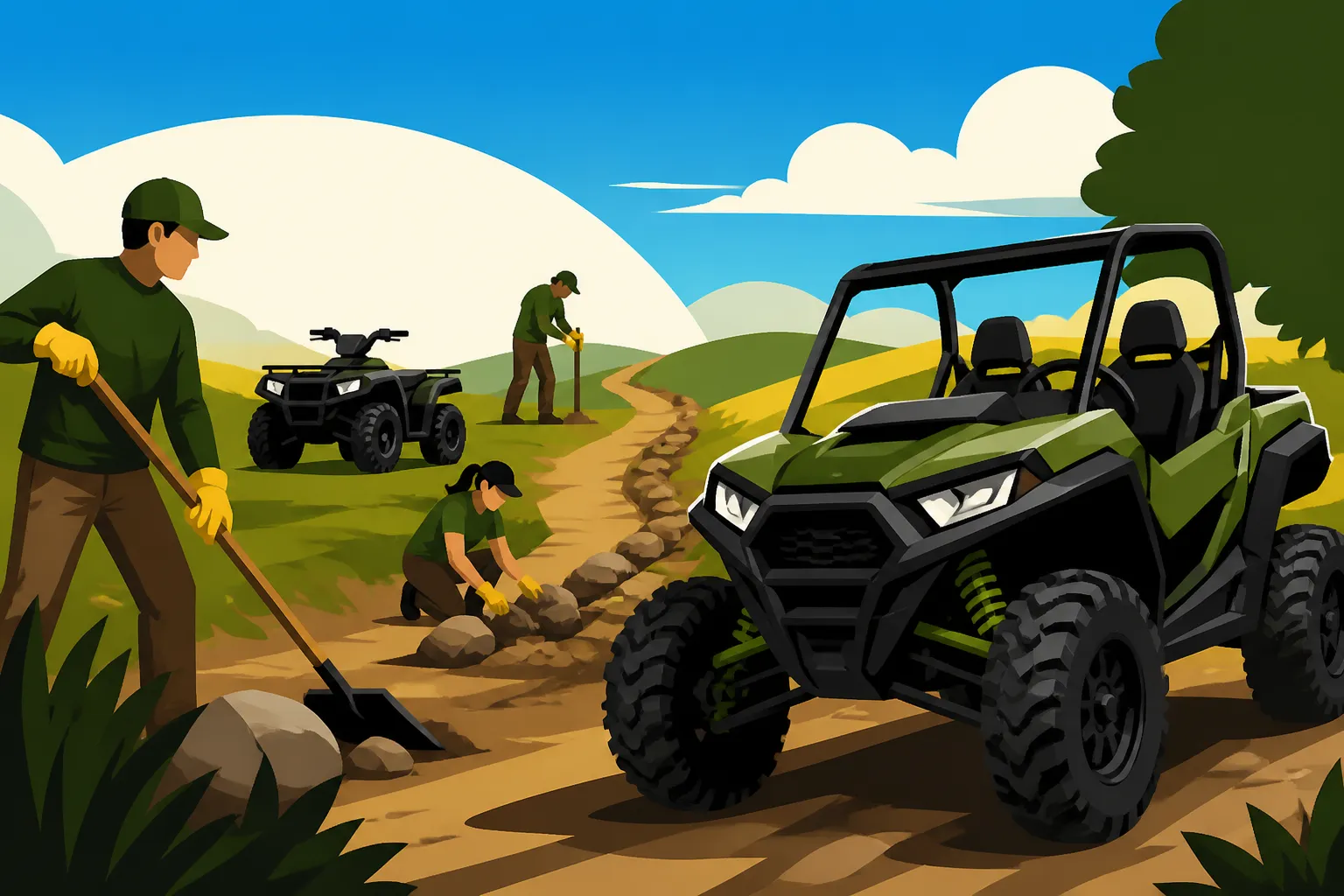
A workday might involve picking up litter, clearing small debris from an approved route, improving a staging area, or helping with signs and other visitor information. Some projects may be more physically demanding, while others are suitable for people who can help with light tasks or coordination. The organizer should explain what the project involves before anyone starts.
Trail conditions can also shape the work. In North Dakota, wet clay and gumbo can be easily damaged by tires or foot traffic, so a cleanup or inspection may be more appropriate than digging or moving material. If a route is soft, muddy, or closed, do not ride onto it to reach a work area unless the organizer specifically directs you to do so. [Tread Lightly on Wet Clay] offers more context on why restraint matters in those conditions.
A volunteer day can also help visitors understand how to use an area responsibly. That might mean assisting with an organized event, sharing basic etiquette with new riders, or helping keep a trailhead tidy. For a broader look at the habits that make shared riding areas work better, see [North Dakota Trail Etiquette Locals Expect].
Why the site and land manager matter
North Dakota riding areas are not all managed the same way. A volunteer opportunity near Pembina Gorge, for example, may have different procedures from one associated with the Roughrider OHV Trail or a riding area near Turtle Mountain. A volunteer’s good intentions do not replace permission from the person or organization responsible for the land.
That is especially important if you see a problem during a ride. A blocked route, damaged sign, eroded section, or discarded material may look like an obvious fix, but moving a sign or changing the trail can create safety, access, or environmental problems. Report what you found and let the appropriate organizer decide what should happen next.
Before making plans, identify the exact riding area and ask who is coordinating the project. [North Dakota OHV Trails: All Four Riding Areas] can help you get oriented to the state’s main riding locations, while [North Dakota OHV Clubs Worth Joining] is a useful starting point for finding rider communities that may know about organized stewardship efforts.
How to find and join a volunteer opportunity
Volunteer days may be announced through a riding club, an event organizer, a land manager, or a local community group. Schedules and projects can change with weather, access, staffing, and trail conditions. Rather than assuming a date you heard about is still happening, confirm the details directly with the organizer.
Start with a specific riding area
If you already ride at a particular location, begin by asking about that site. For example, a rider who regularly visits Pembina Gorge near Walhalla can ask the appropriate park or event contacts whether volunteer work is planned there. Someone who rides the Roughrider corridor between Fort Abraham Lincoln and Fort Rice should identify which part of the route and which managing group the question concerns.
A broad question such as “Are there any trail projects in North Dakota?” may be harder to answer than a focused one. Try asking whether there is a planned volunteer day at a named area, whether new volunteers are welcome, and whether the work is open to people who do not belong to a club. If you are connected with other riders, [North Dakota Group Ride Planning] has related ideas for coordinating people and logistics.
Do not treat an informal online post as permission to work on public or private land. Confirm that the activity is authorized and find out who will be supervising it. Organized projects need clear boundaries: where to park, where to walk, which route is open, and what work volunteers are allowed to perform.
Ask the right questions before you go
A few practical questions can prevent a frustrating trip. Ask whether the project is still scheduled, where volunteers should meet, what clothing or equipment is useful, whether tools will be supplied, and whether the work is suitable for children or people with mobility limitations. Also ask what to do if weather changes or the site closes.
| Question to ask | Why it matters |
|---|---|
| Who is organizing and supervising the work? | Confirms that the project is authorized and gives you a contact for instructions. |
| Where exactly should volunteers meet? | Riding areas may have multiple entrances, trailheads, or parking areas. |
| What tasks are planned? | Helps you decide whether the work matches your abilities and equipment. |
| Are tools and safety gear provided? | Avoids bringing unsuitable tools or arriving without required protection. |
| What happens if the weather turns wet? | Helps prevent travel to a canceled project or damage to soft ground. |
| Is the work appropriate for children or first-time volunteers? | Lets families and newcomers plan safely and realistically. |
If you are traveling to an unfamiliar area, check access and conditions before leaving. [North Dakota Trail Status by App and Phone] and [North Dakota Trail Closures After a Storm] cover useful ways to think about changing trail conditions. A mapping tool such as onX Offroad can also help with trip orientation, but it does not replace an organizer’s directions or confirm that a work site is open. Ask for the meeting location and current instructions from the people running the project.
Prepare for the workday and protect the trail
A volunteer day is easier when you arrive ready for the work, the weather, and the possibility that plans may shift. Prairie conditions can change quickly, and a sunny forecast does not guarantee that a trail surface is firm. The organizer’s instructions should take priority over a personal plan to ride, drive, or walk through the area.
Bring practical clothing and supplies
Wear sturdy footwear and clothes that can handle dust, brush, and changing temperatures. Gloves are useful for many cleanup or maintenance tasks, but the organizer may specify a particular type of protection. Bring water, snacks, and any personal medication you may need. If the project involves tools, confirm in advance whether you should bring them; do not show up with powered equipment or start using tools without approval.
Plan for the work rather than for a recreational ride. A helmet and riding gear may be needed if the organizer has approved travel by OHV, but do not assume you can ride to or through the work area. Leave room in your vehicle for supplies, and follow the parking plan so that trailers and other vehicles do not block access.
For navigation, onX Offroad may be useful for understanding the general area before you travel. Still, use the organizer’s exact meeting directions, posted access information, and any current closure notices. A map can help you avoid getting turned around; it cannot grant permission to enter a closed route or private property.
Respect closures, weather, and instructions
Wet ground is one of the easiest ways for a well-meaning volunteer to cause harm. Tires can leave deep ruts, and walking or hauling equipment across saturated soil may also widen damage. If conditions are questionable, check with the organizer before departure. If a route is closed, stay out—even if the work site appears close or the ground looks passable from the trailhead.
Closures are not merely an inconvenience. They may protect a vulnerable surface, allow repairs to settle, or respond to safety concerns. If the project is postponed, treat that decision as part of responsible stewardship rather than a reason to find another route through the site. [North Dakota Trails Closed by Wet Weather] explains why waiting for better conditions can protect the riding experience over the long term.
Follow the assigned work area and ask before changing anything. Do not relocate signs, cut vegetation, move barriers, or ride around a closure unless the project lead explicitly asks you to do so. If you notice a hazard outside the project area, take note of its location and report it instead of improvising a repair.
Make volunteering sustainable for riders and communities
A good volunteer day should leave the site safer, cleaner, or better cared for without creating new problems. That depends on clear communication, sensible expectations, and respect for the people who manage the land. It also means recognizing that not every contribution has to involve physical trail work.
Choose a role that fits your time and ability
Some people can spend a full day on site; others may only be able to help for part of a project. Ask whether the organizer can use help with check-in, coordination, cleanup, or sharing project information. These roles can be valuable, particularly when a volunteer has limited mobility, a busy schedule, or no experience with trail maintenance.
Families should ask whether children can participate and which tasks are appropriate for them. A child may be able to help with a supervised cleanup, but working around tools, vehicles, or uneven terrain requires careful planning. Bring enough water and warm or sun-protective clothing for everyone, and be prepared to leave early if someone is tired or uncomfortable.
If you cannot attend a scheduled workday, you can still support responsible riding by reporting problems through the proper channel, following closures, and encouraging other riders to do the same. A clear description of a damaged sign or blocked route is more useful than an unverified social media claim. When possible, include the named area, nearby trailhead, and a clear description of the location without entering a closed section to investigate.
Stay involved after the project
Before leaving, check with the organizer about any follow-up needs. They may want volunteers to report remaining issues, return tools, or avoid a section while work settles. Do not assume that a repaired or cleaned area is immediately ready for riding; ask whether any temporary restrictions remain.
If you enjoyed the experience, ask how to hear about future projects and whether there is a club or mailing list you can join. Staying connected can make it easier to find organized workdays and learn the expectations for a particular riding area. When you share information with other riders, pass along confirmed details rather than promising that a project is open or that a route is rideable.
You can also help make the next workday smoother by arriving on time, following the safety briefing, and telling the organizer what worked or what was confusing. Those small contributions matter. Trail stewardship is not only the visible work on the ground; it is also the steady habit of respecting access, reporting concerns, and helping other riders understand how to care for the places they use.
Disclaimer
This article is for general informational purposes only and does not constitute professional advice. Laws, prices and regulations vary by location and change over time. Consult a qualified professional for guidance on your specific situation.