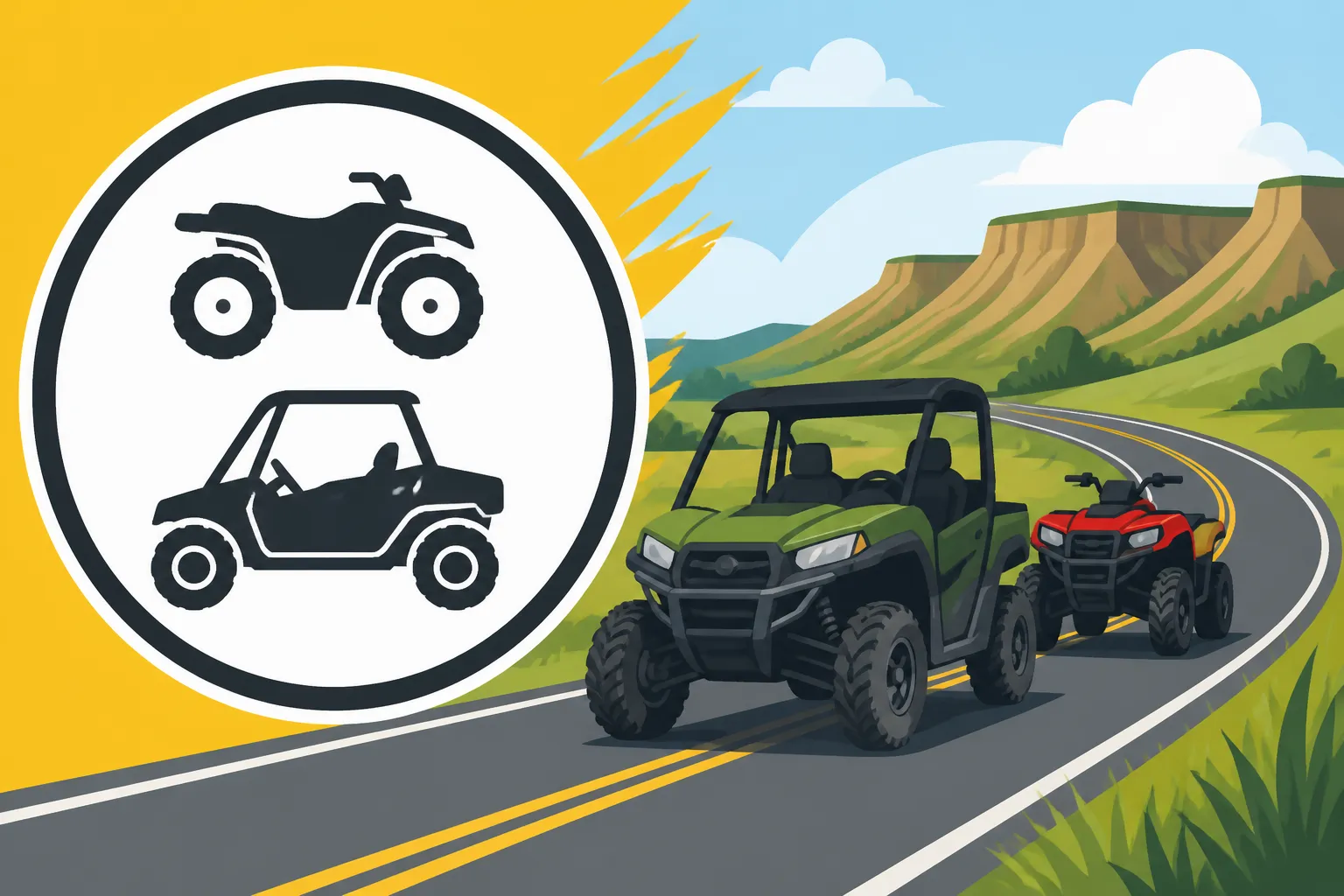
A Roadway Posted at 65 for Class III
It can be incredibly frustrating to own a powerful side-by-side or UTV, knowing it's perfectly capable of keeping up with traffic, only to be confused by North Dakota's nuanced rules about where you can and cannot ride it on public roads. Many owners grapple with the desire to use their robust machines for more than just trails or farm work, wondering if they can legally take the scenic route or run errands on higher-speed paved roads. This guide aims to clear up that confusion, specifically focusing on how North Dakota law opens up roadways posted at 65 mph to qualifying Class III off-highway vehicles, detailing the specific requirements and practical considerations involved.
Understanding North Dakota's Class III OHV Definition
Before you even think about hitting a 65 mph road, it's absolutely crucial to understand what North Dakota considers a Class III off-highway vehicle (OHV). This isn't just bureaucratic jargon; it's the fundamental classification that determines your machine's eligibility for specific road use, especially on higher-speed routes. Without meeting this definition, your aspirations for cruising the open road might hit a legal snag.
What Makes a Machine "Class III"?
In North Dakota, a Class III OHV is quite distinct from your typical ATV (which falls under Class I) or even a wider side-by-side that might creep into Class II territory. The key identifiers for a Class III machine are primarily its steering mechanism and its weight. Specifically, a Class III OHV is defined as a motorized non-highway vehicle with a steering wheel and seating that does not require the operator to straddle the vehicle. Think of your modern side-by-side or UTV – that's the machine we're talking about here. It must also have four or more wheels and generally weighs less than 8,000 pounds. This category is intentionally broad to encompass the utility-focused and sport-focused UTVs that have become so popular. These characteristics are what give Class III machines a certain level of stability and control that lawmakers deemed more suitable for road environments compared to the more agile, straddle-seat ATVs. If you're unsure if your rig fits, consult the official definitions, but generally, if it has a steering wheel and side-by-side seating, you're likely in the right class. For more detailed insights into what constitutes this category, check out [North Dakota Class III Machines Under 8,000 Pounds].
General Road Eligibility for Class III
Now, just because your machine is a Class III doesn't mean you can take it anywhere and everywhere. North Dakota has specific rules about which roads are open to OHVs. Generally, Class I and Class II machines have more limited access, often restricted to ditches, gravel roads, or specific posted trails. However, Class III machines enjoy a bit more freedom. The law provides for broader access for these larger, more stable vehicles, recognizing their design similarities to passenger cars in terms of seating and steering. This wider eligibility means that if your machine meets all other requirements, you're in a much better position to access various road types. A crucial factor, though, is also engine size: your OHV, regardless of class, must have an engine displacement of at least 350 cubic centimeters to be considered for any road use. This minimum power output ensures the vehicle can keep pace adequately with other traffic and isn't a hazard due to slow speeds. [North Dakota's 350cc Minimum for Road Riding] goes into more detail about this specific requirement.
Navigating 65 MPH Roadways with a Class III OHV
This is where the rubber meets the road, quite literally. The ability to legally operate a Class III OHV on a roadway posted at 65 mph is a significant advantage for North Dakota riders, offering flexibility and expanded travel options that many other states don't permit. However, this privilege comes with very specific conditions and a clear understanding of what types of roads are included.
The Specific Rule for 65 MPH Roads
Here’s the exciting part: North Dakota law explicitly permits Class III off-highway vehicles to be operated on any highway where the posted speed limit is 65 miles per hour. This is a game-changer for UTV owners who want to connect trails, access remote hunting spots, or simply enjoy the landscape from their machine without being confined to slow-speed routes. The rationale behind this specific allowance for Class III vehicles often boils down to their design. With their wider stance, steering wheel, and non-straddle seating, they are perceived to offer greater stability and control at higher speeds compared to the more compact, handlebar-steered ATVs. It’s a recognition that modern side-by-sides are built with capabilities that make them more akin to small off-road utility trucks than traditional recreational quads. This distinction is vital; you won't find this allowance for Class I or II machines. This means you can truly integrate your Class III UTV into your travel plans on many state and federal highways, assuming you meet all other requirements.
The "30 MPH Capability Rule" and Its Impact
While being allowed on a 65 mph road is great, your machine also needs to be capable of maintaining certain speeds. North Dakota law mandates that any OHV operating on a public roadway must be capable of maintaining a minimum speed of 30 miles per hour. This isn't just about avoiding tickets; it's a safety measure to ensure your vehicle doesn't impede the flow of traffic, creating a hazard for yourself and others. For most modern Class III UTVs, especially those designed for sport or utility, hitting and maintaining 30 mph is usually not an issue. Many are capable of speeds well over 60 mph, making them perfectly suited for 65 mph roads from a speed perspective. However, it’s not just about top speed; it’s about sustained speed. If your machine struggles to hold 30 mph on an incline or under specific conditions, it would technically be in violation. This rule effectively filters out older, underpowered, or heavily modified machines that might otherwise be legal in terms of classification but unsafe due to performance limitations. [North Dakota's 30 mph Capability Rule] provides more context on this critical performance standard.
Identifying Open 65 MPH Roads
So, you know your Class III machine can handle the speed, and the law allows it. But how do you know which roads are posted at 65 mph and therefore open to you? Generally, these are state highways and some well-maintained county roads that are designed for higher speed travel. These roads will have clear signage indicating the 65 mph limit. It's important to differentiate these from interstates, which, even if posted at 75 mph, are explicitly off-limits to OHVs in North Dakota. Interstates are considered "controlled-access rights-of-way," and OHVs are not permitted on them under any circumstances, regardless of class or speed capability. You'll also encounter plenty of two-lane paved roads or four-lane divided highways where the limit is indeed 65 mph. Always pay attention to the posted speed limits. Don't assume. A road might look similar to another, but a simple sign makes all the difference. For instance, you might be connecting between small towns or heading out to a recreation area, and these 65 mph routes can significantly shorten your travel time and provide a much smoother ride than navigating gravel roads or ditches. Remember, [North Dakota Interstates Are Never Open] to OHVs, so plan your routes carefully.
Essential Equipment and Safe Operation on High-Speed Roads
Just like any other vehicle operating on public roads, your Class III OHV needs to meet certain equipment standards and be operated safely, especially when you're traveling at speeds up to 65 mph. These aren't just suggestions; they are legal requirements designed to ensure your safety and the safety of everyone else on the road. Don't overlook these details.
Required Equipment for Road Use
North Dakota law outlines a specific list of equipment your OHV must have to be considered road-legal. This is even more critical when operating on higher-speed routes where visibility and control are paramount. You'll need:
- Headlamp and Taillight: A functioning headlamp visible from at least 300 feet and a taillight visible from 500 feet, both required for night operation and recommended for daytime visibility.
- Brakes: Fully functional brakes on all wheels.
- Mirrors: At least one rearview mirror mounted to provide a clear view of the road behind you. While the law specifies 10 square inches of reflective surface for road-legal mirrors, most stock UTV mirrors meet or exceed this, or you can easily upgrade with aftermarket options.
- Horn: A working horn capable of being heard from at least 200 feet away.
- Speedometer: A speedometer that registers in miles per hour.
- Muffler: An effective muffler in good working order to prevent excessive noise.
Ignoring any of these can not only lead to a ticket but also compromise your safety. Imagine trying to change lanes on a 65 mph highway without a proper rearview mirror – it’s just not smart. For a complete list of required items, consult [North Dakota Equipment Required on a Roadway] and specifically [North Dakota Mirror and Horn Requirements].
The Importance of Tires and Modifications
While a Class III OHV might come stock with some of the basic safety equipment, its tires and other components are typically designed for off-road use, not sustained high-speed pavement travel. Stock knobby tires, for example, can wear down very quickly on pavement, provide less grip, and reduce ride comfort at 65 mph. This is where strategic modifications become crucial. Many riders opt for aftermarket tires that offer a better balance of off-road traction and on-road durability, often with a smoother tread pattern. Companies like SuperATV offer a wide range of tires, wheels, and suspension components that can significantly improve your UTV's performance, handling, and safety on paved roads. Upgrading your suspension can also make a huge difference, reducing body roll and improving stability at higher speeds, making the ride much more comfortable and predictable. Think about what your machine truly needs to safely and comfortably maintain 65 mph for extended periods. This isn't just about legality; it's about practical safety and longevity for your vehicle.
Safe Riding Practices and Legal Considerations
Operating a UTV at 65 mph on a public highway requires the same level of attention and adherence to traffic laws as driving a car. You must obey all traffic signals, signs, and speed limits. Always stay as far to the right side of the lane as safely possible, giving faster traffic ample room to pass. Use your turn signals (if equipped, otherwise hand signals are necessary) well in advance of turns or lane changes. Passengers must be seated in manufacturer-designated seating areas and wear seatbelts, if available. For riders under 18, a DOT-approved helmet is legally required, even in a UTV with a roll cage. While North Dakota does not mandate liability insurance for OHVs for off-road use, it is highly recommended for any machine used on public roads. In the event of an accident, particularly on a 65 mph highway, liability insurance can protect you from devastating financial repercussions. Many insurance providers offer specific OHV policies that include road liability coverage. For more information on what you might need, check out [North Dakota Insurance Requirements at Registration] and [North Dakota Helmet Law for Riders Under 18]. Always ride defensively and anticipate the actions of other drivers, who may not expect to encounter a UTV on a high-speed road.
Limitations and Practical Realities of High-Speed OHV Road Riding
While North Dakota's laws offer a fantastic opportunity for Class III OHV owners to explore higher-speed roads, it's vital to be aware of the practical limitations and potential challenges. The legal right to ride doesn't always equate to the safest, most comfortable, or even permitted reality in every situation.
County and City Ordinances
One of the biggest hurdles to widespread road use for OHVs is the patchwork of local ordinances. While state law may permit Class III machines on 65 mph roads, individual counties and cities retain the right to impose stricter rules or outright bans on OHV operation within their jurisdictions. A county might, for example, prohibit OHVs from all county-maintained paved roads, or a city might restrict their use to specific ingress/egress routes to gas stations or dealerships. This means that even if you're on a state highway posted at 65 mph, once you enter a specific city or county limit, the rules could change. It's incredibly frustrating to be riding legally one moment and then unknowingly breaking a local ordinance the next. Before planning any route that involves significant road travel, especially on 65 mph routes, it is absolutely essential to check with the local sheriff's department or city police for any applicable ordinances. A quick phone call can save you a significant headache, and potentially a hefty fine. [North Dakota County and City ATV Ordinances] is a great resource to understand this complexity.
Weather and Road Conditions
Riding an open-cab UTV at 65 mph in North Dakota's often unforgiving weather conditions presents unique challenges. The prairie wind can be incredibly strong, making it difficult to maintain control and leading to rider fatigue over long distances. Dust, especially during dry periods, can reduce visibility and become a major discomfort. In winter, even if roads are clear, exposure to cold, wind, and blowing snow at highway speeds is not just uncomfortable but can be dangerous, leading to hypothermia. Even rain or light snow can turn a 65 mph road into a slick, hazardous surface for off-road tires. Unlike a fully enclosed car, you're directly exposed to all these elements. This means you need to be constantly aware of the forecast and road conditions. Sometimes, even if it's legally permissible to ride, it might not be the smartest or safest decision given the weather.
The Experience of Riding a UTV at 65 MPH
Let's be realistic: riding a UTV at 65 mph is a vastly different experience than driving a car at the same speed. The noise from the engine, wind, and road can be deafening, making communication difficult and requiring hearing protection for long rides. The open cab means you're constantly battling wind buffeting, and debris from other vehicles can be a serious concern. The suspension, even on a well-tuned machine, will transmit more road imperfections than a passenger car, leading to a bumpier, less refined ride. While your Class III machine might technically be capable, sustained high-speed road use will put significant wear and tear on components that are primarily designed for lower-speed, off-road abuse. Tires, bearings, and suspension components will degrade faster than they would on trails. You might also find that the fuel economy isn't great at those speeds. While it’s wonderful to have the option to ride legally on these roads, it's important to weigh the practicalities of comfort, safety, and machine longevity against the convenience. Sometimes, trailering for a longer distance and saving your UTV for the dirt is the more enjoyable and economical choice. However, for those shorter connections or specific scenic routes, the ability to open it up on a 65 mph road is truly a North Dakota perk.
Disclaimer
This article is for general informational purposes only and does not constitute professional advice. Laws, prices and regulations vary by location and change over time. Consult a qualified professional for guidance on your specific situation.