A Roadway Posted at 55
It can be incredibly confusing to figure out where you can legally ride your ATV or UTV in North Dakota, especially when you start looking at the speed limits posted on various roadways. Many riders assume that any road with a sign is off-limits, but that's not always the case. This guide is going to clear up the confusion around riding your off-highway vehicle (OHV) on roads specifically posted at 55 miles per hour, explaining the exact rules, required equipment, and practical considerations to keep you on the right side of the law.
Understanding North Dakota's Roadway Regulations for OHVs
Riding an off-highway vehicle (OHV) on public roads in North Dakota isn't as simple as just firing up the engine and hitting the pavement. There are very specific rules, especially when it comes to speed limits and the type of roadway. This can be a major source of frustration for riders who just want to enjoy their machines but worry about running afoul of the law. Understanding what North Dakota law allows on roads posted at 55 miles per hour is crucial, and it hinges on the definition of a highway and your machine's capabilities.
What "Posted at 55" Means for Your Ride
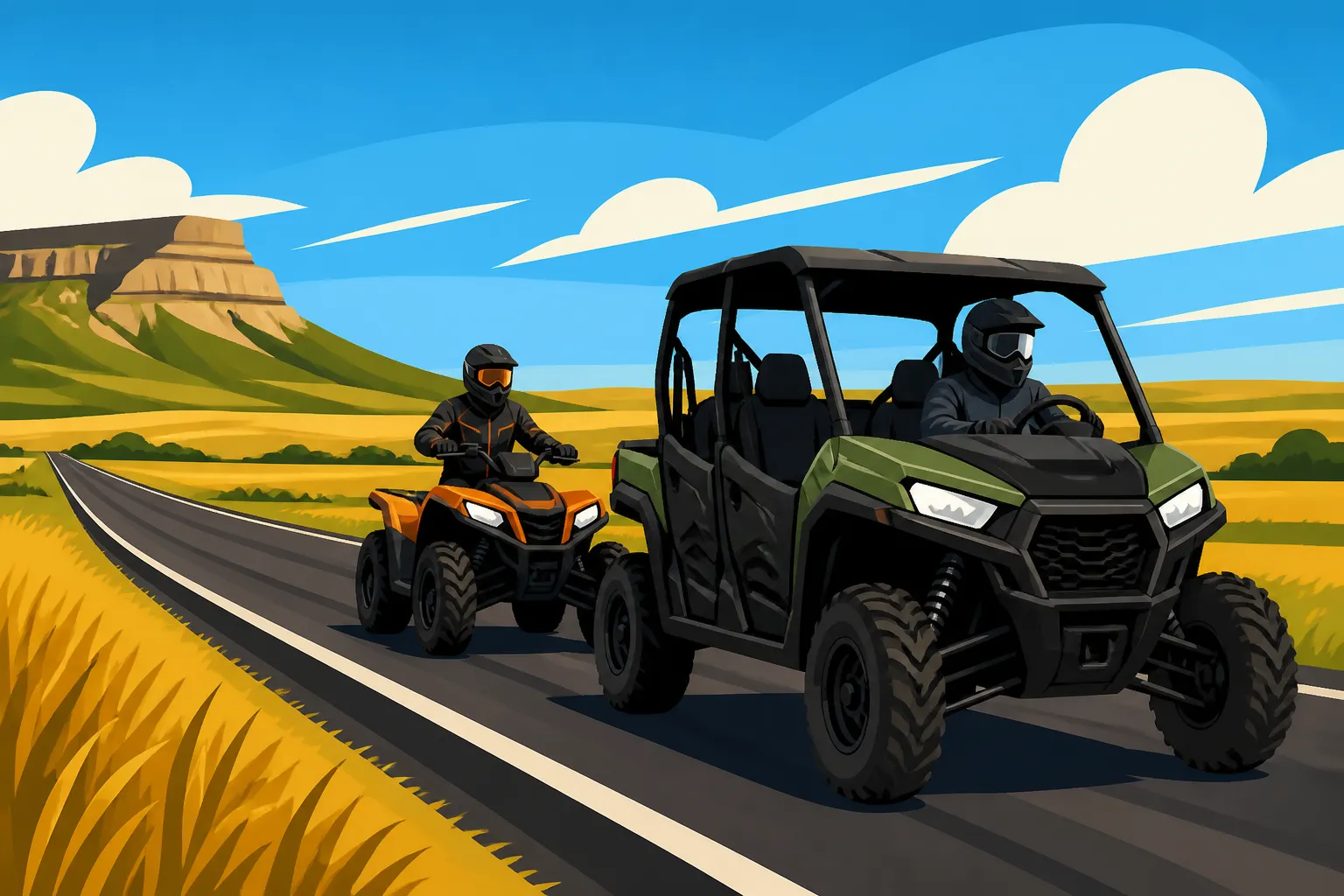
When you see a sign indicating a speed limit of 55 miles per hour, you're typically looking at a rural paved or gravel road that isn't a major interstate. These are the kinds of roads that often connect smaller towns, cross farmland, or lead to state parks. For OHV riders, these roads represent a unique opportunity for connecting trails or accessing various points, but also a specific set of regulations. Unlike higher-speed highways, these 55 mph roads sometimes offer a legal path for OHVs, provided you meet all the criteria. It's not a free-for-all, but it's not a complete ban either. The law is designed to allow some utility and recreational use without compromising safety for other motorists.
The key distinction here is that these aren't the high-speed, controlled-access interstates where OHVs are strictly prohibited. These are generally secondary roads, and North Dakota recognizes that folks sometimes need to use their machines to get from point A to point B, or to access recreational areas. It's about finding that balance between accessibility and safety, and the 55 mph limit is a significant marker in the legal landscape for OHV use.
The Legal Basis for OHV Road Access
North Dakota law, specifically through revisions like House Bill 1346, has made strides in clarifying where and how OHVs can be operated on public roadways. The foundational idea is that certain OHVs, under specific conditions, can indeed share the road with traditional vehicles. This isn't just a suggestion; it's a legal framework that dictates what's permissible. It's important to remember that this legal access is a privilege with responsibilities, not an open invitation to ride anywhere.
The law differentiates between various types of roads and the classes of OHVs allowed on them. For instance, [North Dakota ATV Road Rules by Surface Type] provides a deeper dive into how different surfaces—gravel, paved, section lines—each have their own set of guidelines. On a roadway posted at 55 mph, you're primarily dealing with either paved or aggregate (gravel) surfaces, and the rules are fairly consistent for both, focusing on machine capability and required equipment. The state understands that these machines are often used for work, accessing remote properties, or simply connecting to designated riding areas, and the laws reflect an attempt to accommodate these uses safely and legally.
Specific Requirements for Riding on 55 MPH Roads
Just because a road is posted at 55 mph doesn't mean any ATV or UTV can just roll onto it. North Dakota has strict requirements covering everything from your machine's equipment to its very class and even who can operate it. This is where many riders get tripped up, thinking a quick dash down the road is harmless, but without the proper setup, it could lead to citations or worse. Getting these details right is paramount to legal and safe operation.
Essential Equipment for Road-Legal Operation
To legally operate your OHV on a 55 mph roadway in North Dakota, your machine needs to be outfitted with specific equipment that ensures visibility, control, and compliance with motor vehicle standards. Think of it like making your OHV "street smart." This isn't optional; it's a non-negotiable part of road use.
Here's a breakdown of what you'll need:
- Headlamps: Your OHV must have at least one headlamp that is capable of projecting a beam a certain distance, ensuring you can see the road ahead and oncoming traffic can see you. [North Dakota Headlamp Distance Standards] outlines the specifics here.
- Taillamps and Brake Lights: A visible taillamp is crucial for being seen from behind, especially at dusk or dawn. More importantly, functional brake lights are absolutely essential to signal when you're slowing down or stopping.
- Mirrors: You must have at least one rearview mirror, properly adjusted, to see traffic approaching from behind. Many riders choose a SuperATV mirror setup for enhanced visibility and durability, which is a smart move for road safety.
- Horn: A horn capable of emitting sound audible from a certain distance is required for signaling other vehicles or pedestrians.
- Speedometer and Odometer: Your OHV needs a working speedometer to ensure you're adhering to the posted speed limits and an odometer to track mileage. [North Dakota Speedometer and Odometer Rule] provides more detail on this.
- Muffler: The machine must be equipped with an adequate muffler to prevent excessive or unusual noise.
- Non-Highway Tires: This is a big one. While your knobby tires are great for mud and trails, they aren't considered "non-highway" tires in the legal sense if they're too aggressive or not rated for road use. You need tires that won't damage the road surface and are appropriate for pavement or hard gravel.
- Registration and Decal/Plate: Of course, your OHV must be properly registered with the state, and you'll need to display the appropriate decal or plate. [What North Dakota's OHV Law Requires of Owners] provides a broader overview of owner responsibilities.
This equipment isn't just about avoiding a ticket; it's about making sure you're safe when sharing the road with cars and trucks. Many aftermarket companies, like SuperATV, offer kits and individual components to help ensure your machine meets these road-legal requirements, from lighting to turn signals and mirrors.
Machine Classifications and Speed Capabilities
North Dakota categorizes OHVs into different classes, and these classifications play a significant role in determining what can legally be ridden on a 55 mph roadway. It's not just about the posted speed limit, but also whether your machine can maintain sufficient speed to keep up with traffic and prevent being a hazard.
Here's how the classifications generally break down for road use:
- Class I (ATVs): These are generally quad-style machines designed to be ridden by an operator straddling the seat. For road use, your Class I machine must have an engine displacement of at least 350 cubic centimeters (cc). This minimum engine size is critical because it's tied to the ability to maintain a certain speed.
- Class II (Side-by-Sides/UTVs): These machines typically have a non-straddle seat and a steering wheel, resembling small cars. They also have width and weight limits, as detailed in [North Dakota Class II Width and Weight Limits]. For riding on 55 mph roads, your Class II machine, like a Class I, needs to be capable of maintaining at least 30 miles per hour, as outlined in [North Dakota's 30 mph Capability Rule]. If your UTV meets the criteria, you can often find road-legal accessory kits, sometimes even from brands like SuperATV, to get it ready for these intermediate speed roads.
- Class III (Off-Highway Motorcycles/Dirt Bikes): While some dirt bikes can be street-legal in other contexts, their use on North Dakota's 55 mph roads is more restricted. Generally, if a dirt bike meets the 350cc engine minimum and is properly equipped (headlights, brake lights, mirrors, etc.), it may be allowed. However, it's often more complex to make a dirt bike fully road-legal for general public road use beyond very specific circumstances.
The overarching rule is that your machine must be capable of maintaining a speed of at least 30 mph. This isn't just about reaching 30 mph; it's about being able to sustain it, ensuring you don't become an impediment to the flow of traffic on a 55 mph road. This capability rule is a critical safety measure, preventing slower machines from creating dangerous situations. Also, remember that [North Dakota Class III Machines at 65 mph Roads] specifically mentions that Class III machines can operate on roads posted up to 65 mph if they meet certain criteria, highlighting the difference in allowances based on classification and speed.
Driver and Passenger Rules on Public Roads
Beyond the machine itself, who is riding and who is riding along also falls under North Dakota's OHV regulations for public roads. These rules are in place for the safety of everyone, especially younger riders.
- Age and Licensing: While you don't necessarily need a specific "OHV license," if you are operating an OHV on a public roadway, you must possess a valid driver's license. This means typically being at least 16 years old. Riders under 16 have stricter rules about where and when they can operate OHVs, generally limited to private land or under direct adult supervision.
- Helmets for Minors: [North Dakota Helmet Law for Riders Under 18] makes it clear: if you or your passenger are under the age of 18, you must wear a DOT-approved helmet when operating an OHV on a public road, including those posted at 55 mph. This is a non-negotiable safety requirement.
- Passenger Rules: Your OHV must be designed by the manufacturer to carry a passenger if you plan to have one. This means having a seat and footrests specifically intended for a second rider. You cannot legally carry a passenger on an ATV that is only designed for a single operator, even if it feels like there's enough room. This rule prevents dangerous overloading and ensures the machine remains stable.
- Insurance: While North Dakota doesn't require OHV insurance for off-road use, if you are operating your machine on a public road, you must have minimum liability insurance coverage, just like any other motor vehicle. [North Dakota Insurance Requirements at Registration] goes into more detail about the types and limits of coverage required. This is absolutely critical; riding uninsured on a public road is a serious offense.
It's a lot to keep track of, but each rule is designed to mitigate risks. Planning a family ride? Make sure all young riders have their helmets and that your machine is equipped to safely carry any passengers.
Navigating the Nuances: Exceptions, Limitations, and Safety
Even with all the equipment and understanding of the law, riding an OHV on a 55 mph roadway in North Dakota still requires a good dose of common sense and awareness of potential pitfalls. The rules can have exceptions, local jurisdictions might add their own layers of complexity, and ultimately, your safety is in your own hands.
When Road Access is Restricted or Prohibited
It’s easy to get caught up in what is allowed and forget about the situations where riding your OHV on a 55 mph roadway is either restricted or outright prohibited. These limitations are put in place for safety, environmental protection, or to manage traffic flow.
- Interstate Highways: This is perhaps the most absolute restriction: OHVs are never, ever allowed on interstate highways in North Dakota, regardless of their speed capability or equipment. These are high-speed, controlled-access roads not designed for OHV use.
- Within City Limits: While the state laws lay out a framework, cities and counties in North Dakota often have their own ordinances that further restrict or even prohibit OHV use on any public road within their municipal boundaries. Just because a road is 55 mph outside town doesn't mean you can ride it once you cross the city limits sign. Always check with local law enforcement or municipal offices before planning a route through a town. This is a common trap for visiting riders or those exploring new areas.
- Designated Closed Areas: Some roads, even rural ones, may pass through areas like state parks, wildlife management areas, or private property where OHV use is specifically prohibited, even if the road itself is posted at 55 mph. Always look for signage indicating restricted access or private property. [North Dakota Posted Land Rules for Riders] explains the importance of respecting these signs.
- Emergency Situations: While not a "prohibition," in extremely rare cases, roads might be temporarily closed to OHVs due to severe weather, construction, or other hazards. Always pay attention to official advisories.
- Operating Under the Influence: This should go without saying, but operating an OHV on any public road, including those posted at 55 mph, while under the influence of alcohol or drugs is illegal and carries severe penalties, just like operating a car. [North Dakota DUI Rules for OHV Riders] clearly outlines the consequences.
It's tempting to think that once you're legally equipped, the world is your oyster. But thinking proactively about where you can't go is just as important as knowing where you can.
Local Ordinances and County Variations
This is a big one that often catches riders off guard. North Dakota's state laws provide the baseline, but individual counties and cities have the power to enact their own, more restrictive, ordinances regarding OHV operation on public roads. What's legal in one rural county might be strictly prohibited just a few miles down the road in the next county or within a city's jurisdiction.
For instance, a particular county might have a general ban on OHVs on county roads, even if they're posted at 55 mph, or they might limit hours of operation. Smaller towns might prohibit any OHV use on their streets, requiring you to trailer your machine if you want to pass through. This patchwork of rules can be incredibly frustrating for riders trying to plan a long-distance trip or even just get to a local riding spot.
The best practice is always to:
- Check with local authorities: Before riding in an unfamiliar area, call the county sheriff's office or the city police department for the specific area you plan to ride through.
- Look for signage: Pay close attention to signs at county lines or when entering towns, as they may indicate local restrictions.
- Use available resources: Some counties or cities might have their ordinances published online. It's an extra step, but it could save you a headache (and a fine).
Ignoring local ordinances because you're following state law is a common mistake. Always assume that local rules can be more restrictive than state ones, and confirm before you ride.
Staying Safe and Visible on Shared Roads
Riding your ATV or UTV on a 55 mph roadway means you are sharing that space with much larger, faster, and often less forgiving vehicles. Safety isn't just about following the law; it's about being proactively defensive and highly visible. Even with all the required equipment, OHVs are smaller and less visible than cars and trucks, making them inherently more vulnerable.
Here are some crucial safety tips:
- Maximize Your Visibility:
- Bright Colors: Wear brightly colored clothing and helmets. Fluorescent colors like lime green or orange are excellent for standing out.
- Daytime Running Lights: Always have your headlamps on, even during the day.
- Reflective Tape: Consider adding reflective tape to your machine and helmet, especially if there's any chance you'll be out at dusk or dawn. Aftermarket companies like SuperATV offer robust light bars and accessory lighting kits that can significantly enhance your visibility.
- Flags: A tall, bright safety flag mounted to your OHV can make a huge difference in being seen by drivers of larger vehicles, especially on dusty roads or over rolling hills.
- Ride Predictably: Maintain a consistent speed (within the legal limits and your machine's comfortable cruising speed), use turn signals well in advance, and avoid sudden movements. Other drivers expect predictable behavior from vehicles.
- Maintain Lane Position: Ride in the center of your lane to make yourself more visible and deter drivers from attempting unsafe passes. Don't hug the shoulder, as it can be less stable and may contain debris.
- Be Aware of Road Conditions: OHVs handle differently on paved or gravel roads than they do off-road. Be mindful of loose gravel, potholes, and other hazards that could affect traction. Wet roads or fresh gravel can be particularly tricky.
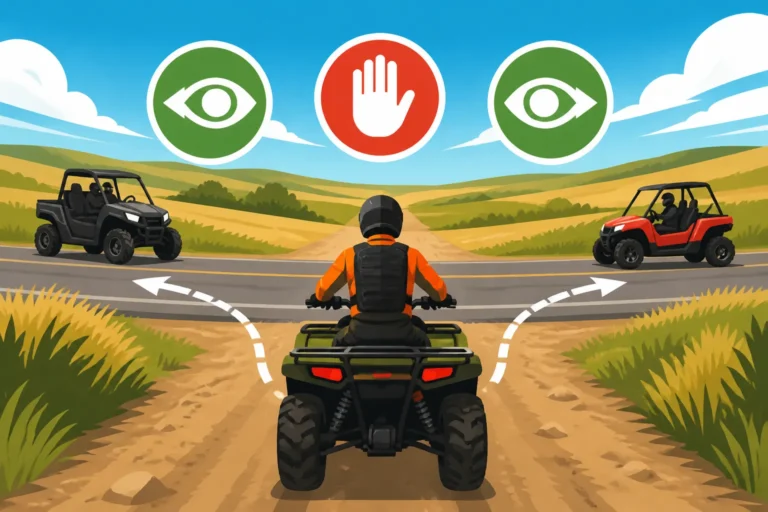
- Anticipate Other Drivers: Always assume other drivers don't see you. Make eye contact if possible, and be ready to react if a driver makes an unexpected move.
- Regular Machine Checks: Before heading out on any public road, do a quick check of your tires, brakes, lights, and mirrors. A blown headlight or non-functional brake light can instantly turn a legal ride into an illegal and dangerous one.
While it's fantastic that North Dakota allows OHVs on certain roads, it's a responsibility you carry every time you merge with traffic. Stay alert, stay visible, and ride safely.
Table: North Dakota OHV Roadway Requirements at 55 MPH
Here's a quick reference for key requirements when riding an OHV on a North Dakota roadway posted at 55 mph:
| Requirement Category | Specific Item | Description | Applicability |
|---|---|---|---|
| Machine Class | Engine Size | Minimum 350cc for Class I. | Class I & III |
| Speed Capability | Must be capable of sustaining 30 mph. | All OHV Classes | |
| Required Equipment | Headlamp | At least one, visible from 300 feet. | All OHV Classes |
| Taillamp/Brake Light | Visible from 300 feet (taillamp), activates on braking. | All OHV Classes | |
| Mirrors | At least one rearview mirror, 10 sq. inches. | All OHV Classes | |
| Horn | Audible from 200 feet. | All OHV Classes | |
| Speedometer | Functional, in miles per hour. | All OHV Classes | |
| Odometer | Functional. | All OHV Classes | |
| Muffler | Adequate to prevent excessive noise. | All OHV Classes | |
| Tires | Must be non-highway tires (suitable for road use). | All OHV Classes | |
| Registration/Decal | Current state registration displayed. | All OHV Classes | |
| Rider Requirements | Driver's License | Valid driver's license required. | All Riders |
| Helmets (Under 18) | DOT-approved helmet required for operator/passenger under 18. | Riders & Passengers Under 18 | |
| Passenger Seating | OHV must be designed by manufacturer for passenger. | All Passengers | |
| Insurance | Minimum liability coverage required for road use. | All Riders | |
| Prohibitions/Limits | Interstates | Never allowed. | All OHV Classes |
| Local Ordinances | Check city/county specific bans or restrictions. | All Areas | |
| Impaired Operation | Strictly prohibited (DUI laws apply). | All Riders |
Disclaimer
This article is for general informational purposes only and does not constitute professional advice. Laws, prices and regulations vary by location and change over time. Consult a qualified professional for guidance on your specific situation.