North Dakota Registration With Two Owners
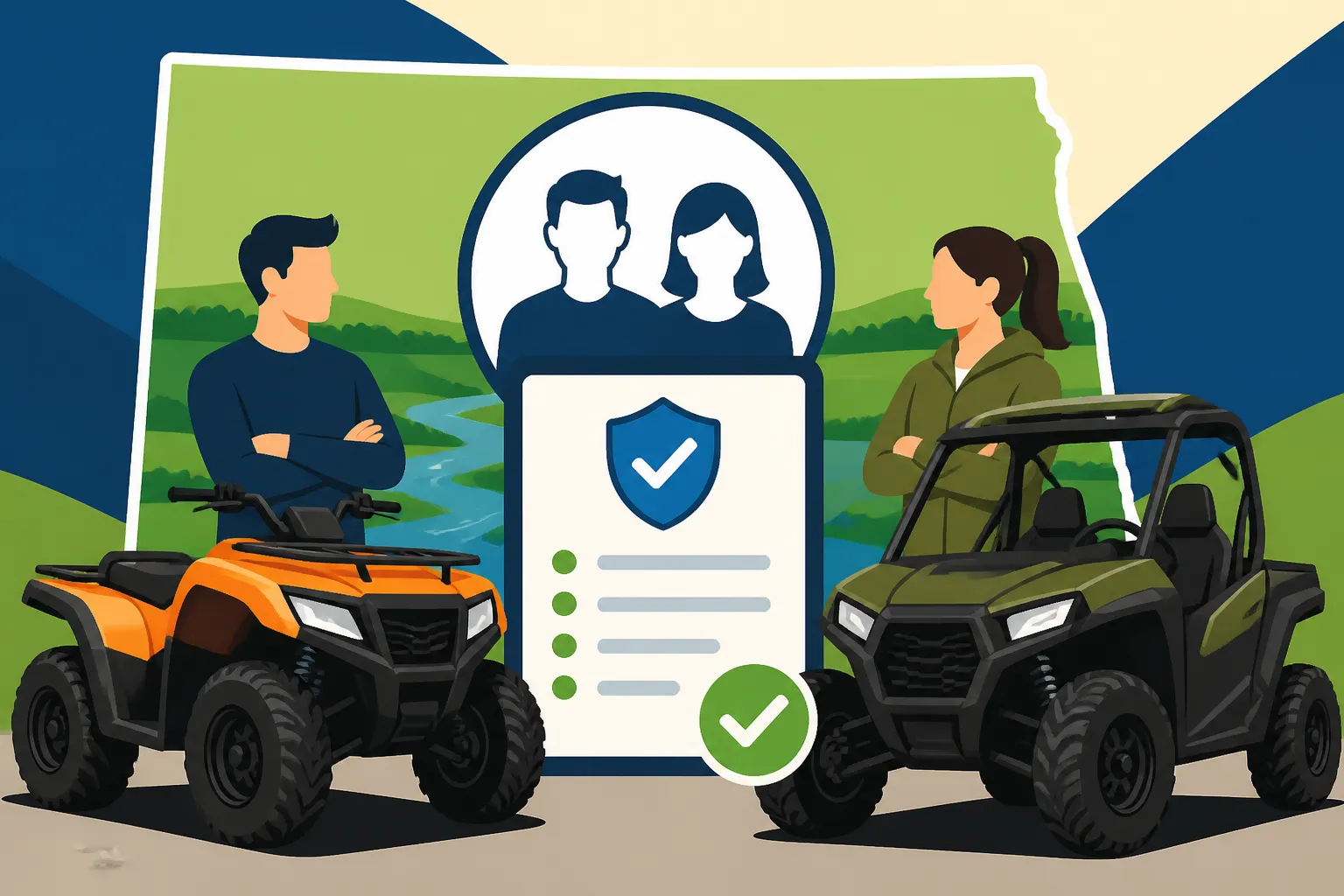
Trying to figure out how to register your ATV or UTV in North Dakota when you’re not the sole owner can feel like navigating a maze blindfolded. You've got questions about whose name goes where, what forms everyone needs to sign, and how this all impacts your rights and responsibilities. This guide is here to untangle the complexities of joint OHV ownership in North Dakota, making the registration process clear and manageable for you and your co-owner.
The Reality of Joint Ownership for Your North Dakota OHV
Whether you’ve purchased a new side-by-side with your spouse, inherited a trusty old quad with a sibling, or gone in on a hunting machine with a friend, having more than one name tied to an off-highway vehicle (OHV) in North Dakota adds a layer of complexity to the paperwork. It’s not just about getting the machine registered; it’s about establishing clear legal rights and responsibilities from the get-go. Many people assume it’s a simple matter of just putting two names down, but the details truly matter, impacting everything from future sales to what happens if one owner is no longer around.
Why Sharing a Machine Means Sharing the Paperwork
When you share ownership of an ATV or UTV, North Dakota’s Motor Vehicle Division needs a crystal-clear understanding of who officially owns the machine. This isn't just bureaucratic red tape; it's about protecting all parties involved and ensuring proper legal transfer of title down the line. Imagine a scenario where two friends buy a robust utility quad for farm work. If only one name is on the title, the other friend has no legal claim to the machine, even if they contributed equally to the purchase. This can lead to serious headaches and disputes if the friendship sours or if one person needs to sell their share.
The state uses this information to track ownership for tax purposes, to ensure compliance with registration laws, and to manage liability. If an unregistered machine is involved in an incident, pinpointing the responsible party becomes much easier when ownership is clearly documented. Furthermore, if you ever need to apply for a [North Dakota Duplicate Plate Cost] or update your address, having all owners correctly listed on the initial paperwork streamlines these future interactions, avoiding frustrating delays or additional requirements. It’s all about creating an undeniable paper trail that everyone can follow.
Common Reasons for Two Names on a North Dakota Title
Joint ownership isn't just for couples; it's a common arrangement in various situations. Spouses frequently purchase OHVs together, seeing it as a shared asset for recreation or utility around a lake cabin. In these cases, both partners want their name on the title to reflect their shared investment and control. Beyond marital partnerships, friends might pool resources to buy a high-performance sport quad or a durable UTV for hunting season, splitting the cost and sharing the enjoyment – and the paperwork.
Another common scenario arises with family machines. Perhaps an adult child and a parent co-own a machine for shared outdoor activities, or siblings inherit an OHV after a parent's passing. In business partnerships, two or more individuals might buy an OHV for commercial use, like maintaining large properties or guiding tours, requiring all partners' names on the title for business asset management. Each of these situations benefits from the clarity and protection that proper joint registration provides, laying the groundwork for a smooth ownership experience.
Navigating North Dakota's Titling and Registration with Multiple Owners
Getting your OHV registered and titled in North Dakota with more than one owner requires attention to detail, but it’s entirely doable. The key is to understand which forms are paramount and how to correctly designate ownership to avoid future complications. This process ensures that all legal owners are acknowledged by the state, protecting everyone's investment and rights to the machine.
Filling Out the Title Application SFN 2872 Together
The main document you’ll be working with is the North Dakota Application for Certificate of Title & Registration, known as [North Dakota Form SFN 2872 Explained]. This form is critical because it's where you formally declare all owners and their relationship to the vehicle. When there are two owners, both names must be clearly printed in the designated owner sections. If there isn't enough space for both names and addresses, you might need to attach an additional statement of ownership, clearly referencing the main application and signed by all parties.
It’s not just about listing names, though. The form also asks for information about the machine itself, such as the VIN, make, model, and purchase details. Ensure all this information is accurate. For instance, if you're registering a side-by-side, you'll want to be sure it's accurately described as a Class II or III machine, which can impact road-riding rules. Don't rush through this; any discrepancies could lead to delays or rejection of your application, forcing you to resubmit or provide additional proof. Take your time, double-check every box, and make sure both owners review it before submission.
Essential Documents and Signatures for All Parties
Beyond the SFN 2872, you’ll need several other documents, and critically, all owners typically need to provide signatures. This includes a valid [North Dakota Bill of Sale Form SFN 2888] or, if you’re transferring from an out-of-state title or a gifted machine, a [North Dakota Statement of Ownership Form SFN 2903]. These documents prove how you acquired the OHV and are essential for establishing the chain of ownership. When buying from a private seller, the bill of sale should list all purchasing parties as buyers and be signed by the seller and, ideally, all buyers. For a gifted machine, a statement of ownership will detail the transfer to all new owners.
Often, specific sections of the title application or a bill of sale might require notarization, especially if there's no existing title or the previous owner's signature needs to be verified. Imagine two friends buying a used quad directly from a private seller; getting the bill of sale notarized ensures there's no question about the transaction later on. Make sure both owners are present to sign all necessary paperwork or have properly executed powers of attorney if one cannot be there. Missing a single signature or a required notarization is a common reason for applications to be kicked back, delaying your ability to hit the trails. For official forms like these, or for creating a clear private bill of sale, many people find it helpful to use templates from services like LawDepot to ensure all required information and signatures are included.
Deciding on "And" or "Or" for Ownership Clarity
This is perhaps one of the most crucial decisions for co-owners in North Dakota, and it's where many people stumble. When listing multiple owners, you’ll often have the option to join their names with "and" or "or." This small conjunction carries significant legal weight, especially when it comes to selling the OHV or what happens if one owner passes away.
- "John Doe AND Jane Smith": This means both parties must agree and sign off on any future transaction involving the OHV. If you want to sell the machine, both John and Jane must sign the title over to the new owner. If one owner passes away, the deceased owner's share of the vehicle typically goes into their estate and must be handled through probate, which can be a lengthy process before the surviving owner has full control or can sell the machine. This provides maximum protection for each owner, ensuring neither can act unilaterally.
- "John Doe OR Jane Smith": This grants either party the authority to act independently regarding the OHV. Either John or Jane can sell the machine, renew the [North Dakota Two-Year OHV Registration], or make other decisions without the other's explicit consent. If one owner passes away, the surviving owner typically gains full ownership automatically, simplifying the transfer of title without going through probate. This offers more flexibility but less individual control.
Understanding this distinction is vital. Consider your relationship with the co-owner and your long-term intentions for the machine. For spouses, "or" might offer convenience, while for unrelated friends, "and" might provide more security. Discuss this thoroughly with your co-owner before submitting any paperwork.
Here’s a quick overview of the implications:
| Feature | John Doe AND Jane Smith | John Doe OR Jane Smith |
|---|---|---|
| Sale/Transfer | Both owners must sign. | Either owner can sign. |
| Inheritance | Deceased owner's share goes through probate. | Surviving owner typically assumes full ownership. |
| Control | Joint control; mutual agreement required. | Individual control; either owner can act independently. |
| Protection | High; protects against unilateral actions. | Moderate; allows individual actions, less protection. |
| Convenience | Lower; requires coordination for most actions. | Higher; easier to manage individually. |
Financial and Legal Implications of Co-Owning an OHV in North Dakota
Beyond the initial paperwork, joint ownership carries ongoing financial and legal considerations that every co-owner in North Dakota should be aware of. These aspects can affect your budget, your rights, and how you resolve potential disagreements down the road. Addressing them proactively can save a lot of grief and expense later on.
Understanding Excise Tax When Multiple Owners Are Involved
When you purchase an OHV in North Dakota, whether from a dealer or a private seller, you’ll owe [North Dakota's 5 Percent Motor Vehicle Excise Tax] on the purchase price. This tax is collected when you title the machine. For jointly owned machines, the excise tax calculation is the same – it’s based on the full purchase price or fair market value of the OHV, regardless of how many owners there are. The responsibility for paying this tax falls jointly on all listed owners.
If you've received the machine as a gift, you might still be subject to excise tax based on its fair market value, even if no money changed hands. The state wants to ensure it collects its due, so they’ll often use resources like NADA Guides or other appraisal tools to determine a reasonable value for the tax. All owners are equally liable for this tax. If one owner fails to pay their share, the others could be held responsible for the full amount. This is why having a clear understanding of the financial obligations upfront and perhaps a formal agreement on who pays what, can prevent future disputes.
The Importance of a Clear Bill of Sale or Ownership Agreement
While the state requires a bill of sale for titling, for jointly owned machines, a simple bill of sale might not be enough to govern the relationship between the owners. This is especially true if you are co-owning with someone who isn't a spouse, where informal understandings can quickly lead to disagreements. A comprehensive co-ownership agreement, perhaps prepared using templates from a service like LawDepot, can be incredibly valuable. This document can explicitly outline:
- Financial contributions: Who paid what portion of the purchase price, registration fees, insurance, and maintenance?
- Usage rules: How will the machine be shared? Who gets priority? Are there any restrictions on where or how it can be ridden?
- Maintenance responsibilities: Who is responsible for scheduling and paying for oil changes, tire replacements, or repairs?
- Decision-making: How will major decisions, like selling the OHV or making significant modifications, be made? Unanimous consent? Majority vote?
- Dispute resolution: What happens if owners disagree? Mediation? Arbitration?
- Buyout clauses: What is the process if one owner wants to sell their share to the other(s)? How will the value be determined?
Having these details in writing, signed by all parties, is a proactive step that can prevent misunderstandings and provide a clear roadmap for resolving conflicts. It’s a safeguard that offers peace of mind when sharing a significant asset. A [North Dakota Bill of Sale Form SFN 2888] or a [North Dakota Statement of Ownership Form SFN 2903] might satisfy the state's titling requirements, but a separate, more detailed agreement truly protects the owners.
What Happens When One Owner Wants Out
Life happens, and sometimes a co-ownership arrangement needs to change. One owner might move out of state, experience financial hardship, or simply lose interest in riding. When one owner wants to sell their share or wants the entire machine sold, the process can become complicated if not outlined in advance. If the ownership is designated as "AND," both owners must agree to sell the machine. If one refuses, it can lead to a stalemate, potentially requiring legal intervention to force a sale or buyout.
If an agreement (like the co-ownership agreement mentioned above) isn’t in place, the departing owner might have little recourse to recoup their investment, especially if the other owner doesn’t want to buy them out. This is where the distinction between "and" and "or" becomes critical. With "OR" ownership, one owner could theoretically sell the entire machine without the other's consent, leading to potential disputes over the proceeds. The state handles the [North Dakota Ownership Transfer in 15 Days], but the private agreements between owners are what truly govern these situations. Clearly defined buyout clauses, pre-agreed valuation methods, and explicit steps for dissolving the co-ownership are essential for a fair and amicable separation.
Smooth Sailing: Best Practices for North Dakota Co-Owners
Co-owning an ATV or UTV can be a fantastic way to enjoy the North Dakota outdoors or share utility responsibilities, but it thrives on clear communication and foresight. By implementing a few best practices, you can ensure that your joint ownership experience is as smooth and enjoyable as possible, avoiding common pitfalls and maintaining a positive relationship with your co-owner.
Maintaining Accurate Records and Communication
One of the simplest yet most effective practices for joint OHV owners is meticulous record-keeping. Keep a shared folder, whether physical or digital, containing all relevant documents: the original [North Dakota Titling an ATV in North Dakota] and registration application, the bill of sale, maintenance records, insurance policies, and any co-ownership agreements. Knowing where to find the [North Dakota Registration Cost] receipt or the previous title saves immense frustration.
Beyond documents, consistent and open communication is paramount. Schedule periodic check-ins to discuss machine usage, upcoming maintenance needs, and any potential issues. If one owner plans a long trip with the OHV, a quick heads-up to the other can prevent scheduling conflicts. If repairs are needed, discussing the costs and plans before proceeding ensures everyone is on board and understands their financial contribution. Think of it like any shared asset; transparency makes everything easier. This includes understanding why the state issues [North Dakota OHV Plate or Decal: Your Choice] and ensuring everyone knows where the current decal is placed.
Planning for the Future: Transfers, Gifts, and Inheritances
It's never pleasant to think about, but planning for the unexpected is a mark of responsible co-ownership. Discussing potential scenarios like gifting the OHV to a child, transferring full ownership to one individual, or what happens in the event of an owner's passing, can save significant stress and legal complications down the line. If you anticipate one owner eventually taking full ownership, plan for the [North Dakota Excise Tax on a Private Sale] or other transfer fees.
Revisit the "and" vs. "or" decision on your title periodically. Life circumstances change, and what was convenient or appropriate years ago might not be today. If you need to change this designation, you'll typically need to apply for a new title. For inheritances, explicitly stating in a will who receives a deceased owner's share can override general probate laws, especially if your title used the "AND" designation. A well-thought-out plan ensures that the OHV's future aligns with all owners' wishes and minimizes administrative burdens during difficult times.
Where to Go for Help and Official Information
Even with all the preparation, questions can and will arise during your joint ownership journey. When you need official information or clarification, start with the North Dakota Department of Transportation (NDDOT) Motor Vehicle Division. Their website is a primary resource for downloadable forms like [North Dakota Form SFN 2872 Explained] and detailed instructions on titling and registration. You can also visit a local NDDOT branch office in person. The clerks there are often familiar with the nuances of North Dakota Registration With Two Owners and can provide specific guidance tailored to your situation.
For legal advice, especially regarding co-ownership agreements or complex inheritance issues, consulting with a North Dakota attorney specializing in property or estate law is always a wise decision. While resources like LawDepot can provide templates for agreements, an attorney can ensure your specific agreement is legally sound and enforceable under North Dakota law. Don't hesitate to seek professional help when you're unsure; it's a small investment that can prevent much larger problems in the future. Remember that understanding [What the Title Application SFN 2872 Asks For] is only one piece of the puzzle; knowing where to get help for the bigger picture is just as important.
Disclaimer
This article is for general informational purposes only and does not constitute professional advice. Laws, prices and regulations vary by location and change over time. Consult a qualified professional for guidance on your specific situation.