North Dakota Permit Expiration Date
A North Dakota non-resident OHV permit can be easy to misread: its expiration date is tied to the calendar, not necessarily to when you buy it. That matters if you visit late in the riding season or plan another trip after New Year’s. Here’s how to understand the date, avoid a gap in coverage, and distinguish a visitor permit from registration.
North Dakota non-resident permit expiration date
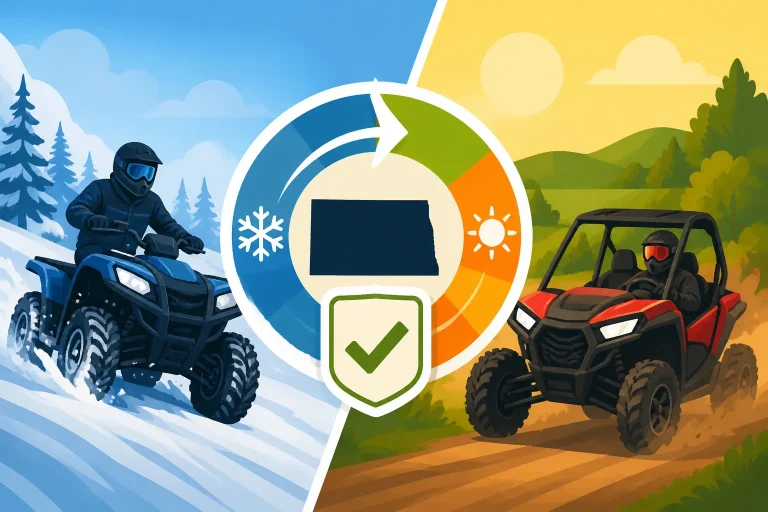
A North Dakota non-resident OHV permit generally runs on a calendar-year cycle, from January 1 through December 31. It does not give you a full year from the day you purchase it. If you buy one partway through the year, it expires at the end of that same calendar year.
That means a permit purchased in late summer and one purchased in late fall can have very different amounts of time left before expiration, even though both expire on December 31. A permit bought near the end of the year is not automatically extended into the following year.
For example, if you purchase a permit in November, plan on needing a new permit for a North Dakota ride in January. The old permit’s expiration date does not shift because you bought it late. The same calendar-year timing applies whether you are making a short visit or returning several times during the year.
| When you buy the permit | What to plan for |
|---|---|
| Early in the calendar year | The permit remains valid through December 31, subject to the applicable rules |
| Midway through the calendar year | It still expires on December 31, rather than one year after purchase |
| Late in the calendar year | It may cover only a short period before expiration |
| After December 31 | Check the current permit process and requirements for the new calendar year before riding |
Treat December 31 as the date to check, not as a suggestion that a permit can be used for a few days into January. If your trip crosses the year boundary, make sure you have the permit required for the new calendar year before riding.
The North Dakota Non-Resident OHV Permit information is useful for understanding who needs a visitor permit. For the timing question, the practical point is simple: buying late does not reset the expiration date. If you want to ride in two different calendar years, plan for the permit requirement in each year rather than assuming one purchase covers both trips.
Who needs a permit and what it covers
The visitor permit is for qualifying non-resident OHV use in North Dakota. It is separate from a machine’s registration, and it should not be treated as a replacement for registration, title paperwork, or any other requirement that applies to the machine or the place you plan to ride.
Visitors sometimes assume a home-state registration sticker automatically gives them the same access in North Dakota. That assumption can create a problem: North Dakota does not have general reciprocity with other states for OHV permits. Check North Dakota Has No Reciprocity With Any State before relying on a registration or permit issued elsewhere.
The visitor permit is also not a universal pass to every property or riding area. Land access, local rules, posted restrictions, trail closures, and park entry requirements can still apply. A permit does not authorize riding on private land without permission, and it does not make a closed route open. Before leaving home, confirm both the permit requirement and the access rules for the specific area you intend to visit.
It helps to keep these documents and permissions separate in your mind:
- Registration identifies a machine under the applicable state registration system. Residents and visitors may have different requirements.
- A non-resident permit addresses the visitor’s OHV use in North Dakota where the permit is required.
- Landowner permission or public-land access rules determine whether you may ride on a particular property or route.
- Park entrance requirements may apply separately from OHV permits and registration.
For more detail on how those obligations differ, see North Dakota Registration Versus a Non-Resident Permit and North Dakota Permits for Visiting Riders. If your question is whether your specific machine needs its own permit, check North Dakota Permit for a Visiting Machine. Do not assume that buying a permit for one vehicle covers every machine in a group.
Visitors who expect to stay in the state for an extended period should also check the time-based rules before the trip begins. The permit and registration questions can change with a longer stay, so review North Dakota’s 30-Day Visitor Threshold rather than treating a weekend visit and a long-term stay as identical situations.
Planning around December 31
The calendar-year expiration date matters most when a trip falls near the end of the year, when a machine stays in North Dakota, or when a rider makes repeat visits in different seasons. A few simple checks can prevent an avoidable stop in riding plans.
- Write down your ride dates. If any ride will take place after December 31, consider it a new calendar-year trip for permit planning.
- Check the permit’s stated expiration. Use the date printed on the permit or shown in the official purchase record. Do not calculate a one-year term from the purchase date.
- Confirm the next year’s requirement before riding. If you are traveling in January, verify the current permit process and make sure the new permit is in place before operating where one is required.
- Check each machine separately. Confirm whether every machine in your party needs its own permit. Do not rely on one rider’s permit to cover a companion’s ATV or UTV.
- Check the riding location. Confirm that the intended area is open and that its access rules, closures, and any separate entrance requirements are satisfied.
- Keep proof available. Save the purchase confirmation and carry or display the permit as directed. If it is lost, review North Dakota Permit Replacement If Lost before the trip rather than assuming a receipt alone will resolve every question.
If you are buying late in the year, compare the remaining riding dates with the cost and effort of obtaining another permit for the next calendar year. The permit’s validity is not extended because you purchased it shortly before expiration. For a rider with only one late-season outing planned, that can affect the trip budget. For someone who expects to return in winter or early spring, it is worth arranging the next year’s permit before setting out.
Purchasing online before traveling may be convenient, but check the official instructions carefully: make sure you select the correct permit, provide accurate information, and understand when the permit becomes valid. The Buying a Permit Online Before You Travel information can help with that step. If the online process or a confirmation does not clearly show the dates, ask the permit issuer for clarification before riding.
A permit’s calendar-year expiration also does not automatically answer every question about an out-of-state machine that remains in North Dakota. For example, leaving an ATV at a cabin and returning months later may raise questions about whether the same permit is still valid, whether a new one is needed, and whether any longer-stay registration rule applies. Check the conditions for your situation, especially if the machine will be used after December 31.
Avoiding the most common expiration mistakes
The most common mistake is treating the visitor permit like a subscription that lasts for twelve months from purchase. It does not work that way when the expiration follows the calendar year. A November purchase is not a pass through the following November.
Another mistake is assuming that a permit remains valid simply because the machine is registered in the rider’s home state. Registration and a North Dakota visitor permit serve different purposes. A valid out-of-state plate or decal may help identify the machine, but it does not by itself establish that the North Dakota visitor permit requirement has been met.
Riders can also confuse a non-resident OHV permit with a state park entrance permit. One does not necessarily cover the other. If you are riding at a state park or staging from one, check the park’s vehicle-entry requirements separately. Similarly, a visitor permit does not override a trail closure or grant access to private property.
A few other details are worth checking before travel:
- Machine type: Confirm that your vehicle is treated as an OHV under the applicable rules. A tracked dirt bike, for example, may have a separate permit requirement; see North Dakota Tracked Dirt Bike Permits.
- Number of machines: If your group is bringing more than one ATV or UTV, verify whether each needs separate coverage. North Dakota Permit for a Second Machine addresses that question.
- Permit proof: Know how the permit must be carried or shown. Keep a digital confirmation available, but follow the official directions about whether a physical permit or display is required.
- Riding location: Check current access conditions. A valid permit does not guarantee that a trail or public area is open on the day you arrive.
- Resident status: If you have moved to North Dakota or the machine is now based there, do not assume the visitor permit remains the right option. Residents have a separate registration framework; see North Dakota Has No Trail Permit for Residents for how that differs.
When official information is unclear, contact the agency or permit seller before riding and ask a narrow question: “What is the expiration date for this permit, and what do I need for a ride after December 31?” Keep the response with your travel records. It is better to resolve a date question at home than at a trailhead.
The reliable planning rule is to treat December 31 as the end of the permit year, regardless of the purchase date. Confirm the new year’s requirements before riding again, and check registration, land access, and park rules separately. That keeps the expiration date from becoming a last-minute surprise and helps ensure the permit you carry matches the trip you actually plan to take.
Disclaimer
This article is for general informational purposes only and does not constitute professional advice. Laws, prices and regulations vary by location and change over time. Consult a qualified professional for guidance on your specific situation.